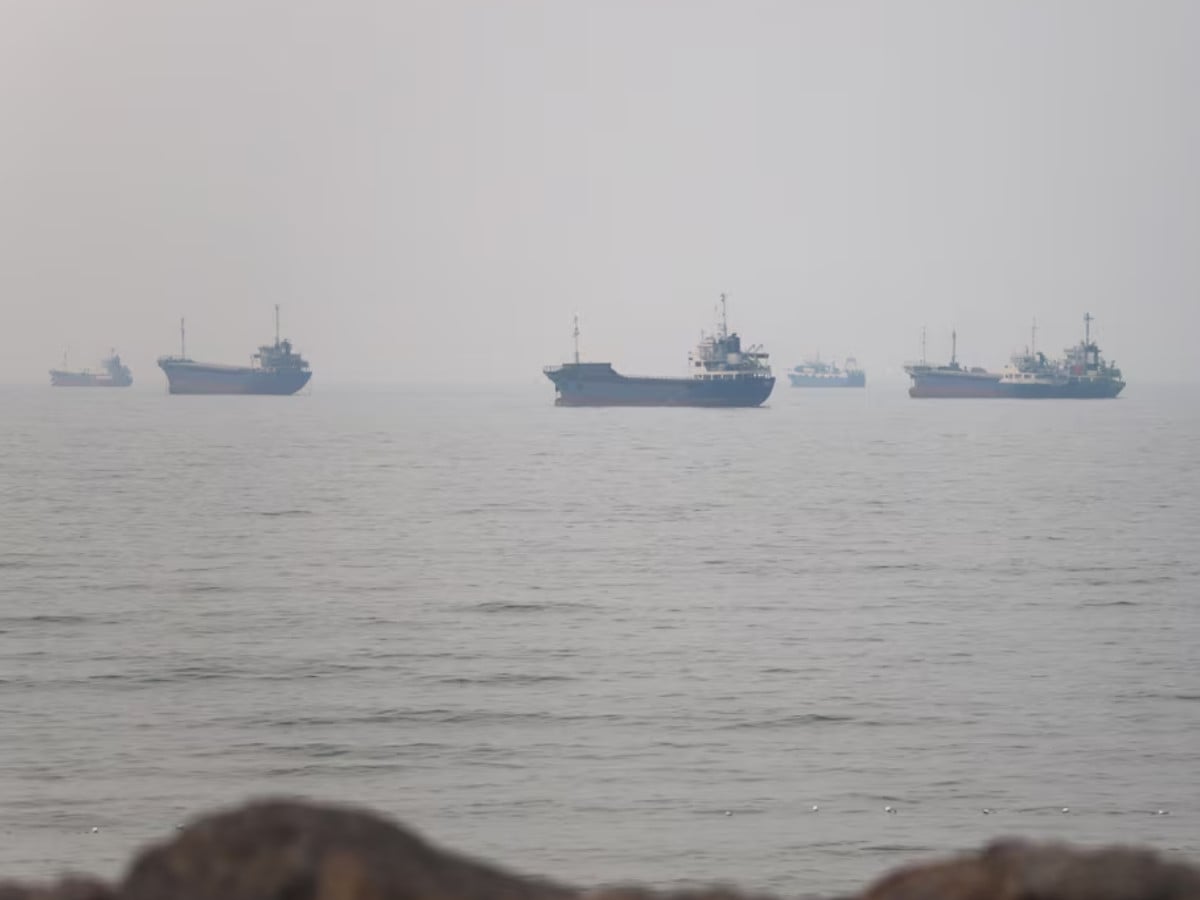
LNG tanker blast risk hinges on cargo tank damage after Strait of Hormuz attack
A Qatari LNG tanker damaged in an attack near the Strait of Hormuz was reported to face an explosion risk, though there was no indication its cargo tanks were breached. The threat would rise if fire spread to cargo systems or caused a major LNG leak.

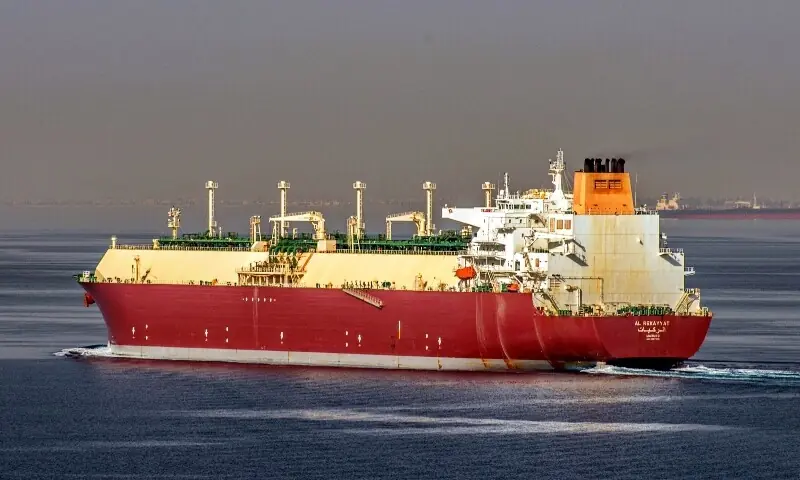
ISLAMABAD: A Qatari liquefied natural gas carrier damaged in an attack near the Omani side of the Strait of Hormuz was reported to face an explosion risk, but industry experience and the vessel’s design suggest that danger depends largely on whether the fire spreads to cargo systems or breaches the LNG tanks.
According to Reuters, the tanker Al Rekayyat sustained significant damage in Tuesday’s attack and later reported a fire in its engine room. A source said the vessel was at risk of exploding, although there was no indication that its LNG storage tanks had been breached. The crew was evacuated safely.
The incident has renewed concern over the vulnerability of energy shipping as commercial vessels have increasingly been caught up in conflict-linked attacks in the wars involving Iran and Ukraine. Reuters reported that Al Rekayyat is the second LNG ship this year to be affected by a war-related strike. In March, the Russian LNG tanker Arctic Metagaz caught fire in the Mediterranean after being hit by Ukrainian naval drones, forcing its crew to abandon the vessel, according to Russia’s transport ministry.
How LNG is transported
LNG is natural gas cooled to about minus 162 degrees Celsius, which turns it into a liquid and reduces its volume by roughly 600 times, making shipment by sea commercially viable. It is stored in heavily insulated cryogenic tanks and transported on specialised LNG carriers built with double hulls and insulated cargo tanks to maintain extremely low temperatures during voyages.
A small amount of LNG naturally evaporates in transit. This boil-off gas can raise pressure inside storage tanks if it is not controlled, so it is commonly captured and used as fuel for the ship’s engines.
What creates the main danger
In liquid form, LNG does not burn. The main hazard arises if it escapes, warms into gas, mixes with air in the correct proportion and encounters an ignition source. LNG carriers are therefore equipped with multiple safeguards, including double-hull construction, layered containment systems, gas detection devices, pressure-relief equipment, emergency shutdown systems, firefighting gear, strict operating procedures and crew training.
In principle, an LNG carrier could face a serious explosion risk if damage caused a major release of LNG, produced a flammable gas cloud and that cloud ignited. However, Reuters reported that modern LNG carriers are designed with several layers of protection intended to stop ignition from reaching cargo tanks, and industry experts say an engine-room fire does not in itself mean the ship will explode.
The danger would become greater if the fire reached cargo equipment, damaged the containment system or caused a substantial LNG leak. One industry source told Reuters on Wednesday that if Al Rekayyat is not hit again, it is likely to remain in its present condition and not explode.
Comments
No comments yet. Be the first to join the discussion!