Every death was a decision
Pakistan mourns 40 lives in another crash—and moves on. The WHO estimates tens of thousands die annually as poor roads, weak enforcement, and lack of Vision Zero reforms cost lives and billions.

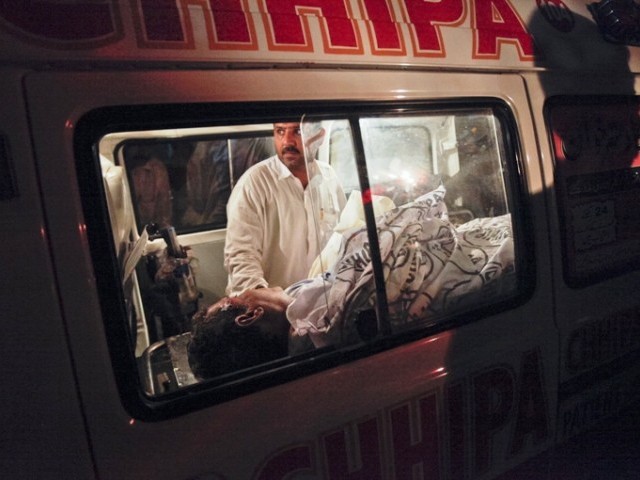
Somewhere between Dhanasar in Balochistan’s Sherani district and the edge of Dera Ismail Khan in Khyber Pakhtunkhwa, forty human beings lost their lives last Friday when an overcrowded bus fell eighty feet into a ravine. They were travelling the kind of road that Pakistan builds and then forgets, narrow, unmaintained, lacking guardrails, winding through terrain that punishes any margin of error with absolute finality. Within hours, the condemnations were issued, the inquiry was announced, and the news cycle moved on. This is the ritual Pakistan has perfected in place of the harder work of actually keeping its citizens alive on its roads. The forty dead will be mourned by their families for the rest of their lives. They will be remembered by the state for approximately 48 hours.
The scale of what Pakistan loses on its roads every year demands to be stated plainly, because it is the kind of number that should produce outrage and instead produces nothing. The WHO estimates that approximately 28000 Pakistanis are killed in road crashes annually, accounting for 2.2% of all deaths in the country. The Global Burden of Disease study places the figure even higher, at 38000. Pakistan ranks first in Asia for traffic deaths. The economic cost of road crash fatalities and serious injuries was estimated by the Asian Transport Observatory at $12 billion in a single year, equivalent to roughly 3% of GDP, a figure that exceeds Pakistan’s entire public healthcare expenditure for the same period. The country is spending more absorbing the consequences of road carnage than it spends keeping its citizens healthy, and it has normalised both facts simultaneously.
What makes this particularly inexcusable is that the knowledge of how to prevent it exists and has been demonstrated repeatedly in countries that once faced comparable challenges and chose to respond systematically rather than ceremonially. Sweden introduced its Vision Zero policy in 1997, built around a single moral premise that no level of road fatality is acceptable, and that the road system must be designed to accommodate human error rather than punishing it with death. Roads were redesigned with median barriers, speed cameras, reduced limits, and pedestrian-safe crossings. The results were not symbolic. Sweden achieved one of the lowest road traffic death rates in the world, and the Vision Zero framework has since been adopted by Norway, the Netherlands, Japan, and cities across the United States and Australia. Japan, which once had severe road safety challenges driven by rapid motorisation, reduced its annual road deaths from over 16000 in the 70s to under 3000 today through a combination of rigorous vehicle inspection, strict enforcement of driver working hours, mandatory speed limiters on commercial vehicles, and infrastructure investment that treated every fatal stretch of road as a solvable engineering problem rather than an act of God.
Pakistan has a National Road Safety Strategy covering 2018 to 2030. It targets saving 6000 lives against current trends. The International Road Assessment Programme evaluated Pakistani road infrastructure in 2024 and found that only 1% of roads meet a three-star or better safety rating for pedestrians, against an Asia-Pacific average of 14%. Only 7% meet that standard for cyclists, and 15% for motorcyclists. An annual investment of $550 million, representing just 0.2% of GDP, could potentially prevent 9000 fatalities per year according to IRAP’s own calculations. Pakistan currently does not come close to making that investment. It spends more on the bureaucratic apparatus of transport ministries than on the physical and regulatory infrastructure that would actually reduce the body count.
Institutional failures that produce each individual tragedy are consistent and catalogued. Vehicles operating on intercity routes routinely carry passengers beyond certified capacity because there is no meaningful enforcement of load limits. Drivers complete journeys of 16 to 20 hours without rest because the regulations governing driver working hours exist on paper and nowhere else. Roads through mountain passes in Khyber Pakhtunkhwa, Balochistan, and Gilgit-Baltistan lack safety railings at drops that guarantee death because installation and maintenance of such infrastructure falls between jurisdictions that each assume the other is responsible. Vehicle fitness certificates are issued through processes so compromised by corruption that the certificate itself has become a formality rather than an assurance. 41% of road crash fatalities in Pakistan are pedestrians, higher than the Asia-Pacific average of 31%, which reflects not reckless pedestrian behaviour but the complete absence of safe walking infrastructure in a country where millions of people have no choice but to walk on roads designed exclusively for vehicles.
None of this is mysterious and none of it is inevitable. Road deaths at scale are not natural disasters. They are policy failures, and they are correctable through the same combination of political will, institutional investment, and consistent enforcement that has reduced fatalities dramatically in every country that has taken the problem seriously enough to act on it. Pakistan's roads are not more dangerous because safer solutions are unknown. They remain dangerous because road safety has never been treated as a national priority, and institutions have never been held accountable for preventing avoidable deaths. Until it does, the inquiries will continue, the condolences will be offered, and somewhere on a mountain road between two provinces, another bus will leave before dawn carrying more passengers than it was built to hold, driven by a man who has not slept, on a road that has not been inspected, toward a drop that has no railing.
The writer has a PhD in Political Science, and is a visiting faculty member at QAU Islamabad. He can be reached at [email protected] and tweets @zafarkhansafdar
View all articles →Comments
No comments yet. Be the first to join the discussion!