From Indo-Pacific to the US Pacific: A Setback for India's Strategic Ambitions
The US decides to drop “Indo” from USINDOPACOM and rename it USPACOM. While missions stay unchanged, India fears the symbolic shift could signal uncertainty about Indo-Pacific priorities.

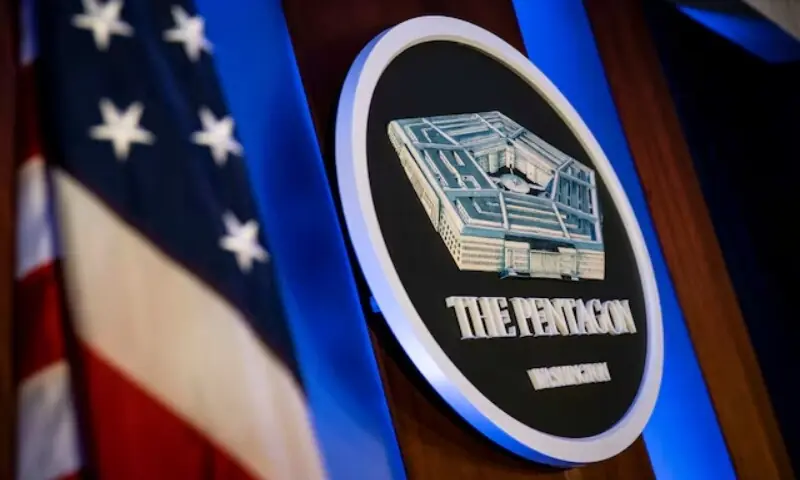
The US Department of War has decided to rename the US Indo-Pacific Command (USINDOPACOM) to its previous designation, the US Pacific Command (USPACOM). It indicates that the United States seeks to honor the command’s historical identity and institutional legacy, fostering collective spirit among all who serve in the Pacific. While the geographic scope, strategic mission and the command’s operational responsibilities remain unchanged, the drop of “Indo” from Indo- Pacific Command raised questions in New Delhi about Washington’s commitment to the Indo-Pacific concept and the Quad grouping that includes India. Even if symbolic or administrative, such a change could be interpreted as signalling ambiguity in US Indo-Pacific prioritisation, affecting regional perceptions
The reported renaming of USINDOPACOM back to USPACOM, whether symbolic or administrative, highlights the importance of nomenclature in shaping strategic perceptions in international politics. While such a change would not necessarily indicate a structural shift in US Indo-Pacific strategy or its commitments under frameworks such as the Quad, it could generate interpretive uncertainty among regional stakeholders, particularly India, which has invested significantly in the Indo-Pacific narrative as a pillar of its great-power aspirations
The USPACOM was established in January 1947 by then President Harry S Truman, and it served for more than seven decades as the oldest and largest unified command. The USPACOM played a critical role in shaping the security architecture of the post-World War IIera. Until this latest change, the command is responsible for fostering defense partnerships and maintaining regional security across the wider Indo-Pacific, extending from the US West Coast to India’s western border.
The USPACOM was retitled as US Indo-pacific Command (USINDOPACOM) in 2018, signalling Washington’s acknowledgement of geopolitical, geoeconomic and geostrategic intercourse of the Indian Ocean region with the Pacific Ocean region. For New Delhi, this development held paramount significance as USINDOPACOM served as a significant institutional channel, fostering defense cooperation with Washington. Under the umbrella of a broader Indo-Pacific framework, the command promoted increased US-India military engagement which includes joint exercises, maritime coordination and strategic cooperation. However, the recent development of removing “Indo” from the US Indo-Pacific command’s title has provoked strong reactions from Indian strategists and scholars. In New Delhi, this renaming of nomenclature has been interpreted as a shift in messaging around the US Indo-Pacific strategy.
The Indo-Pacific concept emerged to create a single strategic theatre, reflecting economic and military interconnectedness between the Indian and Pacific Oceans. Under this concept, Indiaemerged as a significant player in Indo-Pacific, maintaining a balance of power amid China’s ascendency. In 2018, the Pacific Command was renamed as the “Indo Pacific” command to strategically recognize the pre-eminence of New Delhi in the evolving regional security calculus. Symbolism holds strategic significance in international politics, and for India, this framing of nomenclature is much more than a geographical concept, serving diplomatic validation to growing Indian aspirations of becoming a major power within Asia and beyond.
New Delhi has successfully raised its diplomatic stature by capitalizing on the benefits of Indo-Pacific narrative, grabbing a prominent seat at the major regional initiatives while strengthening the country’s influence in key strategic arrangements like QUAD- a quadrilateral alliance between Australia, India, the US and Japan. Through this narrative, India projected itself as a major stakeholder in ensuring a free, open and rules-based order in the Indo-Pacific region.
However, a change in nomenclature reflects that the US, now, aspires to focus on the Pacific theatre instead of a broader Indo-Pacific region. Though the change of command appears administrative in nature, the policy circles are interpreting this change in terms of the downgrading of India’s centrality in the strategic thinking within the US policy circles. The inclusion of “Indo” in the US Pacific Command was not a cosmetic measure rather it showed a conscious effort to accentuate India’s role within the regional security architecture. Suffice it to say, its removal creates uneasiness in Delhi regarding the durability of the command’s commitment.
The timing of the decision is worrisome for New Delhi as it comes amid the rebalancing of ties between Beijing and Washington. The change in the name of the US military formation came a little more than a fortnight after the US defense secretary’s speech at the Shangri-La Dialogue, held in Singapore, where Pete Hegseth claimed the US “return to realism” in the Pacific while chalking out a new course for the US alliances and partnerships in the region, “rooted in the realities of power and interests.” In response to this US move, Indian Navy chief Admiral Arun Prakash criticised the US policies as unreliable and poorly thought.
“Whatever ephemeral morale boost might come from the renaming is entirely outweighed by the symbolic damage done to US ties with the most populous country on the planet,” said Christopher Clary, an associate professor of political science at the University at Albany. He further stated that “The renaming is senseless. It is reasonable for sceptics to wonder whether the goal is to appease China, which seems to be the recurrent feature of this administration’s policy in Asia.” Already the US-India ties are under stress, given tariff disputes between two states, and tensions over Delhi’s energy ties with Moscow.
Some questions need to be addressed to delve into the relations between the linguistic interpretation of the terms and real strategic interests. Does the title of the command reflect the US geo-strategic and geo-political interests? If the title means so, then the rebranding of the USINDOPACOM into USPACOM reflects the strategic shift in the US foreign policy, omitting the values of the Indian Ocean region.
Second question, if the title of the command does not reflect the strategic interpretation, then why does the US need to rename it? It might demonstrate that the US no longer play wedge strategy between China and India, signaling a shift in the US strategic interest in the Indian Ocean region.
However, with Washington’s shift from this terminology, the effectiveness of the most important diplomatic frameworks could weaken through which New Delhi has projected itself as a security provider in Indo Pacific region. This change of heart in the US strategic thinking reflects Trump administration’s intentions to recalibrate their strategic focus away from Indo Pacific to the areas that pose immediate security challenges.
This development could serve as a reminder for New Delhi, reflecting the limitations of external validation. Though New Delhi has reaped the rewards from its growing partnership with the US, down the road country cannot bet solely on American policies or perceptions
For Pakistan, this policy move creates diplomatic space, allowing Islamabad to project itself as a valuable economic and logistic partner. The change of nomenclature would reduce international support for narratives, perceiving India as a regional net security provider in the Indian Ocean region. Islamabad can capitalise on this opportunity by engaging with other regional powers without being viewed through the lens of the US-India strategic partnership. Moreover, this softening of framework could reduce pressure on China- centric regional alignments, allowing greater diplomatic manoeuvrability and renewed geostrategic relevance.
Therefore, this rebranding has broader implications for the narrative underpinning the Indo-Pacific concept. The Indo-Pacific concept was instrumental in projecting India as sole regional security provider in the Indian Ocean region and the return to USPACOM raises questions about the future American foreign policy priorities. This development does not reflect collapse of Indo-Pacific strategy nor the end of US-India strategic cooperation yet the disappearance of “Indo” from one of the important geopolitical frameworks affects perception and in geopolitics perceptions shape the future as much as power itself.

Nawal Nawaz is a Research Assistant at Center for International Strategic studies, (CISS) Islamabad and an M.phil Scholar Strategic Studies at National Defense University.
View all articles →Comments
No comments yet. Be the first to join the discussion!