June 24, 2026
KP raises MTI budget without audit of funds
The KP government has increased the budget for medical teaching institutions to Rs80 billion for 2026-27, while concerns remain over the lack of external audits of their revenues and expenditures. Health experts say MTIs should face the same accountability standards as other hospitals.

June 24, 2026
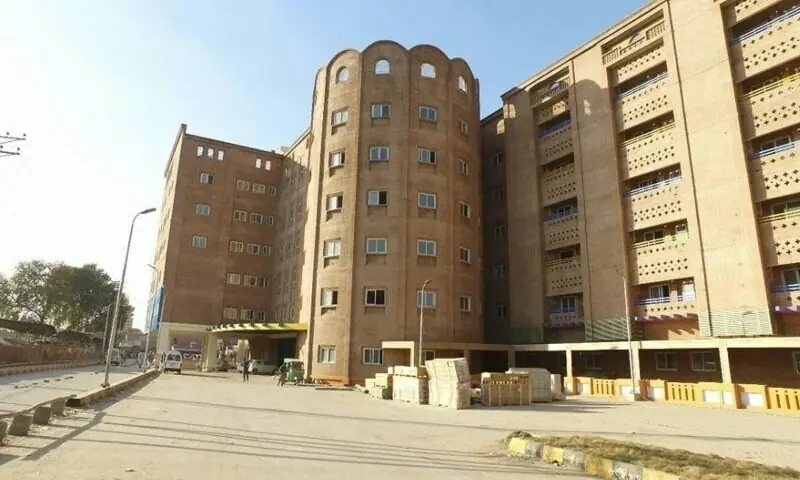
PESHAWAR: The Khyber Pakhtunkhwa government has increased budgetary allocations for medical teaching institutions for the coming fiscal year, even as concerns continue over the absence of an external audit of their income and spending, according to health experts.
The experts said the upcoming budget includes a 22 per cent increase for MTIs. They added that, apart from higher allocations, there had been no external audit of revenues generated by the institutions through the Sehat Card Plus programme, institution-based practice and user charges. For 2026-27, the allocation for MTIs has been set at Rs80 billion, up from Rs65.7 billion in the previous year, making it the largest single-line budget to be spent by the respective institutions according to their requirements without government involvement.
They said the budget increase comes despite a lack of financial statements showing the volume of MTIs’ own receipts from Sehat Card Plus, institution-based practice and user charges. Major MTIs in Peshawar — including Lady Reading Hospital, Khyber Teaching Hospital, Hayatabad Medical Complex and Peshawar Institute of Cardiology — as well as MTIs in Mardan, Dera Ismail Khan, Bannu and Swabi, continue to receive revenue through Sehat Card Plus and institution-based practice, but the government has yet to audit those funds in the same way as other departments and hospitals.
Health experts said non-MTI institutions undergo regular government audits, while the Board of Governors of MTIs makes administrative and financial decisions without the control of the health or finance departments. Under the Medical Teaching Institutions Reforms Act, enforced by the provincial government in 2025, hospitals and their affiliated medical and dental colleges were given administrative and financial autonomy and are governed by their respective boards, whose members are selected from the private sector.
Sehat Card spending and medicine allocations
According to the figures cited by the experts, the government has spent Rs150 billion on free treatment under the Sehat Card Plus scheme since 2016, of which about Rs50 billion went to MTIs. In 2025-26 alone, spending under the scheme stood at Rs35 billion, with more than Rs15 billion going to MTIs. The allocation for Sehat Card Plus has now been increased to Rs46.7 billion for 2026-27 from Rs35 billion in 2025-26, an increase of 33.4 per cent, and indicators suggest that half of the amount will go to MTIs.
At the same time, the allocation for medicines for 2,600 health facilities run by the health department has been raised to Rs14.3 billion from Rs11.9 billion in 2025-26, showing an increase of 20.2 per cent. The experts and officials said district headquarters hospitals and primary health facilities were struggling to provide medicines to patients, in contrast to the continued rise in MTI allocations.
Officials in the health department described Sehat Card Plus as a successful initiative that had been appreciated by international organisations for ensuring universal health coverage and helping people obtain treatment without out-of-pocket spending. However, they also questioned why MTI budgets continued to rise when doctors and other staff were already receiving regular government salaries along with revenue generated through Sehat Card Plus and institution-based practice.
Audit dispute
The MTI Policy Board, which serves as the oversight body for all MTIs, has during the past two years blocked government efforts to carry out audits. The board argued that MTIs had autonomous management structures aimed at improving tertiary healthcare facilities and that they already had their own internal audit mechanism.
Dr Nausherwan Burki, chairman of the MTI Policy Board, told Dawn that external audits had in fact been completed.
Health experts said the increase in Sehat Card Plus funding reflected the government’s intention to expand universal health coverage to vulnerable groups, but maintained that MTIs should be subjected to accountability measures similar to those applied to other hospitals.
0 Comments
No comments yet. Be the first to join the discussion!