June 24, 2026
Bloomberg Philanthropies commits $285 million to accelerate clean energy transition
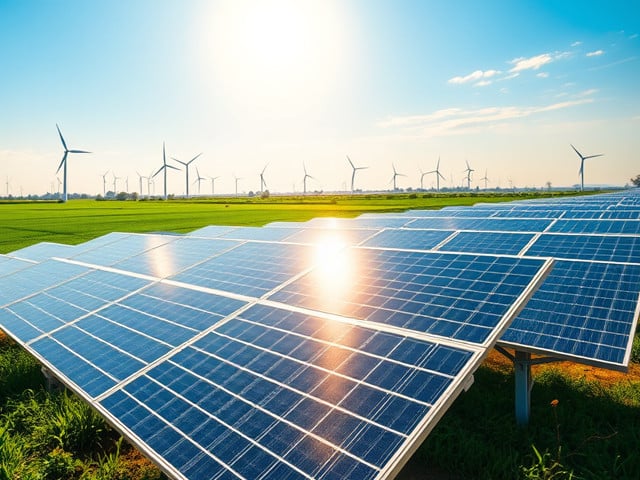
Bloomberg Philanthropies has announced a $285 million commitment to support renewable energy and help governments with the energy transition. The initiative will focus on strengthening clean energy industries and tackling structural barriers in emerging economies.

June 24, 2026
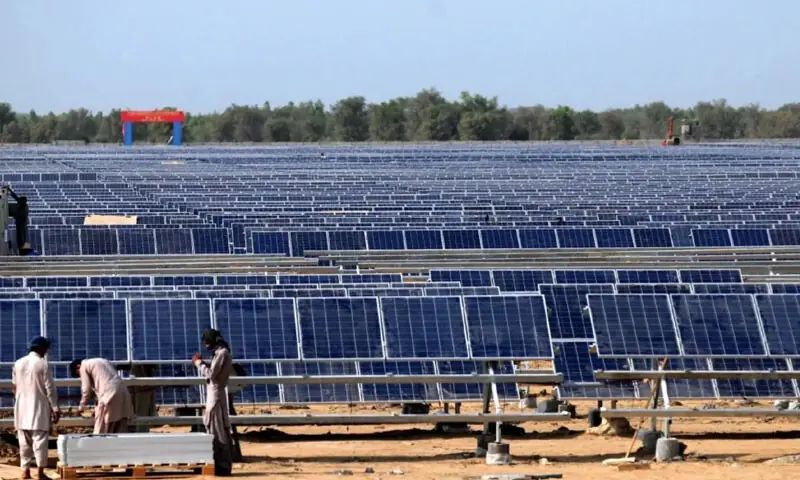
ISLAMABAD: Bloomberg Philanthropies has announced a $285 million commitment for the renewable energy sector aimed at speeding up the global shift to cleaner power and providing technical assistance to governments managing the energy transition.
According to a statement issued by Bloomberg Philanthropies, the funding is intended to strengthen national clean energy industries by improving their institutional capacity, technical capabilities, market expertise and analytical strength. The initiative is focused on building enabling conditions for the transition in emerging markets and developing economies, where energy demand is rising most rapidly.
Michael R. Bloomberg, the UN chief’s special envoy on climate and founder of Bloomberg L.P. and Bloomberg Philanthropies, said the falling cost of clean power had changed the economics of the energy sector, but deployment was still being slowed by barriers that could be addressed. “Clean energy is now cheaper than fossil fuels in virtually every part of the world, and as a result, its share of global power production is growing,” said Mr Bloomberg, founder of Bloomberg L.P. and Bloomberg Philanthropies. “But fixable obstacles are still slowing down deployment — and with energy demand rising at an unprecedented speed, we can’t allow those obstacles to continue standing in the way of lower energy costs for households and businesses, and cleaner air and water for communities. This new investment will help ensure they don’t.”
The statement said renewables and nuclear power are projected to account for half of global electricity generation by 2030. It added that the new commitment seeks to help close the gap by building on existing efforts in countries where electricity demand is increasing fastest.
The programme is focused on countries that account for nearly 70pc of global power-sector emissions and is intended to help solar and wind generate more than half of their electricity by 2030. It also aims to strengthen clean energy industry associations and regional networks so they can play a larger role in energy planning, financing and market design. In addition, it will support technical research to show how clean energy can provide reliable and affordable power at scale.
Minister of State for Climate Change Dr Shezra Mansab Ali Khan Kharal welcomed the initiative and said structural issues, rather than the cost of renewable energy itself, were holding back progress in many emerging economies. “Across emerging economies, renewable energy is being held back not by economics but by market structures designed for a different era. With this investment, Bloomberg Philanthropies is helping to close the gap between clean energy potential and what reality requires by tackling these systemic challenges head-on,” he said.
Energy expert Dr Khalid Waleed said the reference to countries responsible for nearly 70pc of global power-sector emissions appeared to describe the initiative’s overall portfolio rather than indicating country-by-country allocations. Dr Waleed, a research fellow at the Islamabad-based Sustainable Development Policy Institute, said Pakistan was not central to that emissions calculation but remained important to the broader developing-country transition challenge.
He said Pakistan’s power sector was already showing strong momentum in clean energy, particularly through distributed solar, but added that the institutional framework had not kept pace with the transition. According to Dr Waleed, countries such as Pakistan needed support in areas including the early retirement of fossil fuel plants as bankable projects, as well as preparation for the expansion of battery and storage technologies.
0 Comments
No comments yet. Be the first to join the discussion!