June 14, 2026
JCP mulls panel for high court judge interviews amid lawyers’ opposition
The Judicial Commission of Pakistan is considering a seven-member panel to interview candidates for high court judgeships, with a decision expected on June 19. The proposal has drawn objections from sections of the legal fraternity, particularly in Islamabad.

June 14, 2026
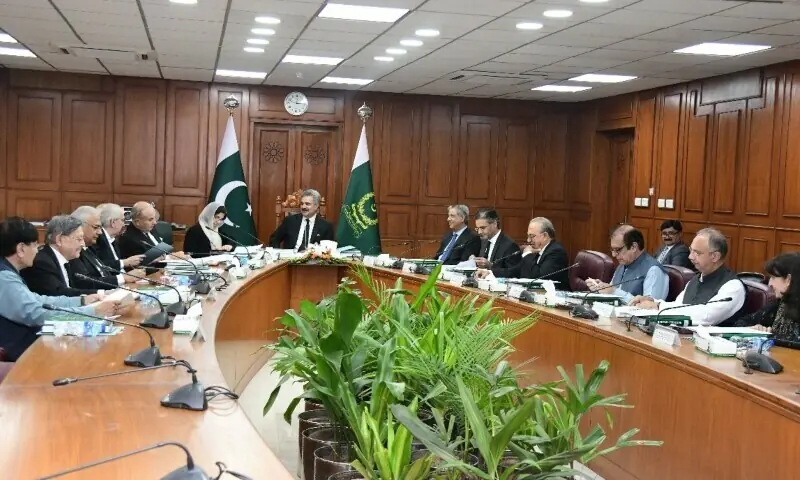
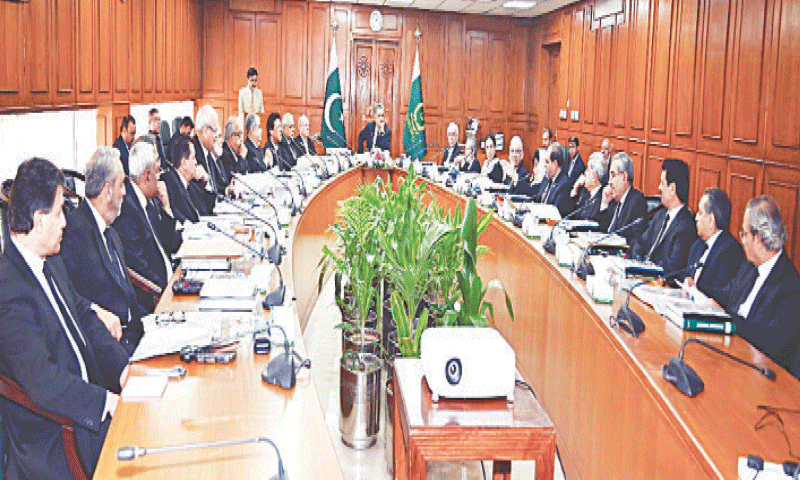
ISLAMABAD: The Judicial Commission of Pakistan is considering a proposal to create a seven-member committee to interview candidates for appointment to the high courts, a plan that is expected to be taken up for final approval at the commission’s next meeting on June 19.
The proposal came under discussion at the JCP’s meeting on Thursday, which focused mainly on drafting long-pending rules for judicial appointments after recent constitutional amendments. The need for the new rules has become more pressing because appointments to several high courts have been held up despite a rise in vacancies and a growing backlog of cases.
Under the 27th Constitutional Amendment, the JCP was given the authority to frame rules for its own working, including the procedure and criteria for assessing, interviewing, evaluating and determining the fitness of candidates for appointment as judges.
Competing proposals before the commission
The JCP’s Rule-Making Committee consists of Federal Constitutional Court Justice Aamer Farooq, Attorney General for Pakistan Mansoor Usman Awan, Senator Farooq H Naek, Senator Syed Ali Zafar and Pakistan Bar Council representative Ahsan Bhoon.
Familiar with the deliberations, the committee reviewed several options for interviewing prospective judges, including lawyers and judicial officers from the subordinate judiciary. Senator Syed Ali Zafar proposed that the full commission should interview each nominee when their case comes before the JCP so that all members can assess the candidate together.
Senator Farooq H Naek put forward a different approach, suggesting that a smaller body should carry out interviews before the JCP meeting and then place its recommendations before the commission. Ahsan Bhoon, representing the Pakistan Bar Council, proposed a five-member panel made up of two judges of the Federal Constitutional Court or Supreme Court, one parliamentarian, the attorney general and a Pakistan Bar Council representative.
The sources said the commission considered the Rule-Making Committee’s recommendations on Thursday and, after discussion, agreed in principle on a seven-member panel instead of a five-member one. Under the proposal, the body would include a judge of the Federal Constitutional Court or Supreme Court, the senior-most chief justice among the high courts, the chief justice of the relevant high court, Senator Farooq H Naek, Attorney General Mansoor Usman Awan, Senator Syed Ali Zafar and Pakistan Bar Council nominee Ahsan Bhoon.
If approved, the proposed panel would interview candidates for elevation to the superior judiciary and submit its recommendations to the JCP. The sources also said the commission considered giving high court chief justices a more active role in the rule-making process.
Appointments stalled after constitutional changes
The framing of the new rules remains the central item on the JCP agenda because judicial appointments have stayed stalled after the recent constitutional changes. The matter drew added attention after the JCP, in its April 28 meeting, approved the transfer of three Islamabad High Court judges — Justice Mohsin Akhtar Kayani, Justice Babar Sattar and Justice Saman Rafat Imtiaz — to the Lahore, Peshawar and Sindh high courts, respectively.
The proposed interview mechanism has triggered debate within sections of the legal community, especially among lawyers in Islamabad, who argue that candidates for constitutional courts should not be interviewed by any committee functioning outside the constitutional structure.
Earlier this week, the Islamabad Bar Council, the Islamabad High Court Bar Association and the District Bar Association Islamabad opposed both the proposed interview panel and the reported plan to fill vacancies in the Islamabad High Court through transfers from provincial high courts. They said such transfers would effectively mirror last year’s moves under which Justice Sardar Muhammad Sarfraz Dogar, Justice Khadim Hussain Soomro and Justice Mohammad Asif were brought to the IHC from provincial high courts.
IHCBA President Syed Wajid Ali Gillani criticised the proposed interview process and described it as a threat to the dignity of judicial office.
According to Mr Gillani, senior lawyers often leave successful legal practice to join the bench because of the status and dignity attached to judicial office rather than financial incentives. He said the chief justice of the relevant high court could assess a lawyer being considered for elevation, but subjecting candidates to questioning by a large committee would undermine the prestige of a constitutional office.
0 Comments
No comments yet. Be the first to join the discussion!