JCP set to decide panel for interviews for high court appointments
The Judicial Commission of Pakistan is expected to decide next week on a proposed panel to interview candidates for elevation to the high courts. The move has drawn objections from the Islamabad High Court Bar Association over concerns about the constitutional framework.

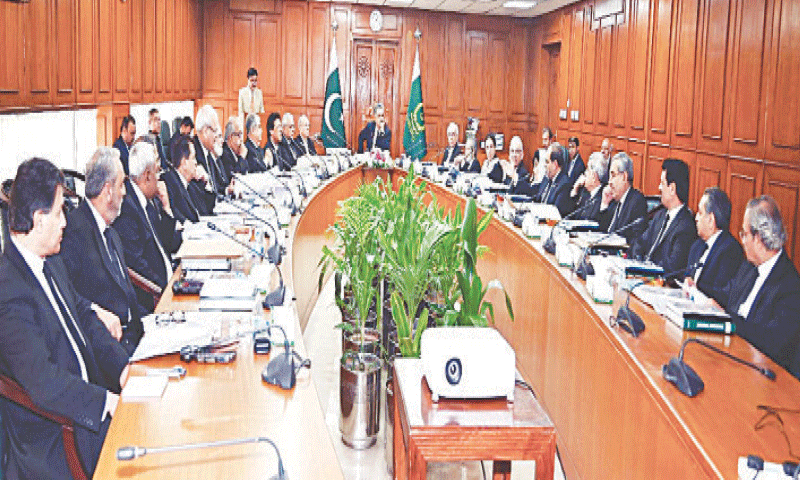
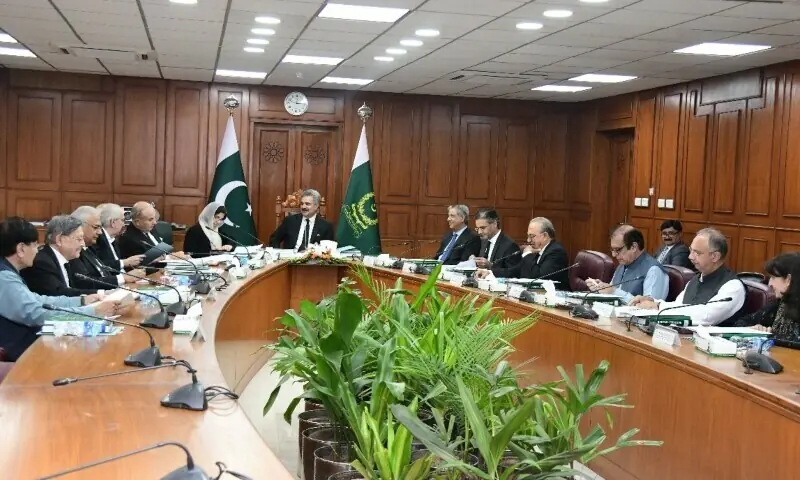
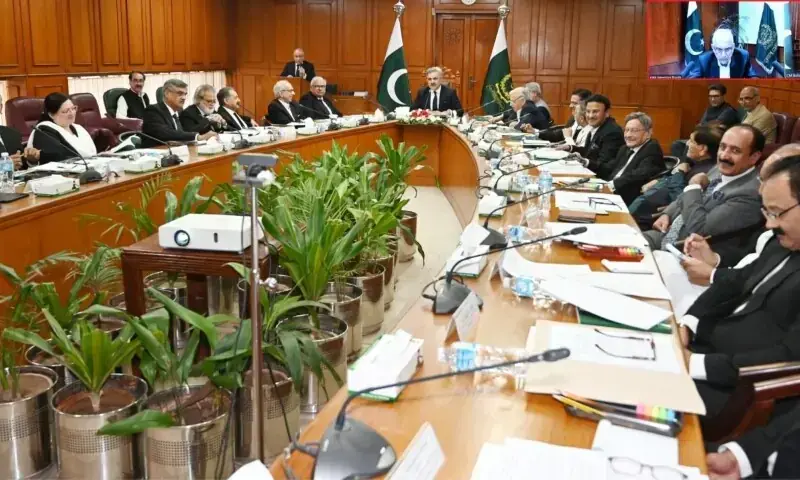
ISLAMABAD: The Judicial Commission of Pakistan (JCP) is expected to take up the composition of a proposed committee for interviewing candidates for elevation to the high courts at its next meeting, familiar with the matter.
The proposed move has prompted concern among sections of the legal community, particularly in Islamabad, where lawyers have argued that candidates for constitutional courts should not be interviewed by any body functioning outside the constitutional framework.
Sources said the JCP’s Rule-Making Committee met on May 6 to consider the criteria and procedure for appointing judges to the superior judiciary in light of recent constitutional changes. The 27th Constitutional Amendment added a provision authorising the commission to frame rules for its procedures, including the procedure and criteria for assessment, interview, evaluation and fitness for appointment of judges.
The Rule-Making Committee comprises Justice Aamer Farooq of the Federal Constitutional Court (FCC), Attorney General for Pakistan (AGP) Mansoor Usman Awan, Senator Farooq H. Naek, Senator Syed Ali Zafar and Pakistan Bar Council representative in the JCP Ahsan Bhoon.
Different proposals were discussed on how interviews for judicial appointments should be conducted. Senator Ali Zafar proposed that the full JCP should interview each candidate when that person’s nomination comes before the commission. Senator Farooq Naek suggested that a seven-member committee should hold interviews before the JCP meeting and then place its recommendations before the commission.
Sources said Mr Bhoon proposed a five-member committee made up of two judges from the FCC or the Supreme Court, one parliamentarian, the attorney general and a representative of the Pakistan Bar Council. The committee under consideration may include FCC Justice Syed Hassan Azhar Rizvi, Justice Aamer Farooq, Barrister Syed Ali Zafar, AGP Mansoor Usman Awan and Mr Bhoon.
The proposals are likely to be placed before the full commission at its next meeting, which is expected next week. Sources also said the JCP may finalise the long-pending rules for appointments to the superior judiciary at that meeting. Appointments in several high courts have remained on hold because revised rules have not yet been framed after the recent constitutional amendments.
LHC vacancies and consultations
In Lahore, Lahore High Court (LHC) Chief Justice Aalia Neelum has already started consultations and interviews to fill long-pending vacancies as the court faces a growing backlog of cases.
Official figures show that the sanctioned strength of the LHC is 60 judges, but only 41 judges, including the chief justice, are currently serving, leaving 19 seats vacant.
Sources said a number of senior lawyers and law officers have already appeared before the chief justice for consultation. They include Prosecutor General Islamabad Ghulam Sarwar Nihang, Advocate Asad Ali Bajwa, Advocate Kashif Rajwana, Barrister Zargham, Punjab Advocate General Amjad Pervaiz, Barrister Usman Ghani Rashid, Punjab Prosecutor General Syed Farhad Ali Shah, Barrister Umer Riaz, Advocate Asad Abbasi, Advocate Shireen Imran and Advocate Masroor Haider Awan, brother of AGP Mansoor Usman Awan.
Former Bahawalpur Bar president Amir Ajam and Multan-based lawyer Khalid Ibne Aziz are also under consideration, sources added. The Punjab Bar Council is also expected to send its own panel of nominees to the JCP. Likely nominees include Hafiz Ansarul Haq and Additional Attorney General Munawar Iqbal Duggal.
IHCBA objects to proposed committee
Meanwhile, the Islamabad High Court Bar Association (IHCBA) has voiced reservations over reports about the formation of any committee to conduct interviews or scrutinise lawyers for elevation to the high courts outside the constitutional framework.
In a statement issued after a meeting of its executive body on Friday, the IHCBA said the constitutional mandate for assessment, consultation and recommendation of candidates for judicial appointments rests exclusively with the JCP. It also said the constitutional role and consultative authority of the respective chief justices must remain fully protected.
The process of judicial appointments has faced delays after recent constitutional developments. During a JCP meeting on April 28 on the transfer of judges from the Islamabad High Court (IHC), it was decided that fresh appointments would be considered only after the new rules governing the commission’s functioning were finalised.
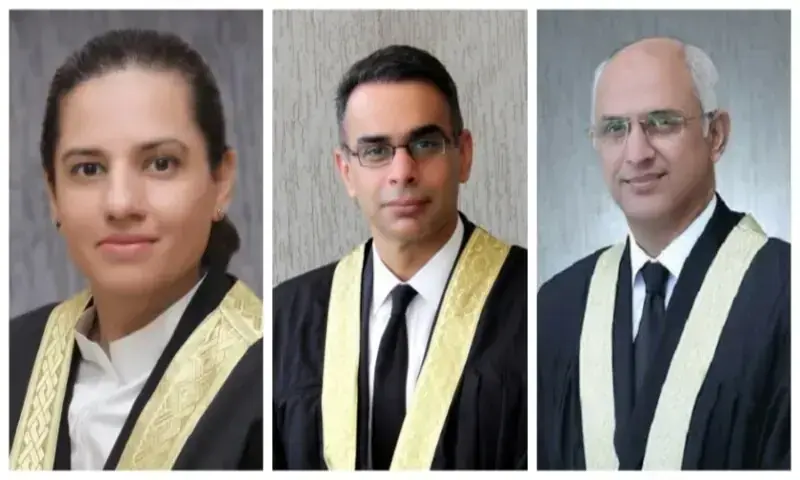
At that meeting, three IHC judges — Justice Mohsin Akhtar Kayani, Justice Babar Sattar and Justice Saman Rafat Imtiaz — were transferred to the Lahore, Peshawar and Sindh high courts, respectively, as part of a wider judicial reshuffle.
Sources said the government had proposed convening the next JCP meeting only after the revised rules were completed in light of the 26th and 27th Amendments, which significantly changed the composition and functioning of the commission.
Comments
No comments yet. Be the first to join the discussion!