June 13, 2026
Iran says signing of Islamabad memorandum will not take place on Sunday
Iran’s foreign ministry says the Islamabad memorandum signing will not take place on Sunday, though it may occur in coming days. Talks toward a Pakistan-brokered MoU and ceasefire framework continue.

TEHRAN: The exact timing of the signing of the Islamabad memorandum will not be on Sunday, Iran's Foreign Ministry spokesperson Esmaeil Baghaei said, according to state media on Saturday.
Baghaei said the possibility of signing the Islamabad memorandum in the coming days could not be ruled out, but added that caution was needed regarding any comment on the signing date due to the hesitation of the other side.
Earlier, Prime Minister Shehbaz Sharif said the United States and Iran have agreed on a framework for a peace deal after more than three months of war and are expected to sign the initial deal in the next 24 hours.
"With finalisation likely expected in the next 24 hours, Pakistan is preparing for the electronic signing of the peace deal immediately after, followed by technical-level talks next week."
Shehbaz further stated that he thanks the US and Iran for their "ongoing commitment during the negotiations", and extends his "sincere appreciation to our brothers in the region for their support."
"We are confident that this historic peace deal will form a strong foundation for lasting peace."
Iran, US close to finalising Pakistan-brokered MoU: Araghchi
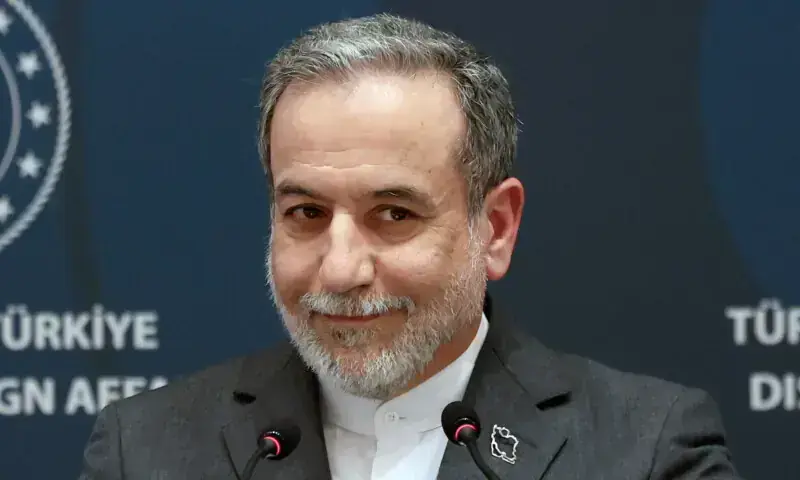
Iranian Foreign Minister Abbas Araghchi has said during an interview with Iran's State TV, Tehran and Washington are on the verge of finalising a memorandum of understanding (MoU) aimed at formalising the ceasefire that ended the recent conflict between Iran, the United States and Israel.
According to IRNA, Araghchi described the proposed agreement as the outcome of two months of negotiations facilitated by Pakistan, which brokered the April 8 ceasefire and has continued to mediate efforts to secure a lasting settlement.
Both Iran and the United States have indicated in recent weeks that discussions are nearing completion. The proposed framework follows the conflict that erupted in late February and was halted after Islamabad helped secure a ceasefire between the parties.
Araghchi said the Iranian Foreign Ministry had pursued the negotiations to consolidate what he described as the Iranian people's victory during the war.
“One of the missions entrusted to the Foreign Ministry was to follow a negotiating track that would preserve and consolidate the achievements of the Iranian nation,” he said, adding that the diplomatic effort had been carried out in full coordination with the country's armed forces.
The foreign minister stressed that Iran's diplomatic and military institutions had worked in tandem throughout the process.
There is something beyond simple unity between the Foreign Ministry and the Armed Forces. We are moving on the same path toward the same objective, each operating from a different trench, he said.
According to Araghchi, negotiations have now reached their final phase, producing a 14-point memorandum of understanding that has been referenced in media reports. While declining to disclose specific provisions, he said the text remains subject to final amendments and would only be made public once formally concluded.
“This process has now reached its final stages, resulting in a 14-point memorandum of understanding that has been mentioned in the media. The details of the memorandum will not be disclosed until it is finalised, as changes may still be made up until the very last moment. Once finalised, the details will be explained to the public,” he said.
Araghchi revealed that the proposed framework has been repeatedly reviewed by Iran's Supreme National Security Council and other relevant decision-making bodies.
He said the Pakistan-brokered document envisages an end to hostilities across multiple theatres, including Lebanon, where Israel would withdraw from territories occupied during the conflict.
“The war will come to an end on all fronts, including in Lebanon, and there will be a commitment not to initiate any new war or resort to threats or the use of force. In the text of the possible MoU, both sides will respect each other’s sovereignty. I believe this would mark the first time in 47 years that the United States explicitly recognises and respects the sovereignty of the Islamic Republic of Iran, and states and documents it in writing,” he said.
Araghchi said the agreement would be digitally signed by both governments once finalised.
We are closer than ever to that point. It may happen within a day or two, or in the coming days, he said, according to IRNA.
He added that once the MoU is signed, Tehran and Washington would launch negotiations on a comprehensive agreement covering Iran's nuclear programme and the removal of US sanctions.
According to Araghchi, those talks would initially be scheduled for 60 days, with the possibility of an extension if progress is made.
The Iranian foreign minister argued that successful diplomacy requires both parties to achieve a degree of satisfaction, rejecting the notion that negotiations can produce absolute winners and losers.
“There is no agreement or deal in which one side is one hundred percent successful while the other gains nothing. This is a basic principle of diplomacy. When you choose the path of negotiation and dialogue, the satisfaction of both parties is of vital importance," he said.
“If threats and pressure were effective, Iran would have backed down long ago. Our clear message to the other side is that threats are counterproductive. If you seek an understanding, change your language. But if you choose the path of threats, pressure, or war, Iran is ready and capable of responding,” he emphasised.
Details about Islamabad MoU
According to a translation by Drop Site News, Araghchi told Iranian State TV that the emerging memorandum of understanding (MoU) between Iran and the United States is a roughly 1.5- to 2-page document comprising 14 points. He said the text has been negotiated for more than two months and reviewed line by line by Iran's Supreme National Security Council including the country's military leadership.
Araghchi said the first stage of the agreement would include a formal end to the war on all fronts, including Lebanon, alongside a commitment from both sides that neither would initiate a new war or resort to threats and the use of force. According to Drop Site News, the initial phase would also provide for the lifting of the US naval blockade and establish a framework for the release of Iran's frozen assets.
The Iranian foreign minister said the Strait of Hormuz is addressed in the memorandum, noting that Iran's future management of the strategic waterway “will be different from the past” and that services there “will no longer be free.” He explained that arrangements governing the 60-day interim period would be settled through the MoU itself, while additional details could be finalised during subsequent negotiations.
Araghchi added that sanctions relief and reconstruction are included as part of a broader reconstruction and economic development plan. However, he said the specific mechanisms governing those issues would be worked out during follow-on talks.
According to Drop Site News, the second stage of the process would consist of 60 days of negotiations to reach a final agreement, with the possibility of an extension if both sides consent. Araghchi said those talks would seek to resolve the nuclear file, including questions surrounding uranium enrichment and Iran's stockpile of 60% enriched uranium.
He said the negotiations would also address wider issues referenced in the memorandum, including sanctions relief, the reconstruction and economic development plan, arrangements related to the Strait of Hormuz and other technical matters.
On the issue of Hormuz, Araghchi said Iran and Oman, as the two sovereign states bordering the strait, would continue to oversee its security and administration. He suggested that services historically provided free of charge—including maritime security and safe passage, the designation and maintenance of shipping lanes, environmental protection and search-and-rescue operations—could, under a future framework, be subject to fees.
Araghchi said Iran has maintained close consultations with Oman, which he described as its principal partner on matters related to the strait, and that the two countries have achieved “good results.” He added that joint plans and a joint statement would be announced in the near future.
According to Drop Site News, the foreign minister also disclosed that Iran has conducted expert-level consultations with other stakeholder nations, including China. He noted that roughly 40% of shipping traffic through the Strait of Hormuz is linked to China because of its economic interests in the region.
Araghchi said the memorandum would be signed remotely in a “digital” format, with each side signing separately before a joint announcement is made. He added that the agreement could be finalised “within the next day or two, or within the next several days.”
0 Comments
No comments yet. Be the first to join the discussion!