Bilawal calls for GB rights equal to provinces
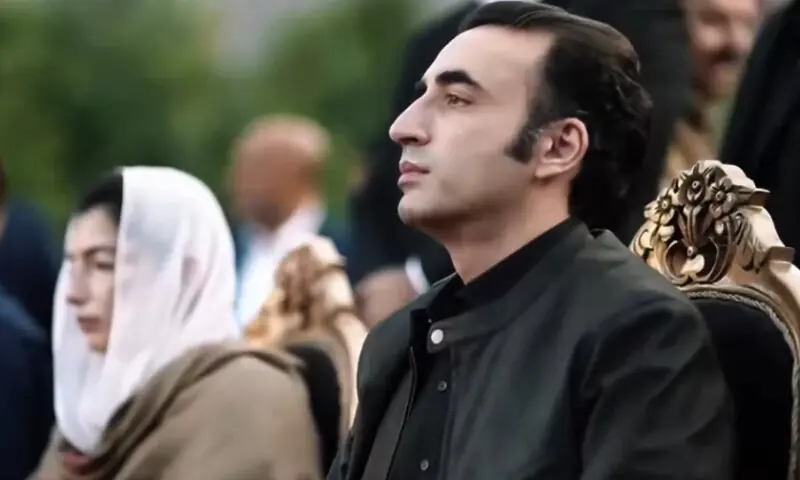
Bilawal Bhutto Zardari says Gilgit-Baltistan should receive the same constitutional protections and powers as the provinces under the 18th Amendment. Speaking in Skardu and Gilgit, he also outlined the PPP’s positions on development, energy, welfare and public services.

ISLAMABAD: Pakistan Peoples Party (PPP) Chairman Bilawal Bhutto Zardari has said Gilgit-Baltistan should receive the same constitutional safeguards, authority and public facilities available to the provinces under the 18th Amendment, saying that only such an arrangement would give the region’s people real control over their resources and future.
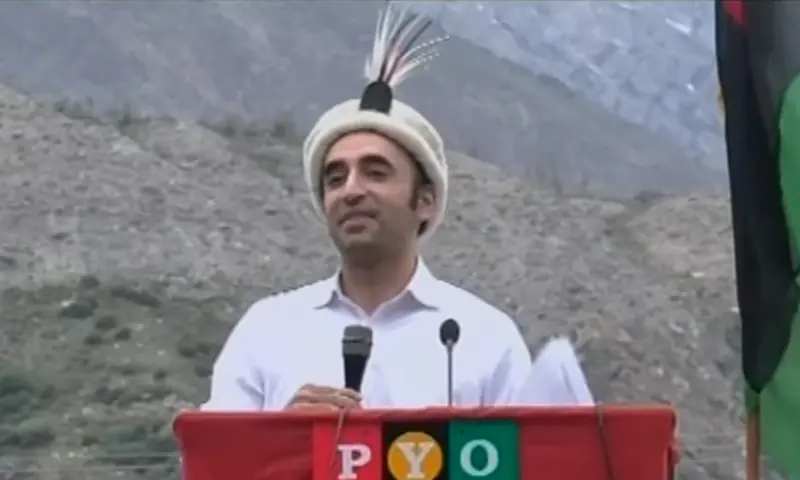
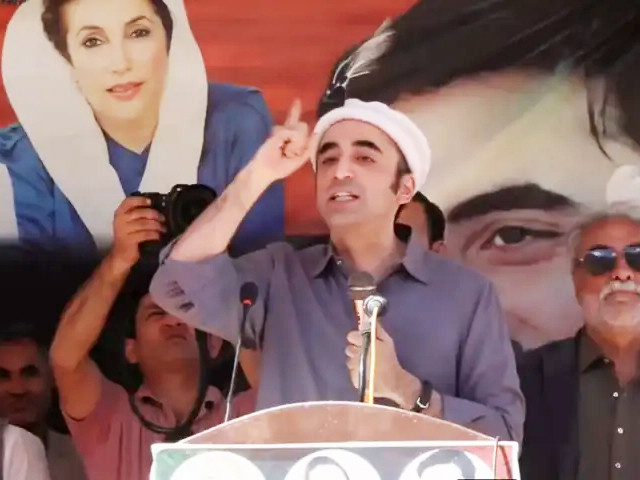
Addressing election rallies in Skardu and Gilgit ahead of the Gilgit-Baltistan general elections on June 7, Bilawal said the PPP’s younger leadership would continue what he described as a struggle for the region’s right to self-governance, ownership of resources and employment for its youth. He linked the party’s approach to its founding slogan of Roti, Kapra Aur Makaan and said its implementation depended on three core principles: governance rights, ownership rights and employment rights.
Speaking about the party’s manifesto, he said: "If we have to implement the manifesto in its true sense, we will have to work on these principles."
Bilawal argued that progress in Gilgit-Baltistan had been limited by over-centralised decision-making, with key choices historically made in Islamabad without effective local ownership. He said development schemes in the region should ensure participation by local communities and that residents should directly benefit from such projects.
Development, energy and welfare agenda
Referring to Sindh as an example, Bilawal said people in Thar had received electricity, employment and even equity stakes in coal projects, although many chose monetary compensation instead. He said the benefits of Thar Coal reached the whole country, but local communities were given priority first.
He also cited Sindh’s post-flood housing programme, describing it as among the largest globally, and said 2 million permanent houses were being built and registered in the names of women for long-term protection.
On energy, Bilawal said Gilgit-Baltistan possessed major untapped hydropower capacity and referred to past estimates that put potential generation at up to 50,000 megawatts. He criticised what he said were lower estimates in recent years and added that delays in exploiting that potential had held back the region’s development.
He said the PPP planned to expand electricity production through public-private partnerships and improve healthcare facilities in the area, including hospitals providing free treatment.
Campaign, BISP and wider policy remarks
On the political campaign, Bilawal said he had personally visited every tehsil of Gilgit-Baltistan and claimed that no other politician had carried out comparable outreach. He also contrasted the current election atmosphere with earlier contests, saying previous polls were held in a festive environment whereas the present campaign was taking place amid grief.
Bilawal said the PPP would continue to back the Benazir Income Support Programme (BISP), which he described as the only federal scheme reaching households at the grassroots level. He said attempts to weaken the programme would not succeed and added that the party would seek higher allocations for it in the upcoming budget.
He said BISP had drawn international attention and added: "From Egypt to Brazil and across Africa, there is a desire to launch programmes like BISP to support poor families."
Without naming opponents, Bilawal criticised political calls to end welfare programmes for lower-income groups, saying some forces were more focused on removing support for the poor than on dealing with subsidies benefiting the wealthy.
On defence and foreign policy, he said Pakistan did not permit foreign military bases during the PPP’s tenure and contrasted that period with earlier phases in the country’s history. He credited Zulfikar Ali Bhutto with starting Pakistan’s nuclear programme and Benazir Bhutto with advancing its missile capability.
Bilawal said Pakistan needed strength in both economic and defence terms, while criticising what he described as growing inequality in economic policy.
"What kind of system is it where the rich become richer and the poor become poorer," he said,
He also referred to conflicts in Iran, Palestine, Lebanon and Syria, saying they had caused suffering for civilians, including children, while also carrying economic consequences worldwide. He said he prayed for the success of peace efforts being led by Army Chief Field Marshal Asim Munir and stressed that stability was necessary for development. Calling for restraint in international conflicts, he said Pakistan had consistently opposed war and supported peace initiatives.
Wrapping up his campaign appeal, Bilawal urged voters to support the PPP in the June 7 election, saying the party would work to secure ownership rights, development and better public services across Gilgit-Baltistan.
Comments
No comments yet. Be the first to join the discussion!