Bilawal calls for constitutional protection of GB rights ahead of June 7 polls
Bilawal Bhutto Zardari urges constitutional safeguards for Gilgit-Baltistan’s political, economic and administrative rights ahead of the June 7 elections, backing synchronized polls and local control of resources.

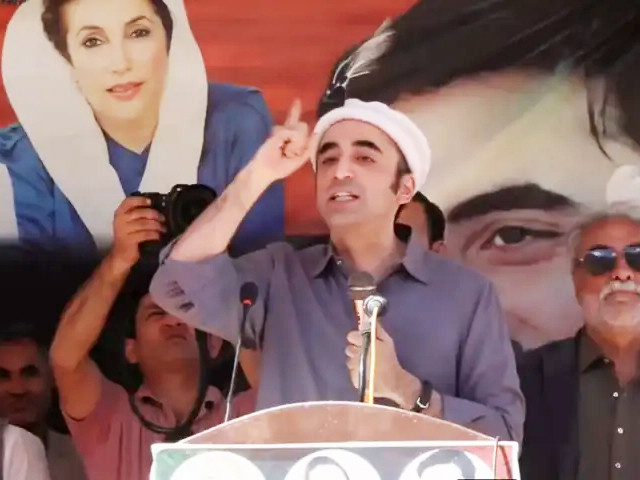
SHIGAR: Pakistan Peoples Party (PPP) Chairman Bilawal Bhutto Zardari on Monday called for constitutional safeguards for the rights of Gilgit-Baltistan (GB), asserting that any future constitutional amendment must ensure protection of the region’s political, economic and administrative interests.
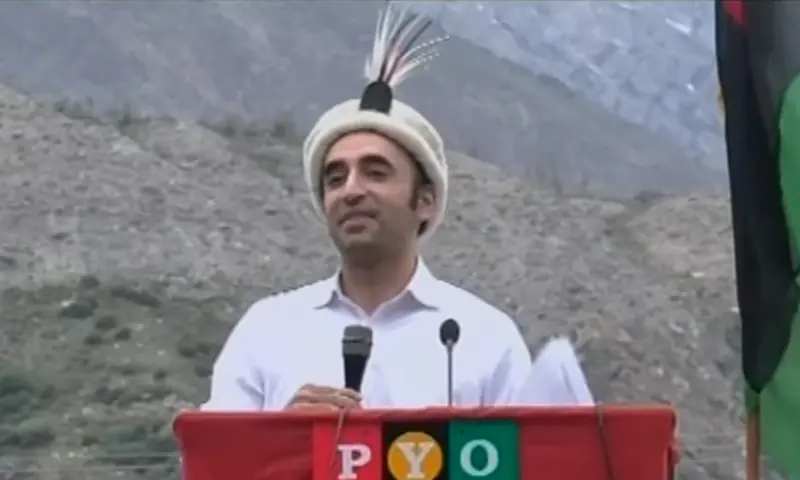
Addressing a large public gathering in Shigar ahead of the June 7 Gilgit-Baltistan elections, Bilawal said the people of the region deserved the same constitutional rights and opportunities enjoyed by citizens in other parts of Pakistan.
“If any constitutional amendment is introduced in the future, it is essential that the rights of Gilgit-Baltistan are fully protected,” he said, adding that the struggle for the region’s right of self-governance must continue until meaningful constitutional progress is achieved.
The PPP chairman emphasized that one of the most effective ways to advance Gilgit-Baltistan’s political rights would be to hold elections in the region simultaneously with general elections across Pakistan.
“When elections in Gilgit-Baltistan and the rest of Pakistan are conducted on the same day, the struggle for the right of rule and representation will move forward in a meaningful manner,” he stated. “If we genuinely want to strengthen the constitutional position of Gilgit-Baltistan, then synchronizing elections should be among our foremost objectives.”
Bilawal reiterated his party’s commitment to extending the spirit of the 18th Constitutional Amendment to Gilgit-Baltistan, ensuring that the region receives the same rights, resources and administrative authority available to other federating units.
Speaking about what he described as the “right to ownership” (Haq-i-Malkiyat), Bilawal criticized centralized decision-making and argued that local communities should have greater control over their natural resources and development priorities.
“The difference between the PPP and other political forces is that others want everything to be controlled from Islamabad,” he said. “They want to manage Gwadar from Islamabad, Karachi from Islamabad, and they also want decisions regarding Gilgit-Baltistan to be made from Islamabad.”
Addressing residents of the mountainous region, he noted that the people of Gilgit-Baltistan had long experienced the consequences of decisions being made far from their communities.
“You have witnessed what happens when your future is decided elsewhere,” he said. “The people of Gilgit-Baltistan should have the authority to make decisions regarding their own affairs.”
The PPP chairman also questioned the continued existence of the Ministry of Kashmir Affairs and Gilgit-Baltistan, arguing that resources allocated to the ministry could be better utilized by empowering local governments and assemblies.
“What is the benefit of maintaining a separate ministry for Kashmir Affairs and Gilgit-Baltistan?” he asked. “If the federal government claims it lacks resources, then the first step should be to abolish this ministry and transfer political, financial and administrative powers directly to the elected assemblies in Gilgit and Muzaffarabad.”
Bilawal further stressed that the natural wealth of Gilgit-Baltistan belongs to its people and should be utilized for their development and prosperity.
“Some political forces view your mountains, minerals and natural resources as their property,” he said. “But these resources belong to the people of Gilgit-Baltistan and should be used for their welfare.”
He argued that granting greater control over local resources would not only benefit the people of Gilgit-Baltistan but would also contribute to broader national economic growth.
The PPP chairman also highlighted employment opportunities as a key component of his party’s vision for the region. He said empowering local communities and granting them greater ownership rights would create jobs for the youth and encourage investment and development.
“It is our responsibility to provide employment opportunities to the young people of Gilgit-Baltistan,” he said. “When local communities are empowered and their rights are protected, economic opportunities will expand not only for the youth of this region but for people across Pakistan.”
Describing the PPP manifesto for Gilgit-Baltistan as a charter of rights, Bilawal said the party’s primary objective was to secure constitutional, political and economic rights for the people of the region.
In a lighter moment during his speech, he urged supporters to vote for PPP candidates and ensure proper documentation of election results.
“You make arrangements for Form-45, and I will make arrangements for Form-47,” he remarked, drawing applause from the audience.
He later clarified that the PPP sought only transparent and fair elections and had never relied on political favoritism or behind-the-scenes arrangements.
“The PPP has always demanded free and fair elections,” he said. “We have never asked anyone to select us or engineer outcomes in our favour. Our only demand is neutrality and a level playing field for all political parties.”
Bilawal also warned that ongoing regional tensions, particularly the US-Israel conflict with Iran, could have economic consequences for Pakistan and the wider region. He urged voters to elect representatives who would stand with ordinary citizens during difficult economic times.
“If the financial crisis deepens, who will represent the interests of the poor, workers, farmers and youth?” he asked. “I believe the PPP remains the strongest voice for these segments of society.”
Highlighting the role of the Benazir Income Support Programme (BISP), Bilawal defended the flagship social protection initiative and opposed suggestions that it should be devolved to provincial governments.
He argued that the programme enables the federal government to provide direct assistance to vulnerable communities, including those living in remote and underdeveloped areas.
“If BISP is devolved to the provinces, what will happen to regions like Gilgit-Baltistan?” he questioned. “Does Gilgit-Baltistan possess the financial resources to operate such a programme independently? Weakening BISP would effectively mean ending a lifeline for millions of deserving families.”
Reaffirming the PPP’s commitment to protecting social welfare programmes, Bilawal vowed to resist any attempt to curtail or dismantle BISP and urged voters to reject what he described as efforts to undermine support for low-income households.
Concluding his address, the PPP chairman called upon the people of Gilgit-Baltistan to participate actively in the upcoming elections and support candidates committed to securing greater rights, representation and development opportunities for the region.
Comments
No comments yet. Be the first to join the discussion!