El Niño likely during 2026 monsoon season in South Asia, says PMD
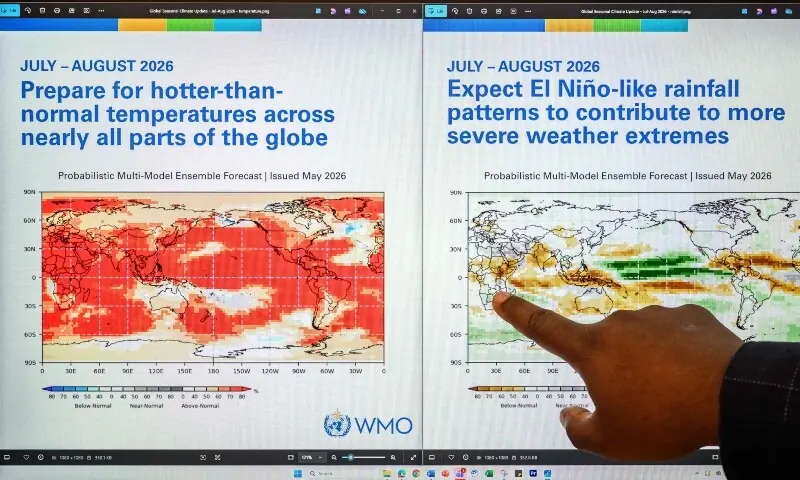
The PMD says El Niño conditions are likely to develop during the 2026 monsoon season in South Asia, with below-normal rainfall expected in most areas and above-normal temperatures across much of the region.

ISLAMABAD: South Asia is bracing for a significant climatic shift as meteorologists warn of a developing El Niño pattern that threatens to disrupt the 2026 monsoon and drive regional temperatures to unprecedented highs.
According to a formal consensus issued Friday by the Pakistan Meteorological Department (PMD) following the 34th South Asian Climate Outlook Forum (SASCOF-34) in Malé, the equatorial Pacific is currently transitioning from neutral conditions toward a full El Niño phase. This naturally occurring phenomenon, characterized by the warming of surface waters in the central and eastern Pacific, is notorious for altering global wind and rainfall patterns.
Heat and Rain Scarcity
The outlook for the upcoming southwest monsoon season—running from June through September—paints a concerning picture for the subcontinent’s agricultural and water security. PMD spokesperson Anjum Nazir Zaighum confirmed that most of South Asia, particularly its central heartland, is "most likely" to see below-normal rainfall.
While a few pockets in the northwest, northeast, and southern regions may receive normal precipitation, the overarching trend points toward a drier and significantly hotter season. Experts noted that both minimum and maximum temperatures are expected to remain above normal across the vast majority of the region.
The Rise of a 'Super El Niño'
The stakes for this transition are particularly high following the record-breaking heat of recent years. El Niño previously fueled the surge that made 2023 the second-hottest year on record and 2024 the hottest ever documented.
PMD officials warned that the current trajectory could lead to the formation of a "Super El Niño" by late August. Should this intensification occur, the suppression of the summer monsoon will likely be more severe, potentially positioning 2027 to break all previous global temperature records.
Scientific Consensus and Uncertainty
The forum, which included representatives from the World Meteorological Organization (WMO) and national weather services from nine South Asian nations, also identified the emergence of a "positive Indian Ocean Dipole (IOD)" later in the season. A positive IOD can sometimes mitigate El Niño’s effects, but its timing remains a critical variable.
Despite the "strong consensus" among global models, the PMD’s statement included a note of scientific caution. Predictions made during the spring season typically carry a "noticeable uncertainty," as intra-seasonal features and Northern Hemisphere snow cover continue to influence the final performance of the monsoon.
As the region prepares for what could be a historic heat cycle, climate agencies are maintaining close surveillance on the Pacific’s warming trend, which now dictates the immediate future of South Asia’s climate.
Comments
No comments yet. Be the first to join the discussion!