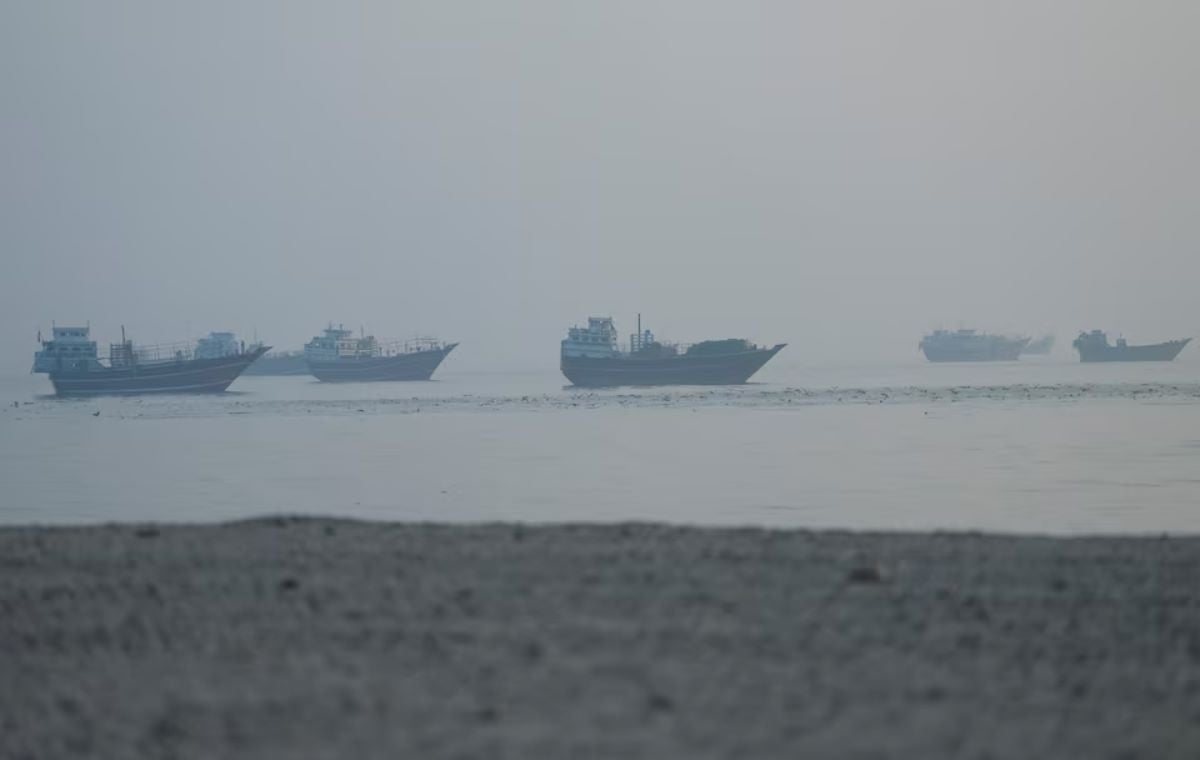
Strait of Hormuz reopens for commercial shipping amid US-Iran ceasefire breakthrough
Iran says the Strait of Hormuz is reopening for all commercial shipping under a US-brokered ceasefire, while the US keeps a blockade posture until a final deal. Oil prices fall as de-escalation signals grow.

-- Iran announces reopening of strategic waterway for commercial vessels
-- Trump claims progress toward near-final US-Iran agreement
-- Oil markets tumble sharply after de-escalation signals
-- Pakistan-linked diplomacy cited in backchannel negotiations
TEHRAN: The Iranian Foreign Minister Abbas Araghchi on Friday announced the reopening of the Strait of Hormuz for all commercial shipping for the remaining period of a US-brokered ceasefire between Israel and Hezbollah, describing the move as part of coordinated de-escalation efforts linked to the truce between Israel and Lebanon.
In a post on X, Araghchi said commercial vessels would be allowed passage through the strait under a coordinated maritime route already announced by Iran’s Ports and Maritime Organisation. He added that the move was consistent with the ceasefire arrangement and aimed at ensuring safe passage during the truce period.
US President Donald Trump also confirmed the development in a post on Truth Social, saying the strait was “fully open and ready for full passage.” However, in subsequent remarks, he said the US Navy’s blockade posture would remain in place until a final agreement with Iran was reached, though he indicated most negotiation points had already been settled.
Trump later claimed Iran was cooperating in de-escalation measures, including removing or clearing sea mines from the strait, and said Tehran had agreed not to close the waterway again or use it as a geopolitical tool. He described the developments as a “great and brilliant day for the world,” while again thanking Prime Minister Shehbaz Sharif and Field Marshal Asim Munir for their reported roles in facilitating negotiations.
Despite the announcements, a senior Iranian official told Reuters that commercial shipping would still need coordination with Iran’s Revolutionary Guards and that transit would be restricted to safe lanes designated by Tehran, while military vessels remained barred from crossing.
The announcement triggered a sharp reaction in global energy markets, with oil prices falling more than 11 percent amid easing fears of disruption. Brent crude and US West Texas Intermediate both recorded steep declines as investors reacted to signs of de-escalation in the Gulf.
A Pakistani official involved in backchannel mediation said progress had been made in indirect US-Iran talks, with discussions potentially leading to a memorandum of understanding followed by a broader agreement within 60 days. The official said both sides had reached broad agreement in principle, with technical details still under negotiation.
Reports also indicated that a key element of the emerging deal includes the possible unfreezing of Iranian assets and compromise arrangements over Tehran’s enriched uranium stockpile, though differences remain over the scale and timing of any transfers.
Trump reiterated that Washington’s primary objective was to secure Iran’s nuclear materials, while Iranian state media denied any agreement on transferring highly enriched uranium, saying such claims were unfounded.
The developments come after weeks of escalating regional conflict involving the US, Israel, Iran, and Hezbollah, which had disrupted shipping routes and raised fears of a wider regional war. Pakistan has been repeatedly cited in reports as playing a facilitative role alongside other regional actors in encouraging dialogue and supporting ceasefire efforts, though earlier rounds of talks reportedly failed to produce a breakthrough.
Despite lingering uncertainties, the reopening of the Strait of Hormuz marks a significant easing of tensions in one of the world’s most critical maritime chokepoints, with further negotiations expected in the coming days.

The writer is Head of News at Pakistan Today. He has a special focus on current affairs, regional and global connectivity, and counterterrorism. He tweets as @mian_abrar and also can be reached at [email protected]
View all articles →Comments
No comments yet. Be the first to join the discussion!