June 20, 2026
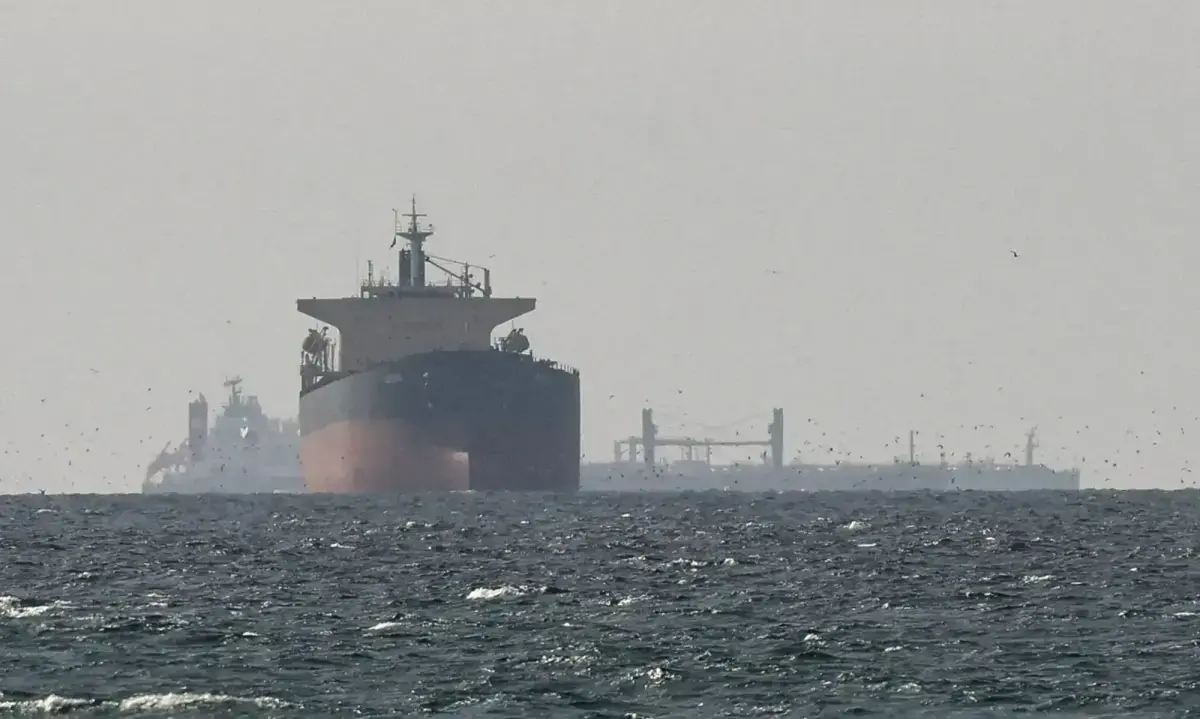
Iran closes Strait of Hormuz over ceasefire violations
Iran’s top military command orders the Strait of Hormuz closed to vessel traffic, calling alleged ceasefire violations by the US and Israel. US and Iranian envoys head to Switzerland as strikes disrupt the Lebanon ceasefire.

TEHRAN: Iran's top joint military command, Khatam al-Anbiya Central Headquarters, said on Saturday that the Strait of Hormuz would be closed to vessel traffic, citing alleged violations of a ceasefire agreement by the United States and Israel, Iran's Mehr state news agency reported.
It said that the closure was the "first step" in response to what it described as breaches of commitments and warned that further measures would be taken if "aggression" continued.
US, Iranian envoys head for talks as Israeli strikes violate ceasefire
United States President Donald Trump's personal envoy and Iran's foreign minister were headed to Switzerland for talks, Axios said, although deadly strikes by Israel in Lebanon on Saturday put the deal into question.
The talks, led by Steve Witkoff and Abbas Araghchi, mark an effort to turn this week's interim 14-point pact into a lasting regional deal to end the war that the US and Israel launched on February 28.
But just hours after a ceasefire took effect in Lebanon between Israel and Hezbollah, Israeli air strikes and drone attacks killed at least five people in the south on Saturday, Lebanese state media said.
A halt to the fighting in Lebanon is a condition for starting 60 days of US-Iranian talks to resolve disputes over Iran’s nuclear program and other thorny issues needed to forge a more durable deal critical to reopening the Strait of Hormuz and stabilising global oil supplies.
Witkoff-Araghchi talks arranged after Vance pulls out
The Lebanon ceasefire took effect around 4pm (1800 PKT) on Friday in Lebanon after an exchange of fire, a senior US official said. Two sources from Hezbollah and a senior Israeli official confirmed the ceasefire.
But Israeli warplanes and drones launched a series of strikes across the Nabatieh area overnight and into Saturday morning, destroying residential buildings, while Israeli artillery shelled Nabatieh and its outskirts before dawn, Lebanese state news agency NNA said.
Israel did not immediately comment on the NNA report.
Witkoff is heading to Switzerland to join Jared Kushner, Trump’s son-in-law, who is already there, while Araghchi would travel there on Saturday, Axios said. The White House did not respond to questions about Witkoff's travel. Iran has not confirmed Araghchi's plans.
Vice President JD Vance cancelled plans on Thursday to travel to the Swiss mountaintop resort of Buergenstock as preparations for technical talks were well advanced, amid rising tension between Israel and Hezbollah.
Switzerland stood ready to facilitate the US-Iran talks and preparatory work continued, the Swiss foreign ministry said.
Wednesday's interim deal requires the US, Iran and their allies to declare an immediate and permanent termination of military operations on all fronts, including in Lebanon.
Israel says it is not a party to the deal.
Israel dissatisfied with Iran deal and may seek further action: Russian Security Council deputy chair
Russian Security Council Deputy Chairman Dmitry Medvedev on Saturday warned that Israel has been dissatisfied with the US-Iran deal and may seek further action.
Iran had emerged from the conflict without suffering a loss despite the killing of the country's leader and missile strikes against its territory, Medvedev argued in a post on the Russian social media platform Max.
"The third party, Israel, is left aggrieved in its expectations of the complete defeat of Iran's political regime, which means it will seek revenge. And no Trump can order it otherwise," he said. The official added that the Strait of Hormuz would continue to play a significant role in global security and energy markets.
"This fragile agreement is easily blown apart by new strikes on Lebanon or other provocations. And that is precisely what Netanyahu's Cabinet, which clings to power through war, needs.
"So, it would be reckless to expect peace, and the Strait of Hormuz has truly turned into a Persian nuke, as I wrote back on April 8," he said.
Turning to the conflict in Ukraine, Medvedev said Russia should abandon remaining constraints in its approach toward Kyiv in response to increasing Ukrainian attacks on Russian cities.
"Only one thing should remain beyond the acceptable for us: the deliberate killing of civilians. I emphasise -- deliberate, or knowingly intentional. Everything else is entirely permissible," he said.
Medvedev also questioned the relevance of existing international conventions governing warfare, saying armed conflicts had changed significantly since such agreements were drafted.
In the same statement, he criticised reported discussions in the Netherlands about the possible establishment of camps for Russian prisoners of war. He rejected the idea and made a series of remarks about European countries and the potential consequences of a direct conflict between Russia and NATO members.
"Russia, unlike the decrepit old hag of Europe that has fallen into neo-Nazism, will not create concentration camps for Europeans. And not because it would be immoral, but simply because in the event of war with some snot-nosed Dutchmen, they simply would not be needed. Radioactive bones and ashes are usually buried deep in the ground," he said.
Medvedev, a former Russian president, has frequently issued strongly worded statements on foreign policy and security issues since the start of the conflict in Ukraine.
Lebanon key to a lasting deal
Araghchi, in a telephone call with his FM Ishaq Dar on Friday, said the US would be responsible for any violation of its commitments under the deal, including ending the fighting in Lebanon, his ministry said.
Hezbollah opened fire at Israel on March 2 in retaliation for consistent encroachment and strikes on Lebanese territory, prompting Israel to launch an offensive against the group and invade the south of the country. Lebanese President Joseph Aoun condemned the latest Israeli attacks but said the escalation would not hinder efforts to reach a comprehensive ceasefire.
The US State Department said Secretary of State Marco Rubio spoke to Aoun and reiterated the need to disarm Hezbollah, while reaffirming US support for a "fully sovereign" Lebanese state.
It said they also discussed holding a next round of Israel-Lebanon negotiations in Washington from June 23 to June 25. The Lebanese presidency said a comprehensive ceasefire was a fundamental pillar for these talks.
The Iran war has killed at least 7,000 people, mostly in Iran and Lebanon. It has pushed up energy prices, stoking inflation worldwide. Brent crude fell about 8% this week, and oil shipments through the Strait of Hormuz picked up after the signing of the interim deal.
The strait carried nearly a fifth of global crude oil and liquefied natural gas supplies before Iran blockaded it during the war. The body Iran set up to manage the strait said on Friday it would waive planned fees during the interim deal's negotiation period.
The interim deal foresees relief for Iran from economic sanctions, the unfreezing of assets worth tens of billions of dollars and immediate US waivers for its exports of oil.
It also provides for a $300-billion reconstruction fund for Iran and other financial incentives.
Trump again defended the deal after criticism in Washington, including some from Republican allies in Congress who question whether he conceded too much to end a war unpopular with most Americans ahead of midterm elections in November.
"The War has diminished Iran!" Trump wrote on social media on Friday, adding, "We didn’t meet out of desperation; Iran did. They are FINISHED! We’ll play out the 60 days. They get no money, not 10 cents!"
Rubio to visit Gulf with stops in Bahrain, UAE, Kuwait
US Secretary of State Marco Rubio is planning a trip to Gulf countries next week, with stops in Kuwait, the United Arab Emirates and Bahrain, according to media reports Friday.
Axios reported the planned itinerary, though a State Department official told Anadolu that the agency has "no travel announcements to make at this time."
The visit would mark one of the highest-level US engagements with Gulf states since Washington and Tehran signed a memorandum of understanding earlier this week, launching a 60-day negotiating process aimed at ending the four-month war that was initiated by the US and Israel against Iran.
0 Comments
No comments yet. Be the first to join the discussion!