Islamabad talks
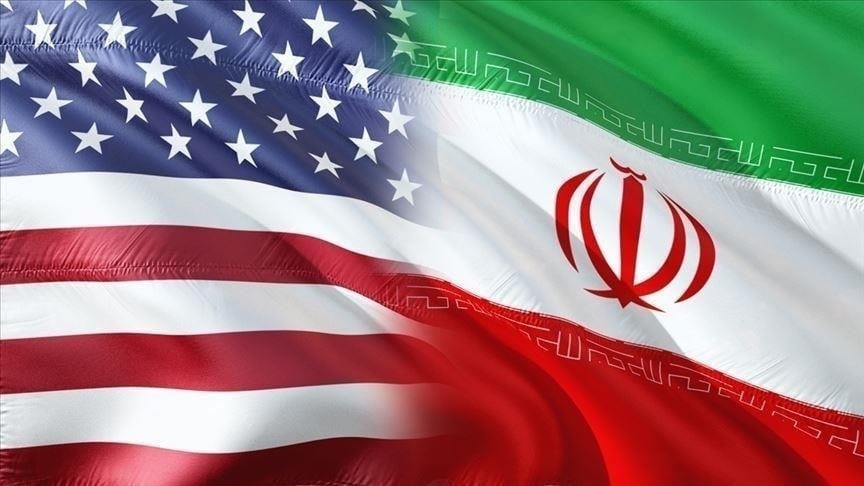
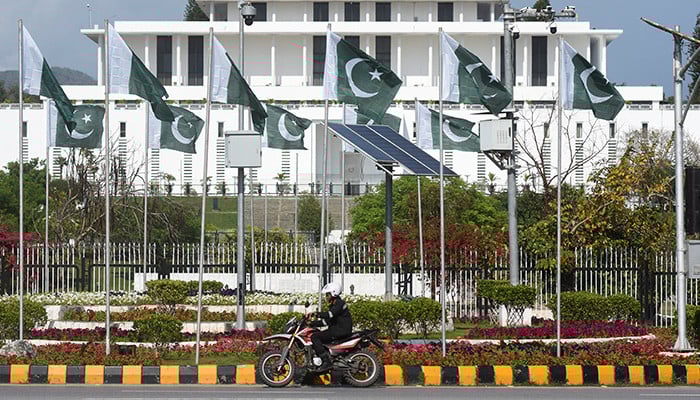
US and Iran begin talks in Islamabad to convert a 14-day truce into a permanent ceasefire. Mediator Pakistan faces risks as attacks on Lebanon test whether the ceasefire holds.

The conversion of the temporary peace into a permanent depends on these talks
The 14-day truce has been followed swiftly by the holding of talks between the USA and Iran in Islamabad, to be led by Vice-President J.D. Vance for the USA and Foreign Minister Abbas Araghchi and Speaker Bagher Kalibaf for Iran. These talks should have been held earlier, and led to a truce, but the immense gap between the two sides kept them apart. The main focus is on whether these talks can convert the r14-day ceasefire into a permanent one. The first task of the negotiators will be to ensure that the current ceasefire holds. The initial signs are disturbing, as Israeli planes continued to attack Lebanon. This is not the result of any misunderstanding; it was specifically stated by US President Donald Trump while announcing the ceasefire that it included Lebanon. While joining fully in the attack on Iran, Israel also attacked Lebanon, where it seems engaged in an effort to take over territory and even change the border. This is exactly how it observed the ceasefire with Hamas, which it interprets to mean that its forces can continue shooting while the ceasefire is said to continue. This is the sort of behaviour that Pakistan, as the leading mediator in these negotiations, must watch out for and try to prevent.
The distance between the two sides is so great that neither side can accept the other’s terms without national humiliation. This is more serious for Iran apparently, for it might face disaffection with the regime. The Trump Administration, on the other hand, faces a midterm, election in November. Initial Iranian statements indicate that it thinks it has won. The Iranian regime has indeed survived, but the USA has shown it is very strong. It will be up to Pakistani diplomats to ensure that Iran does bnot try to overplay its hand.
Pakistani should realize that its mediational role is indeed an acknowledgement of its place in the world, but it is also a poisoned chalice. If the negotiations result in an accord, the world will applaud Iran and the USA for drawing back from the brink. If there isn’t, Pakistan will share part of the blame. Even afterwards, if there is any problem in implementation, both the USA and Iran will blame Pakistan. At that point, Pakistan might feel it would have been better to follow the example of such powers as Turkey and Egypt.

The Editorial Department of Pakistan Today can be contacted at: [email protected].
View all articles →Comments
No comments yet. Be the first to join the discussion!