Pakistan pushes fragile US–Iran peace track as ceasefire holds amid blockade, delayed talks
Pakistan says it remains cautiously optimistic about US–Iran peace as a fragile ceasefire extension holds. But disputes over Iran’s maritime blockade and uncertain Tehran participation delay the next Islamabad talks.

-
Islamabad says it remains ‘cautiously optimistic’ on peace prospects
-
Trump extends ceasefire citing Pakistan’s mediation efforts
-
Iran refuses confirmation for second round of talks in Islamabad
-
US delegation postpones visit as diplomatic uncertainty deepens
-
Key dispute persists over Iran’s maritime blockade of ports
-
Tehran links ceasefire durability to lifting Strait of Hormuz restrictions
-
Reports suggest possible new talks window within 36–72 hours
-
Security tightened in Islamabad as Red Zone remains under lockdown
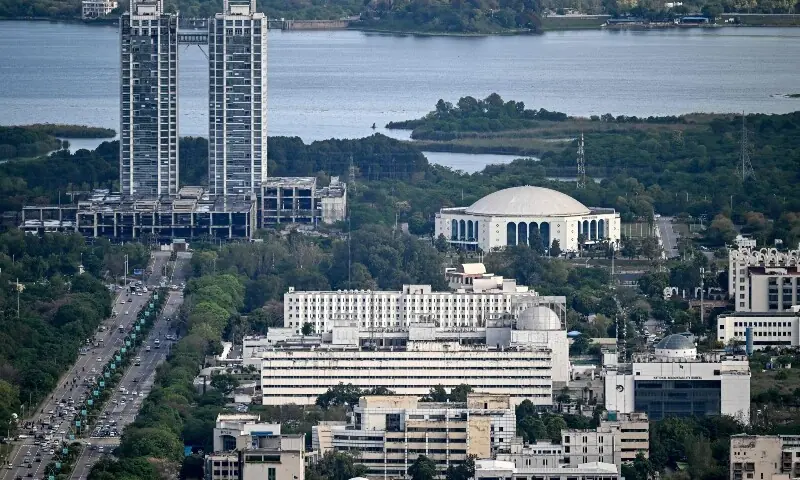
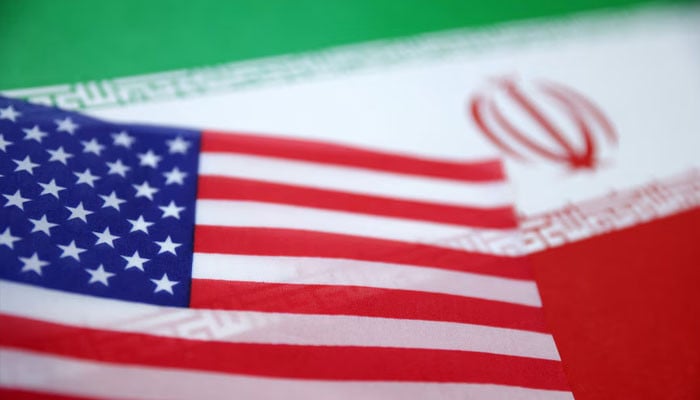
ISLAMABAD: Pakistan on Wednesday said it remains “cautiously optimistic” about prospects for peace between the United States and Iran, as diplomatic efforts continue amid a fragile ceasefire extension, unresolved disputes over Iran’s maritime blockade, and uncertainty over Tehran’s participation in the next round of negotiations in Islamabad.
The evolving diplomatic push comes as talks between Washington and Tehran remain in limbo, with Iran yet to confirm its participation in a second round of negotiations, while the United States has maintained its blockade of Iranian ports. The White House also confirmed that a US delegation expected in Islamabad for talks would not travel on Wednesday.
US President Donald Trump on Tuesday announced an extension of the ceasefire between the two sides, saying it was made on Pakistan’s insistence. However, despite the announcement, key sticking points remain unresolved, and both diplomatic momentum and mutual trust appear under strain.
Trump signals possible Friday talks amid shifting timelines
In a fresh development, Trump said the second round of peace talks in Islamabad could take place as soon as Friday, according to The New York Post. The remarks added to uncertainty surrounding the timeline of negotiations, which have repeatedly shifted in recent days.
A Pakistani official familiar with mediation efforts told Arab News that Islamabad remained hopeful of facilitating a breakthrough between the two sides, despite growing complexity.
“We remain cautiously optimistic for prospects of peace,” the official said, speaking on condition of anonymity as he was not authorised to speak publicly. “In coordination with our partners, Pakistan’s sincere, capable and tireless efforts at this critical moment reflect a strong national spirit and confidence, laying the foundation for a more secure and prosperous future for humanity.”
The official further stressed that Pakistan’s diplomatic intervention may have helped prevent further escalation. “Had the ceasefire not been secured last night through Pakistan’s intervention, tireless diplomacy and persistent efforts, the situation today could have been far worse,” he added.
However, sources involved in the process cautioned that there was still no confirmed timeframe for the next round of talks, saying “both sides are testing each other’s nerves.”
They added that the situation was proving “tougher than the first phase” of diplomacy that led to the initial Islamabad-brokered ceasefire, which brought both sides face-to-face on April 11 and 12. EXPLAINER: How US is blockading Iranian ports and the measure’s implications for Islamic republic’s economy
The US is using a naval blockade to pressure Iran into reaching a peace deal. It’s a huge blow to its economy and global oil supplies, as analysts warn it could threaten energy security in Asia.
Al Jazeera’s Julide Ayger explains how the measure is being implemented. pic.twitter.com/XB0BDOIYU1— Al Jazeera English (@AJEnglish) April 22, 2026
Iran raises blockade issue as key condition for ceasefire durability
Iran’s Parliament Speaker and chief negotiator Mohammad Bagher Ghalibaf said on Wednesday that a “complete ceasefire” would only be meaningful if the United States lifted its maritime blockade of the Strait of Hormuz.
In a post on X, he said: “A complete ceasefire only makes sense if it is not violated by the maritime blockade and the hostage-taking of the world’s economy, and if the Zionist warmongering across all fronts is halted; reopening the Strait of Hormuz is impossible with such a flagrant breach of the ceasefire.”
آتشبس کامل وقتی معنا دارد که با محاصره دریایی و گروگانگیری اقتصاد دنیا نقض نشود و جنگ افروزی صهیونیستها در همه جبههها متوقف باشد؛ بازگشایی تنگه هرمز با نقض فاحش آتشبس ممکن نیست.
با تجاوز نظامی به اهداف خود نرسیدند،با قلدری هم نخواهند رسید. تنها راه، پذیرش حقوق ملت ایران است.— محمدباقر قالیباف | MB Ghalibaf (@mb_ghalibaf) April 22, 2026
He added that “they did not achieve their goals through military aggression, nor will they through bullying,” stressing that “the only way forward is to recognise the rights of the Iranian nation.”
Pakistan intensifies backchannel diplomacy amid deadlock
Multiple Pakistani sources told Anadolu that Islamabad had intensified diplomatic efforts to secure a breakthrough and bring both sides back to the negotiating table.
According to one source, “renewed efforts are on to persuade Trump to end the blockade of Iranian ports,” which Tehran considers a core condition for resuming talks. The source added that Pakistan’s top leadership was directly engaged in the process.
However, officials acknowledged there was no clarity on timing. “No definitive timeframe can be given,” one source said. “Both sides are testing each other’s nerves.”
Diplomats involved in the process admitted the current phase was significantly more difficult than the earlier ceasefire effort. “The process to unfold the logjam is tougher than the first time when Islamabad brokered the ceasefire,” a source said.
A senior official, speaking anonymously, said Pakistan’s efforts reflected both urgency and restraint. “We remain cautiously optimistic,” he said, adding that diplomatic engagement continued “around the clock to bridge mistrust.”
US media reports possible 36–72 hour window for talks
The New York Post reported that “good news” regarding a second round of talks could emerge within 36 to 72 hours, citing US President Donald Trump and Pakistani sources.
The report said Islamabad’s mediation efforts with Tehran had created “positive momentum,” with Pakistan continuing diplomatic outreach after the ceasefire extension.
A source quoted by the outlet said there was “no military escalation from either side” and that Pakistan “remains the key mediator.”
Meanwhile, Axios reported that US officials remain concerned there may be no clear decision-making authority in Tehran to finalise any agreement, despite belief that a deal is still possible.
Experts urge caution as situation remains fluid
Former Pakistan ambassador to the United Nations Maleeha Lodhi said it was too early to predict failure or success, noting that neither side had withdrawn from dialogue.
“It’s too premature to speak of a possible failure of talks,” she said. “A rush to make a judgment about this and who is to blame makes little sense when the situation is so fluid.”
Pakistan’s diplomatic role deepens amid high-level engagement
Pakistan has continued sustained diplomatic engagement with both Washington and Tehran in an effort to stabilise the situation.
Prime Minister Shehbaz Sharif recently met Iranian Ambassador Reza Amiri Moghadam, reaffirming Pakistan’s commitment to a negotiated settlement. According to the PMO, both sides reviewed the regional situation following the ceasefire extension.
Amb. Reza Amiri Moghadam, Ambassador of the Islamic Republic of Iran, called on Prime Minister Muhammad Shehbaz Sharif on 22.4.2026 to discuss the ongoing regional situation and peace efforts. pic.twitter.com/C7SMgPwrGl
— Government of Pakistan (@GovtofPakistan) April 22, 2026
The engagement followed Trump’s statement that the ceasefire extension came at the request of Prime Minister Shehbaz Sharif and Field Marshal Asim Munir. The US president said the truce would remain in place until Iran presented a comprehensive proposal and talks concluded.
PM Shehbaz later thanked President Trump for accepting Pakistan’s request to extend the ceasefire, saying Islamabad would continue its “earnest efforts for negotiated settlement of the conflict.”
Pakistan has positioned itself as an “honest broker” in the crisis, with both Washington and Tehran acknowledging its central mediating role.
Since the onset of hostilities following airstrikes, multiple rounds of diplomatic engagement have taken place, including the April 11 Islamabad Talks and high-level visits by Pakistani officials to Tehran.
Ground tensions rise as security tightened in Islamabad
As diplomatic uncertainty continues, security measures in Islamabad have been significantly intensified ahead of possible negotiations.
The city’s Red Zone, which houses key government and diplomatic institutions, remains under strict lockdown with heavy deployment of law enforcement agencies.
Police said large-scale search operations are ongoing across multiple districts, with over 500 individuals checked and dozens taken for verification. Roads remain blocked in several areas, while access to sensitive zones is tightly controlled.
The uncertainty has also affected daily life. Government offices are operating remotely, schools have shifted to online classes, and commercial activity has slowed.
“We have to live here, the Red Zone has been shut down,” said Islamabad resident Zainab Ali Uthmankhail. “Children cannot go to school, and shops are closed from time to time.”
Small traders also reported financial pressure due to repeated disruptions, though some citizens expressed support for Pakistan’s diplomatic role.
“We are giving a small sacrifice to reduce the size of the larger sacrifice,” said Dr Syed Umar Hasnain Shah.
Maritime tensions add new pressure point
Amid diplomatic uncertainty, Iran’s semi-official Tasnim news agency reported that Revolutionary Guards had seized two vessels over maritime violations — the first such action since the outbreak of hostilities.
The Strait of Hormuz, through which nearly one-fifth of global oil and LNG supplies pass, remains a critical flashpoint, with tensions over navigation rights adding further strain to already fragile negotiations.
Separately, Britain’s maritime security agency UKMTO reported that at least three container ships had come under gunfire in the strait, underscoring escalating risks to international shipping routes.
Comments
No comments yet. Be the first to join the discussion!