Hopes, fears swirl as Pakistan set to host US-Iran ceasefire talks
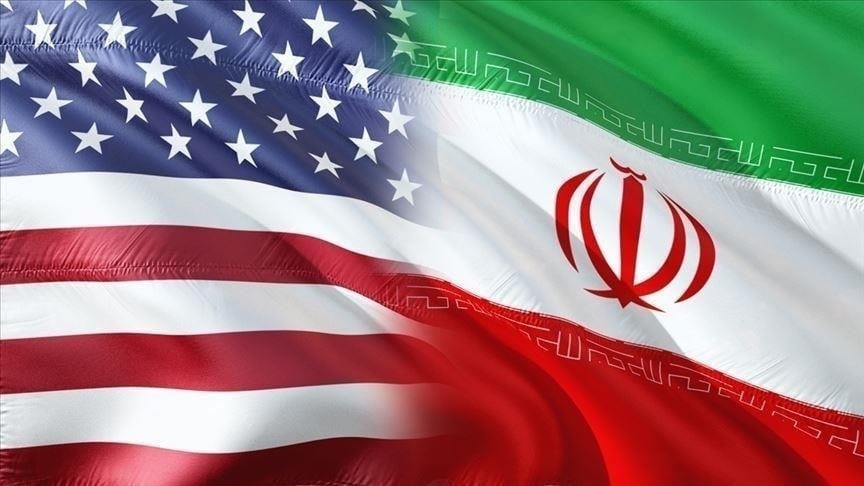
Pakistan will host the first round of US-Iran ceasefire negotiations in Islamabad on Saturday, after a two-week truce. Trump sends JD Vance’s team as Israel strikes intensify.

PM Shehbaz invites US, Iranian delegations to Islamabad on April 10 for ‘peace talks’
Trump dispatches JD Vance–led delegation for Islamabad negotiations
Iranian president confirms participation in talks with team to be led by Speaker Qalibaf, FM Abbas Araghchi
Premier Shehbaz expresses hope talks would result in lasting peace, thanks Gulf states for commitment to peace
President Trump says US would work closely with Iran, including discussions on tariff and sanctions relief
Pakistan at centre as US, Iran move to talks after fragile truce brokered by Pakistan averts wider war
Tehran warns it may quit ceasefire as Israel intensifies strikes on Hezbollah despite US-Iran truce
Oil prices fall 14pc; global markets rally on truce hopes as diplomacy resumes
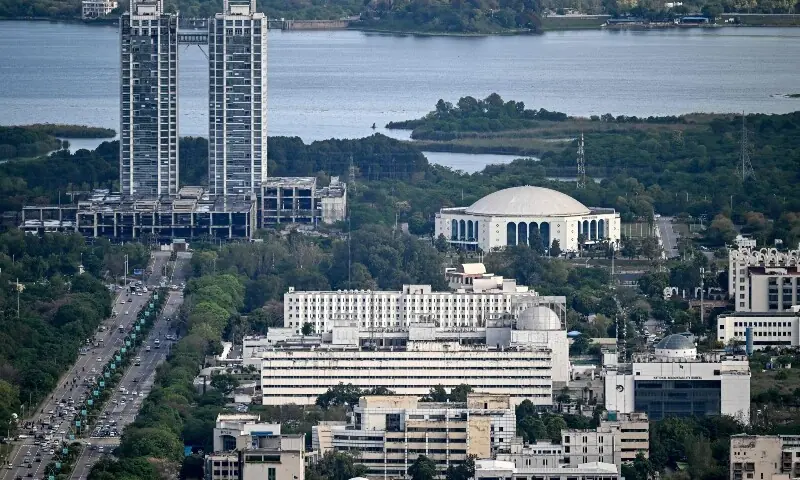
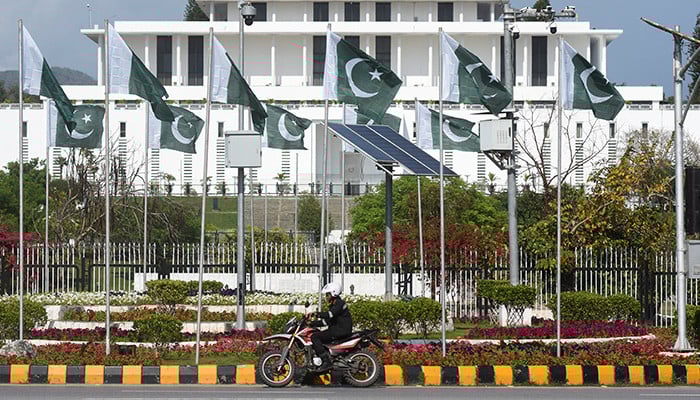
ISLAMABAD: Prime Minister Shehbaz Sharif on Wednesday said Islamabad would host delegations from the United States and Iran for “the first round of negotiations scheduled for Saturday,” following the announcement of a two-week ceasefire brokered by Pakistan that has drawn worldwide applause and support.
United States President Donald Trump is dispatching his Iran negotiating team, led by Vice President JD Vance, to Pakistan for talks, the White House confirmed on Wednesday, with the first round of negotiations scheduled for Saturday
Earlier, the prime minister announced that both Iran and the United States, along with their allies, had agreed to an immediate ceasefire “everywhere, including Lebanon,” effective immediately. He also invited delegations from both countries to Islamabad on April 10 to negotiate a conclusive settlement.
With the greatest humility, I am pleased to announce that the Islamic Republic of Iran and the United States of America, along with their allies, have agreed to an immediate ceasefire everywhere including Lebanon and elsewhere, EFFECTIVE IMMEDIATELY.
I warmly welcome the…— Shehbaz Sharif (@CMShehbaz) April 7, 2026
The confirmation of talks comes as initial relief over the US–Iran truce gave way to renewed concern, with fighting persisting across the region. Israel launched its heaviest strikes yet on Lebanon, while Iran targeted Gulf neighbours’ oil facilities, underscoring the fragility of the ceasefire.
US President Donald Trump endorsed the two-week truce shortly before a self-imposed deadline for Tehran to reopen the Strait of Hormuz, describing it in a Truth Social post as “a big day for world peace” and signalling Washington’s support for regional stability, including ensuring safe passage through the strategic waterway.
The Islamabad-hosted talks, brokered by Pakistan, are set to mark a significant milestone in efforts to de-escalate tensions in the Middle East and underscore Islamabad’s growing role as a facilitator of regional diplomacy.
The war in the Middle East started with the US and Israel launched coordinated attacks on Iran on February 28, killing more than 2000 people in Iran to date, including its Supreme Leader Ayatollah Ali Khamenei and leaving tens of thousands injured, with civilian areas, including residential buildings and religious sites, among those hit.
The conflict also expanded geographically as Iran retaliated with drone and missile strikes targeting Israel as well as Jordan, Iraq, and Gulf countries hosting US military assets. It also restricted the movement of ships through the Strait of Hormuz.
PM Shehbaz posted on X, "I... extend deepest gratitude to the leadership of both the countries and invite their delegations to Islamabad on Friday, 10th April 2026, to further negotiate for a conclusive agreement to settle all disputes."
"We earnestly hope, that the 'Islamabad Talks' succeed in achieving sustainable peace and wish to share more good news in coming days," the prime minister said.
Both Tehran and Washington said they had agreed to a two-week ceasefire barely an hour before Trump's deadline to obliterate Iran was set to expire.
Global financial markets reacted positively after Trump announced the agreement late Tuesday, just two hours before a deadline he had set for Iran to reopen the blockaded Strait of Hormuz or face the destruction of its “whole civilisation.” Brent crude, which had surged by more than 50 per cent since the war began, fell around 14pc to $95.20 a barrel at 1720 GMT, while US stocks climbed to near one-month highs amid a broader global relief rally.
White House Press confirms a team of US negotiators
White House Press Secretary Karoline Leavitt has announced that a team of US negotiators, led by Vice President JD Vance and including special envoys Steve Witkoff and Jared Kushner, is being dispatched by President Donald Trump for talks in Islamabad this weekend.
.@PressSec: "I can announce that @POTUS is dispatching his negotiating team, led by @VP, @SEPeaceMissions, and @jaredkushner to Islamabad for talks this weekend." pic.twitter.com/HWx9xxRw0F
— Rapid Response 47 (@RapidResponse47) April 8, 2026
“The first round of those talks will take place on Saturday morning local time, and we know we look forward to those in-person meetings,” she added.
The war began when Israel and the United States launched strikes on Iran that assassinated its supreme leader on February 28, sparking retaliatory attacks from Tehran on Gulf nations and Israel.
Iran's President confirms Tehran's participation in ‘Islamabad talks’
Separately, PM Shehbaz said that Iran's President Masoud Pezeshkian confirmed Tehran's participation in the "Islamabad talks" to finalise a settlement to their conflict.
The confirmation came during a 45-minute phone call between PM Shehbaz and Pezeshkian, he wrote in a post on X.
I had a warm and substantive conversation with President Masoud Pezeshkian of Iran, this afternoon.
I conveyed my deep appreciation for the wisdom and sagacity of the Iranian leadership in accepting Pakistan’s offer to host peace talks in Islamabad later this week to work…— Shehbaz Sharif (@CMShehbaz) April 8, 2026
The war began when Israel and the United States launched strikes on Iran that assassinated its supreme leader on February 28, sparking retaliatory attacks from Tehran on Gulf nations and Israel.
Lebanon has also been drawn into the conflict after Hezbollah launched attacks on Israel, which has since carried out strikes, including on the capital, and launched a ground operation in the south of the country.
PM Shehbaz said the ceasefire applied "everywhere" including Lebanon, though Israel later said it would not stop its aerial and ground operations there against Hezbollah.
The temporary ceasefire came after a down-to-the-wire bid by Pakistan and other mediators to avert Trump's threat to destroy all power plants and bridges across Iran, a move that legal experts said could constitute a war crime.
Turkiye and Egypt had also been helping mediate in recent days. China helped get Iran to the negotiating table, Trump told AFP on Wednesday.
PM Shehbaz, in a separate X post, said China, Saudi Arabia, Turkiye, Egypt and Qatar had all provided "support towards reaching the ceasefire and giving peaceful diplomatic efforts a chance".
The prime minister also thanked Arab Gulf nations for their "commitment to peace and stability in the region".
As we proceed to *Islamabad Talks*, I wish to extend our deepest and sincere gratitude to our brotherly countries People’s Republic of China, Kingdom of Saudi Arabia, Republic of Türkiye, Arab Republic of Egypt and State of Qatar for extending invaluable and all out support…
— Shehbaz Sharif (@CMShehbaz) April 8, 2026
Despite trading missile fire with Iran two years ago and holding an at-times rocky relationship with the United States, Pakistan currently shares warm ties with both countries.
Pakistan shares a 900-kilometre (560-mile) border and represents some Iranian diplomatic interests in Washington where Tehran has no embassy.
Pezeshkian confirms participation in Islamabad talks
Iranian President Masoud Pezeshkian on Wednesday confirmed that Iran will participate in negotiations, scheduled to take place in Islamabad later this week, during a telephone conversation with Prime Minister Shehbaz Sharif.
The prime minister, during warm and cordial conversation with the Iranian president, that lasted for over 45 minutes, conveyed his deep appreciation for the wisdom and sagacity of the Iranian leadership in agreeing to the ceasefire and for accepting his offer to host negotiations between Iran and the US in Islamabad later this week, according to a statement issued by the PM Office.
He also conveyed his respects to His Eminence Supreme Leader Mojtaba Khamenei.
President Pezeshkian thanked the prime minister and appreciated the efforts of the Pakistani leadership to bring about a temporary ceasefire between Iran and the US and conveyed his best wishes for the people of Pakistan.
Sanctions relief, negotiations ahead
President Trump said the United States would work closely with Iran, including discussions on tariff and sanctions relief, following the announcement of a two-week ceasefire brokered by Pakistan.
“We are, and will be, talking tariff and sanctions relief with Iran,” he said, adding that several points of a potential agreement had already been settled. Despite the optimism, key disagreements between Washington and Tehran remain unresolved, with both sides maintaining competing demands for a comprehensive deal.
In posts on Truth Social, Trump said there would be no uranium enrichment and warned that any country supplying military weapons to Iran would face an immediate 50pc tariff on goods exported to the United States, with no exemptions.
Regional tensions persist
Even as US and Israeli strikes on Iran paused, Israel escalated its parallel conflict with Hezbollah in Lebanon. Prime Minister Netanyahu said the ceasefire did not apply to Hezbollah and that Israel would “continue to strike them,” adding that while many objectives had been achieved in the war with Iran, others remained.
Iran’s Tasnim news agency quoted a source as warning that Tehran could withdraw from the ceasefire if Israeli attacks on Lebanon continued. Lebanon’s civil defence said 254 people were killed in Israeli strikes across the country on Wednesday, including 91 in Beirut, with residents reporting that some attacks occurred without prior evacuation warnings.
Iran’s Ghalibaf, US’s Vance expected at Islamabad talks on Friday
Al Jazeera reported that Parliament Speaker Mohammad Bagher Ghalibaf is set to lead Iran’s negotiating team in Friday’s talks in Islamabad, which is expected to see Vice President JD Vance represent the US delegation, according to Iran’s ISNA news agency.
The report said Iran’s 10-point proposal framework includes not only its nuclear programme and regional security, but also Iran’s primary and secondary sanctions, which date back about 45 years.
Iran expresses gratitude towards Pakistan
Iran expressed gratitude towards Pakistan and claimed victory over the US in multiple posts on X.
Special thanks to Pakistan , its leadership and its people for the constant and unwavering efforts and support. pic.twitter.com/xt4OU1xOzJ
— True Promise - الوعد الصادق ✪🇮🇷 (@IRTruePromise) April 7, 2026
The information account for Operation True Promise released a statement thanking Pakistan's "leadership and its people for the constant and unwavering efforts and support."
Iran's Supreme National Security Council said the deal was a victory over the US, saying Trump had accepted Iran's conditions for ending hostilities.
In a full statement released by the security council, they said, "Nearly all the objectives of the war have been achieved. The noble people of Iran should know that, thanks to the sacrifices of their children and their historic presence on the scene, the enemy has been begging for a ceasefire for over a month."
"In this regard...and given Iran's upper hand and that of the Resistance on the battlefield, the enemy's inability to carry out its threats despite all its claims, and the official acceptance of all the rightful demands of the Iranian people — it was decided that negotiations will be held in Islamabad to finalise the details."
The security council statement on X said that within 15 days, the details of Iran's victory would be "cemented in political negotiations."
Full Statement of the Supreme National Security Council :
[PART-1]
Good news to the dear nation of Iran! Nearly all the objectives of the war have been achieved.
The noble people of Iran should know that, thanks to the sacrifices of their children and their historic presence on…— True Promise - الوعد الصادق ✪🇮🇷 (@IRTruePromise) April 7, 2026
In the post, Iran went over key details of the 10-point plan, such as "controlled passage through the Strait of Hormuz in coordination with Iran's armed forces", and acknowledged that this would grant Iran a unique economic and geopolitical position.
Additionally, the council spoke about the necessity of "ending the war against all components of the Axis of Resistance (which would mean the historic defeat of the child-killing Israeli regime's aggression)", and "the withdrawal of US combat forces from all bases and positions in the region."
The council emphasised establishing safe transit protocols in the Strait of Hormuz that "guarantee Iran's dominance according to the agreed protocol", and full payment of damages to Iran according to estimates," in addition to "the lifting of all primary and secondary sanctions and resolutions of the Board of Governors and the Security Council."
The last two points included the "release of all of Iran's blocked assets and properties abroad", and the "approval of all these items in a binding UN Security Council resolution."
Araghchi also shared the SNSC statement on X.
"If attacks on Iran are halted, our Powerful Armed Forces will cease their defensive operations."
Additionally, Iranian Ambassador to Pakistan Reza Amiri Moghadam also released a statement telling people to "stay more tuned" for the next stage.
UK's Starmer heads to Gulf
British Prime Minister Keir Starmer will travel to the Gulf on Wednesday to hold talks with partners to ensure the Strait of Hormuz remains open permanently after a US-Iran ceasefire, his office said.
"I welcome the ceasefire agreement reached overnight, which will bring a moment of relief to the region and the world," Starmer said in a statement.
"Together with our partners, we must do all we can to support and sustain this ceasefire, turn it into a lasting agreement and re-open the Strait of Hormuz."
Starmer, who has been heavily criticised by US President Donald Trump for failing to support the US and Israeli strikes on Iran, has previously hosted multinational meetings on how allies could support the reopening of the key strait that is fundamental to oil and gas trade.
The British statement said Starmer would discuss diplomatic efforts to "support and uphold the ceasefire to bring about a lasting resolution to the conflict and protect the UK and global economy from further threats".
The visit to the region had been planned before the ceasefire was announced.
Ceasefire conditioned on Strait's reopening
Two White House officials confirmed that Israel has also agreed to the two-week ceasefire and to suspend its bombing campaign on Iran. The agreement includes a cessation of Israel's campaign in Lebanon, PM Shehbaz said.
However, citing Israeli Prime Minister Benjamin Netanyahu, Israeli media states that while Israel "supports Trump's decision," the ceasefire "does not include Lebanon", despite PM Shehbaz's statements.
Al Jazeera reported that French President Emmanuel Macron welcomed the ceasefire between the US and Iran and said, “It is a very good thing.”
Macron, however, warned that the situation in Lebanon is critical and said the ceasefire deal should include Lebanon.
It was not immediately clear how soon the ceasefire would take full effect. Israeli media reported it would begin once Iran reopened the strait and that Israel expected Iranian attacks to continue in the interim.
Iraq's Islamic Resistance said it would suspend operations in Iraq and across the region for two weeks.
More than an hour after Trump's announcement, the Israeli military said it had identified missiles launched from Iran, and explosions from intercepted missiles could be heard in Tel Aviv. Gulf countries, including Kuwait, Bahrain, Saudi Arabia and the United Arab Emirates, also issued near-simultaneous alerts and activated air defences.
First ships through Strait of Hormuz since ceasefire
Increased sourcing from the US reduces reliance on the Strait of Hormuz — a narrow maritime corridor through which a substantial proportion of global oil trade passes and which remains vulnerable to geopolitical tensions. Photo: Reuters
Traffic through the Strait of Hormuz remained extremely limited on Wednesday despite a fragile ceasefire announced between the United States and Iran.
At least two ships, both bulk carriers, have crossed the crucial waterway since Iran and the US said that the vital maritime passage would reopen, and a third is on course to do the same.
Two bulk carriers, including one coming from Iran, crossed on Wednesday morning, a few hours after the truce was announced.
A third, the Botswana-flagged and Chinese-owned Hai Long 1, also coming from Iran, was almost done transiting the strait on Wednesday afternoon, according to data by maritime monitor MarineTraffic.
The tally only includes vessels navigating with their transponders switched on. Other boats may have also passed through with their signals switched off.
1 Comment
No comments yet. Be the first to join the discussion!