Pakistan eyes hosting next US-Iran talks as Trump says deal ‘largely negotiated’
Pakistan’s PM Shehbaz says Islamabad could host the next US-Iran talks “very soon” after Trump said an agreement is largely negotiated, following high-level calls with regional leaders.

PM Shehbaz hails Trump's 'extraordinary efforts to pursue peace' after phone call with CDF, leaders of other countries
Field Marshal Munir represents Pakistan in high-level call with Trump as Saudi, Qatari, Turkish and UAE leaders back emerging peace framework
PM says Islamabad hopeful of hosting next round of talks ‘very soon,’ while Dar hails diplomacy push, says durable breakthrough now within reach
Trump says calls with regional leaders and Netanyahu went ‘very well,’ noting MoU with Tehran ‘largely negotiated’ as Strait of Hormuz deal nears
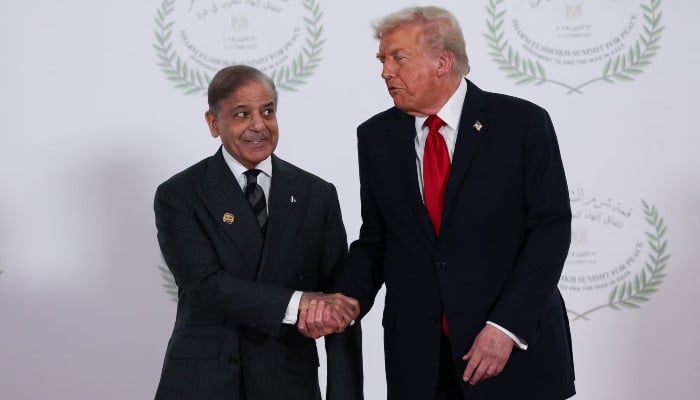
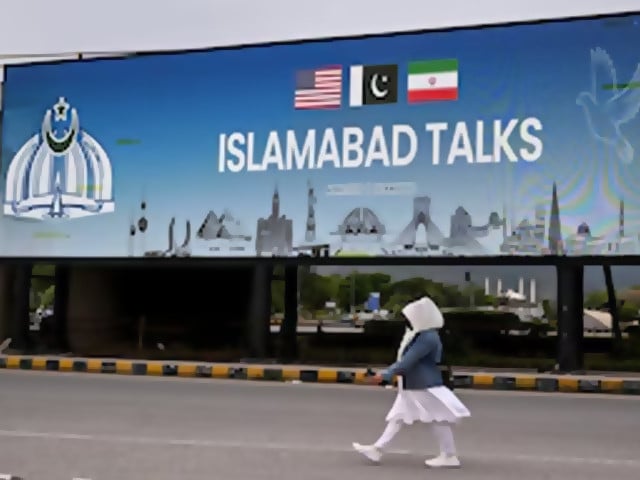
ISLAMABAD: Prime Minister Shehbaz Sharif on Sunday praised US President Donald Trump’s “extraordinary efforts to pursue peace” and expressed optimism that Pakistan could host the next round of the Islamabad Talks between Iran and the United States “very soon,” after Trump announced that a potential agreement had been “largely negotiated.”
The development came after Trump held what he described as a “very useful and productive” phone call on Saturday with leaders and senior representatives from several regional countries, including Pakistan’s Chief of Defence Forces and Chief of Army Staff Field Marshal Asim Munir.
According to reports, the call included the leaders of Saudi Arabia, Qatar, Turkiye, Egypt, the United Arab Emirates (UAE), Jordan and Pakistan, who encouraged Trump to move ahead with the emerging peace framework aimed at easing regional tensions and advancing diplomacy with Iran.
— Rapid Response 47 (@RapidResponse47) May 23, 2026
In a post on Truth Social, Trump said he had a “very good call” with Saudi Crown Prince Mohammed bin Salman; the presidents of the UAE, Turkiye and Egypt; Qatar’s emir, prime minister and a minister serving on the Board of Peace; as well as the kings of Jordan and Bahrain. He added that a separate call with Israeli Prime Minister Benjamin Netanyahu had also gone “very well.”
Subsequently, Prime Minister Shehbaz, in a statement on X, confirmed that Field Marshal Munir represented Pakistan during the high-level discussions and commended his “tireless efforts during the entire process.”
I congratulate President Donald Trump on his extraordinary efforts to pursue peace and for holding a very useful and productive telephone call earlier today, with the leaders of Saudi Arabia, Qatar, Turkiye, Egypt, the UAE, Jordan and Pakistan. Field Marshal Syed Asim Munir…
— Shehbaz Sharif (@CMShehbaz) May 24, 2026
“The discussions provided a useful opportunity to exchange views on the current regional situation and how to move the ongoing peace efforts forward to bring lasting peace in the region,” the prime minister said.
Reaffirming Pakistan’s commitment to diplomacy and regional stability, PM Shehbaz said Islamabad would continue to facilitate peace efforts “with utmost sincerity” and voiced hope that Pakistan would host the next phase of talks “very soon.”
“Pakistan will continue its peace efforts with utmost sincerity and we hope to host the next round of talks very soon,” he said.
Dar praises diplomacy, says breakthrough within reach
Deputy Prime Minister and Foreign Minister Ishaq Dar also welcomed the diplomatic momentum, commending President Trump’s leadership and commitment to “dialogue and diplomacy,” which he described as a major step toward regional peace and stability.
In a statement posted on X, Dar praised the sustained engagement of the US administration, specifically acknowledging Vice President JD Vance, Secretary of State Marco Rubio, special envoy Steve Witkoff and adviser Jared Kushner for their role in advancing negotiations.
Today’s important telephone call led by President Donald J. Trump @realDonaldTrump with the leaders of Pakistan, Saudi Arabia, Türkiye, Qatar, Egypt, the UAE, and Jordan marks a significant step closer toward the shared objective of regional peace, stability, and an early…
— Ishaq Dar (@MIshaqDar50) May 24, 2026
He also appreciated the constructive role played by the Iranian leadership, including President Masoud Pezeshkian, Foreign Minister Abbas Araghchi and Parliament Speaker Bagher Ghalibaf.
The deputy prime minister further lauded Prime Minister Shehbaz Sharif’s “visionary leadership” and highlighted Field Marshal Munir’s “central role throughout this sensitive and consequential process” of regional mediation.
Dar also acknowledged the contributions of United Nations Secretary-General Antonio Guterres and Pakistan’s “brotherly regional partners,” saying he had remained in close coordination with multiple countries throughout the diplomatic engagement.
“The achievements of these negotiations offer grounds for optimism that a positive and durable outcome is within reach,” Dar wrote.
“Dialogue and diplomacy must prevail over conflict and confrontation for the collective prosperity and security of our region and beyond,” he added.
Rubio signals imminent Iran-US breakthrough as Pakistan-led diplomacy gains momentum
US Secretary of State Marco Rubio on Sunday signalled that a breakthrough in the Iran-US negotiations could be imminent, saying an announcement on a possible agreement may come “later today” as diplomatic efforts intensified to end the Middle East conflict and reopen the strategically vital Strait of Hormuz.
“I do think perhaps there is the possibility that in the next few hours the world will get some good news,” Rubio told reporters in New Delhi, indicating that negotiations had entered a decisive phase after significant progress in recent days.
Rubio said the emerging framework aimed to address Washington’s concerns over the Strait of Hormuz, which Iran has largely blocked in response to the recent US-Israeli attacks, while also laying the groundwork for a broader understanding over Tehran’s nuclear programme.
The proposed agreement, he said, would initiate “a process that can ultimately leave us where the president wants us to be, and that is a world that no longer has to fear or worry about an Iranian nuclear weapon.”
“Some progress has been made in the past 48 hours on an outline that could resolve the Strait of Hormuz situation,” Rubio said, while cautioning that additional work was still required before a final deal could be concluded.
Pakistan has continued its diplomatic push to revive the stalled Iran-US peace process after plans for a second round of negotiations in Islamabad were postponed.
The first round of historic direct talks between Washington and Tehran took place in Islamabad on April 11 and 12, shortly after the Pakistan-brokered ceasefire announced on April 8. Although the talks ended without a formal agreement, they concluded without a collapse in negotiations, keeping diplomatic channels open.
US President Donald Trump later called off a planned visit to Islamabad by US Special Envoy Steve Witkoff and adviser Jared Kushner for a second round of negotiations with Iran. However, Trump subsequently extended the ceasefire indefinitely “upon the request of Field Marshal Asim Munir and Prime Minister Shehbaz Sharif.”
The latest diplomatic contacts are taking place amid mounting pressure from Washington and its Middle Eastern allies to secure a settlement. Earlier this week, Trump said negotiations with Iran had entered the “final stages” and warned that military strikes could resume if a deal was not reached within a “limited timeframe.”
Over the weekend, Trump said a memorandum of understanding on a peace agreement with Iran had been “largely negotiated” and would pave the way for reopening the Strait of Hormuz, with details expected to be announced soon.
Pakistan intensifies mediation efforts
Pakistan has stepped up efforts to break the deadlock in the Iran-US negotiations, with Chief of Defence Forces and Chief of Army Staff Field Marshal Syed Asim Munir concluding a high-level visit to Tehran on Saturday.
According to the Inter-Services Public Relations (ISPR), the field marshal held “intensive negotiations” with the Iranian leadership that resulted in “encouraging progress towards a final understanding.”
During the “short but highly productive” visit, discussions focused on accelerating mediation efforts to promote de-escalation and secure a comprehensive agreement amid lingering regional tensions following the April 8 ceasefire.
Field Marshal Munir met Iranian President Dr Masoud Pezeshkian, Parliament Speaker Mohammad Bagher Ghalibaf, Foreign Minister Abbas Araghchi and Interior Minister Eskandar Momeni.
“The Iranian leadership appreciated Pakistan’s sincere and constructive role in facilitating dialogue and promoting peaceful settlement of regional issues,” the ISPR said in a statement.
On Friday, Rubio acknowledged Pakistan’s mediation role, saying Washington remained in “constant communication” with Field Marshal Munir and describing Pakistan’s efforts to broker peace between Tehran and Washington as “admirable.”
Interior Minister Mohsin Naqvi also visited Iran for the second time in less than a week as part of Pakistan’s renewed diplomatic outreach. During the visit, he held meetings with the Iranian president, parliament speaker and foreign minister.
Diplomatic sources said negotiations had now moved beyond political messaging into detailed bargaining over a narrow interim framework covering the Strait of Hormuz, Iran’s nuclear programme, sanctions relief and guarantees against renewed military action.
Iran says talks moving toward convergence
Iranian Foreign Ministry spokesperson Esmail Baqaei also confirmed that Tehran and Washington were moving closer to finalising a memorandum of understanding aimed at ending the conflict, according to Iran’s Fars news agency.
Referring to the Pakistani delegation’s visit led by Field Marshal Munir, Baqaei said, “We are now in the finalization stage of this memorandum of understanding.”
He said the current discussions centred on ending the war, lifting the naval blockade and resolving issues related to the release of Iranian assets.
Baqaei added that the Pakistani delegation’s visit was intended to continue the exchange of messages between Tehran and Washington as part of ongoing mediation efforts.
He stressed that Iran’s primary focus remained ending the conflict in line with the Islamic Republic’s 14-point proposal, which has been exchanged repeatedly during negotiations.
Asked whether the two sides had moved closer to an agreement, Baqaei said that after several weeks of dialogue, “the process appears to be moving toward a convergence of views.”
Comments
No comments yet. Be the first to join the discussion!