

China issues white paper on Hong Kong national security, reaffirms 'one country, two systems' Framework
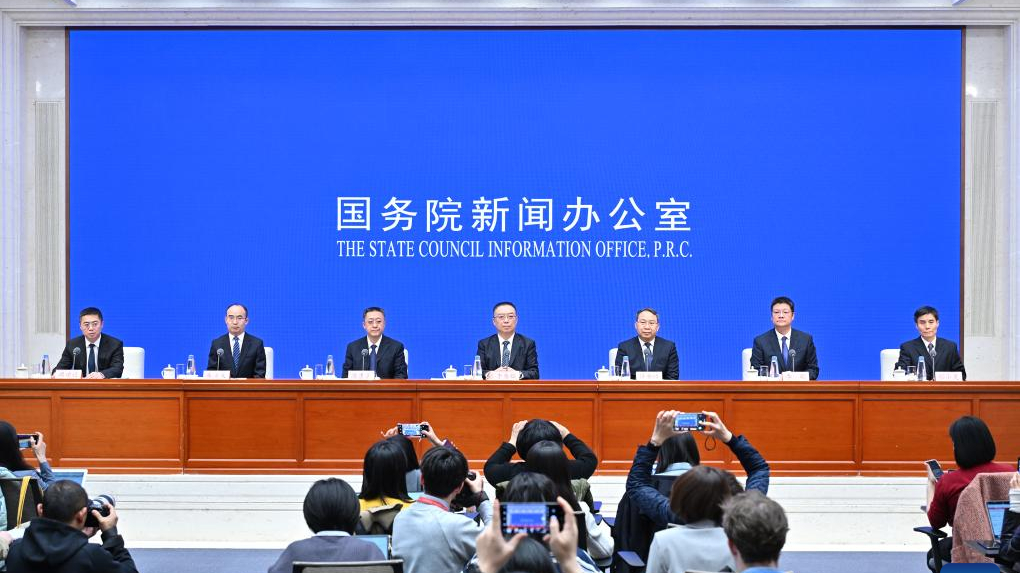
BEIJING: China’s State Council Information Office on Tuesday released a white paper titled “Hong Kong: Safeguarding China’s National Security Under the Framework of One Country, Two Systems,” underscoring the central authorities’ determination to safeguard national security in the Hong Kong Special Administrative Region (HKSAR), according to Xinhua News Agency.
Hong Kong Chief Executive John Lee welcomed the document, calling its release “of great significance” and saying it had come at an opportune moment. Speaking to reporters, Lee said the white paper reinforced three core understandings: that the struggle to safeguard national security in Hong Kong is ongoing and requires constant vigilance; that national security falls under the purview of the central authorities with Hong Kong’s full support for the implementation of national-level security laws; and that high-level security is essential to ensure the steady development of the One Country, Two Systems framework.
Lee said the white paper delivers a clear warning to those who endanger national security, noting that the recent verdict in the Jimmy Lai case demonstrated justice being upheld. He said the ruling showed that Lai’s crimes were serious, harmful to both the HKSAR and the country, and involved collusion with external forces.
The release of the white paper came shortly after the High Court of the HKSAR sentenced Jimmy Lai to 20 years in prison on national security charges. Analysts said the timing was significant in clarifying political and legal principles and rebutting what they described as unreasonable accusations from some Western countries.
Comprising a preface, five chapters and a conclusion, the more than 12,000-word document reviews Hong Kong’s efforts to safeguard national security, the challenges faced, and the experience gained. It reiterates the central government’s fundamental responsibility for national security matters related to Hong Kong and aims to clear misunderstandings, build consensus and ensure the high-quality development of One Country, Two Systems with high-standard security.
The white paper revisits the prolonged debate over local national security legislation under Article 23 of the Basic Law, the 2019 unrest that posed what it calls the gravest challenge to national security in Hong Kong, and the subsequent measures taken by the central and local governments. These included strengthening the legal framework and enforcement mechanisms, improving the electoral system and governance, and implementing the principle of “patriots administering Hong Kong.”
In its third chapter, the document highlights the HKSAR’s progress in fulfilling its constitutional responsibility for safeguarding national security, including the completion of Article 23 legislation, continuous improvements to the legal system and firm law enforcement and judicial actions.
Lawmakers and policy advisers said the white paper sets the record straight amid renewed criticism from some Western countries following Lai’s sentencing. Lawrence Tang Fei, a member of the Hong Kong Legislative Council, said the document systematically clarifies political ethics and rule-of-law principles, explaining how China and the HKSAR have handled national security matters in accordance with the law.
Lai was found guilty in December 2025 on charges of conspiring to collude with external forces and conspiring to publish seditious materials. His mitigation hearing concluded in January this year, according to Xinhua.
Senior policy adviser Lau Siu-kai said the white paper also makes clear that no internal or external hostile forces will be allowed to undermine One Country, Two Systems, Hong Kong’s prosperity and stability, or China’s national security. He added that the document serves as a warning and deterrent to the United States and other Western forces seeking to use Hong Kong to contain China.
Multiple central government agencies expressed support for the white paper, describing it as a comprehensive review of Hong Kong’s national security work and a clear articulation of the central government’s principled stance. Officials said the document provides guidance for advancing national security efforts in Hong Kong and helps build broader consensus on using high-level security to ensure the long-term success of the One Country, Two Systems policy.
Comments
No comments yet. Be the first to join the discussion!


