

Pakistan’s way out of political instability: A council of elders?

For the better part of its 77-year history, Pakistan has resembled a mouse trapped on a tiny, frantic treadmill. There is sweat, there is exhaustion, and there is a great deal of noise, yet there is no forward movement. Decades pass, faces change, and slogans evolve, yet the structural reality remains a tragedy of repetition. Pakistan is stuck in a cyclical "Game of Thrones," a theatre of power and patronage where the script never changes, only the actors rotate. In this high stakes drama, every leader, civilian or uniformed, arrives playing the role of the messianic saviour, only to leave as a villain, a victim, or a compromise.
The country is currently held hostage by this paralysis. The polarization is so deep that it has fractured the social contract, however flawed it was, and the trust deficit between the state and the citizenry has widened into a chasm. If we are to avoid an implosion, we must accept that the current model of hybrid democracy, punctuated by judicial sheepishness and military intervention, has failed. It is time to stop the treadmill. It is time for a radical departure from the norm, a 10-year pause on political warfare in favor of a genuine, no-string attached government of national consensus, steered by a "Council of Elders."
The solution is not another election that will inevitably be disputed, nor a martial law that will inevitably be resisted. The solution may be a "Grand Compromise." Pakistan requires the formation of a Council of Elders to govern for a fixed term of ten years. This Council must not be a technocratic setup installed by the shadows, but a body composed of the actual power brokers of Pakistan. This Council must include the heads of the major political parties including Imran Khan, the Sharif leadership, the Bhutto-Zardaris, leaders of other significant regional parties, and crucially, the Chief of Defence Forces. This, though, requires setting aside egos and showing a level of maturity that has not been shown before. It also requires acknowledgment by the state that mistakes were made in the last three years and over the past decades as well.
Imagine the optical shift, a live telecast from the Supreme Court of Pakistan. Standing before the Chief Justice and the nation, these bitter rivals who have spent decades jailing and demonizing one another stand shoulder to shoulder. The Council takes a solemn oath, not to their parties, not to their institution, but to a ten-year agenda of national reconstruction. They agree to suspend the hunt for votes and the hunger for vengeance to save the house they all wish to rule. This Council would be held accountable on a "joint and several" basis; if the country fails, they all fail. There are no scapegoats anymore.
The objective of this decade-long interim is not to rule, but to repair, mend and overhaul the entire system, including the constitution. The mandate must be specific, codified, and unalterable by the whims of daily politics and institutional jockeying.
-
A Charter of Economy and Structural Reforms: For too long, Pakistan’s economic policy has been a hostage to the electoral cycle and military interventions. For example, governments take loans to subsidize votes, leaving the debt to their successors. The Council must implement a rigorous long term National Economic Policy that remains intact regardless of changes in governments. This means deep and painful structural reforms, expanding the tax net to include the sacred cows of retail, real estate, agriculture and others, privatizing bleeding state-owned enterprises and pivoting from an import-consumption model to an export-production model. This policy must be "locked in," immune to populist rollback. It also means to set the right mechanisms of incentives and penalties to steer the economic outcomes that are direly needed for the country to reach to an upper middle income bracket. There are a lot of top younger Pakistani-origin economists based overseas and in Pakistan who can assist with formulation and execution of the national economic policy and deep structural reforms.
- Constitutional Repair and the Rule of Law: We must admit that our Constitution has been battered. Recent legislative manoeuvres, specifically the 26th and 27th Amendments, have been perceived by legal experts and the public as tools to clip the wings of the judiciary and entrench executive power. These Amendments must be immediately reversed. The Council’s job is to improve the existing Constitution or even come up with a new one to ensure true democracy and the rule of law, creating a framework where the judiciary is independent, not managed. This may require a full review of the Constitution to ensure the necessary checks and balances.
- The Citizen-Centric State: The state currently works for the elite with an elaborate system of patronages of all kinds with all the elements of a rentier state. The Council must enshrine a new operational directive that the state machinery exists solely to improve the life of the common citizen. Justice must be fair and equitable, blind to religion, class, colour, creed, or ethnicity. This requires a shift from "ruling" the population to "serving" the public. The measurement of the Council’s success must be the Human Development Index and other such measures, not just GDP.
- The Great Withdrawal: This may perhaps be the most difficult and critical pillar. The armed forces must agree to a permanent, structured exit from politics. This is not about humiliating the institution but saving it. The military’s involvement in governance has diluted its professional focus and eroded the public’s love for their defenders. Under this Council, the military leadership will oversee serious internal reforms to ensure that the institution never again interferes in the democratic process, media management, or judicial outcomes. They will be partners in security, not overseers of the state.
- Institutional Overhaul:The rot extends beyond Parliament. The police, the judiciary, and the civil service have become arms of political victimization. The ten-year period must be used to depoliticize these institutions. We need a police force that protects citizens, not VIPs, a civil service that serves the public, not the ruling party or the establishment and a judiciary that dispenses justice, not stay orders.
-
Truth, Reconciliation and a Clean Slate:This is the bitter pill the public must swallow for the sake of the future. We are trapped in a cycle of retrospective vengeance. One government arrests the opposition for corruption, the next government reverses it and arrests the previous rulers. ,
It is a zero sum game. The Council must adopt a "Truth and Reconciliation" model similar to post-apartheid South Africa. We must agree that what was done in the past, including corruption and political victimization, is done. A one-time general amnesty should be declared for past economic and political crimes, provided that the assets are declared and a truth commission is faced. However, this comes with a caveat; going forward, from the day the oath is taken, there will be zero tolerance. No exceptions for the elite, the generals, or the politicians. Any corruption moving forward is met with the harshest penalty. The slate is wiped clean only to ensure it never gets dirty again.
The treadmill leads to the abyss. The Council of Elders offers a bridge. While it may be a difficult and dangerous path, it may be the only path that leads forward except a complete overthrow of the existing system. For the sake of the common citizen, who simply wants bread, shelter, justice, and dignity, let us hope our leaders find the courage to take it. History will not be kind to those who choose inertia over responsibility.
Mechanism of Governance
How will this work practically? The Council of Elders will function as the supreme policymaking body, acting as a collective Presidency. Beneath them, a technocratic Federal Cabinet, selected on merit rather than loyalty, will implement the agenda.
At the provincial level, the system needs to mirror the centre. Instead of Chief Ministers playing to their voter base, provincial administrators should be appointed by the Council, tasked with specific deliverables regarding health, education, and municipal services. The focus must shift from "politics" to "administration."
Furthermore, a new Social Contract must be signed. This document should redefine the relationship between the federation and the provinces, and between the state and the citizen. It must acknowledge the mistakes of the past, the suppression of dissent, the neglect of smaller provinces, the missing persons and make a pledge to a future based on dignity. An exact mechanism can be developed by the brilliant legal minds and constitutionalists in the country.
The Necessity of Military Initiative
Realistically, this initiative cannot start with the civilians, who are too fragmented and distrustful of one another. The initiative must come from the armed forces.
The military establishment must recognize the writing on the wall. The anger is palpable. The traditional methods of managing the narrative are no longer working in the age of digital information. To restore its sanctity and the bond with the people, the military must demonstrate the ultimate act of patriotism, by voluntarily relinquishing political control and facilitating this transition.
It requires the Army Chief to reach out to Imran Khan, the Sharifs, and the Bhuttos, not to manipulate a deal for a hung parliament, but to offer a table for a National Consensus. Egos must be put away. The "saviour" mentality must be discarded. There is no saviour but the collective will of the leadership.
The Endgame: A Decade Later
The mandate of the Council is finite. At the end of ten years, the Council dissolves. Having reset the economy, depoliticized the police and other state institutions, restored judicial independence, and codified the military’s non-interference, the country will hold free and fair elections.
These elections will not be a fight for survival, but a competition of ideas. The winner will inherit a functional state, not a bankrupt estate. The loser will sit in opposition, secure in the knowledge that they will not be jailed for dissent.
Critics may call this utopian, but one has to start somewhere given the current environment of mistrust and fear. They will say that these rivals can never work together, that the military will never cede power, and that corruption is too ingrained. They may be right. But consider the alternative. If we continue on the current trajectory, Pakistan is destined to become a permanent economic basket case. We will remain a nation of 250 million souls, nuclear-armed but begging for loans to pay interest on previous loans. Our youth will continue to flee in boats, preferring the risk of drowning in the Mediterranean to the certainty of drowning in Pakistan’s hopelessness. We will remain second class citizens in our own land, ruled by a disconnected elite, waiting for a revolution that might burn everything down.
The treadmill leads to the abyss. The Council of Elders offers a bridge. While it may be a difficult and dangerous path, it may be the only path that leads forward except a complete overthrow of the existing system. For the sake of the common citizen, who simply wants bread, shelter, justice, and dignity, let us hope our leaders find the courage to take it. History will not be kind to those who choose inertia over responsibility.
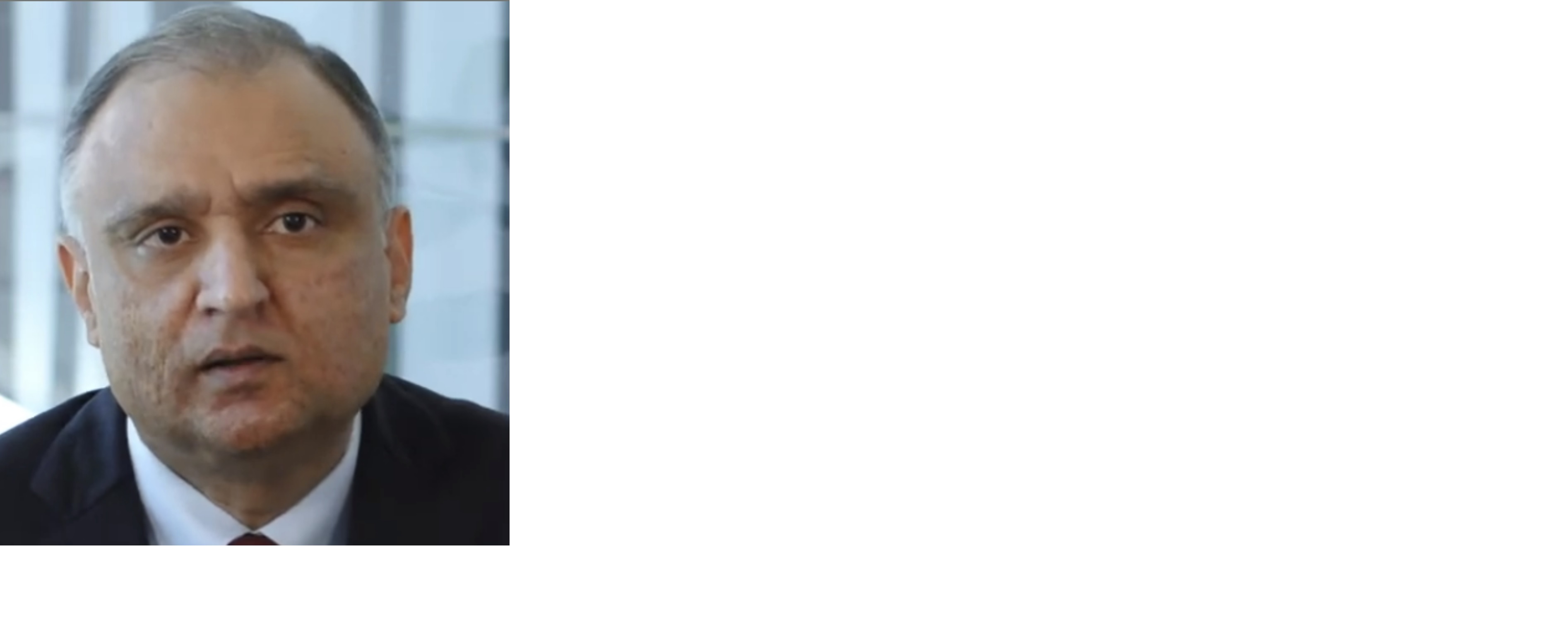
The author is a senior international banker, with degrees in economics and political science from University of Pennsylvania and Brown University
View all articles →Comments
No comments yet. Be the first to join the discussion!


