











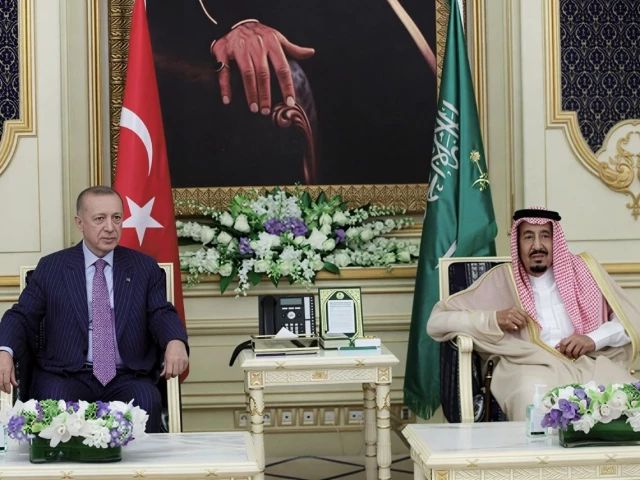
RIYADH: Turkish President Recep Tayyip Erdogan arrived in Riyadh on Tuesday for his first visit to Saudi Arabia in more than two years, underscoring the continued rapprochement between the two regional powers after years of strained relations.
Saudi media reported that Erdogan is scheduled to meet Crown Prince Mohammed bin Salman during the visit. It marks Erdogan’s first trip to the kingdom since July 2023, when he toured the Gulf region in a bid to attract foreign investment.
Although no official agenda was released, Turkish state-run news agency Anadolu said the talks would focus on deepening bilateral cooperation as well as key regional and global developments. Erdogan is also expected to travel to Cairo on Wednesday as part of his regional tour.
Relations between Turkiye and Saudi Arabia have steadily improved in recent years, with both countries cooperating on diplomatic initiatives, including support for Gaza and backing Syria’s new government following the overthrow of Bashar al-Assad in 2024.
The visit comes amid shifting regional dynamics and days after two sources told AFP that Turkiye would not be joining a proposed mutual defence pact between Saudi Arabia and Pakistan, despite earlier remarks by Turkish Foreign Minister Hakan Fidan indicating that talks on the matter had taken place.
Ties between Riyadh and Ankara were severely strained after the murder of Saudi journalist Jamal Khashoggi inside the Saudi consulate in Istanbul in October 2018. Turkiye had angered Saudi Arabia at the time by aggressively pursuing the case, launching an investigation and publicly sharing details of the killing.
Erdogan’s Riyadh visit also coincides with heightened diplomatic activity in the region. It comes just days ahead of a potential round of talks in Turkiye between the United States and Iran on February 6, after Tehran called for the resumption of nuclear negotiations and Washington warned of consequences if a deal was not reached.
Erdogan has recently emerged as a key mediator in efforts to ease tensions between the long-time adversaries, as part of a broader push to prevent escalation into open conflict.