












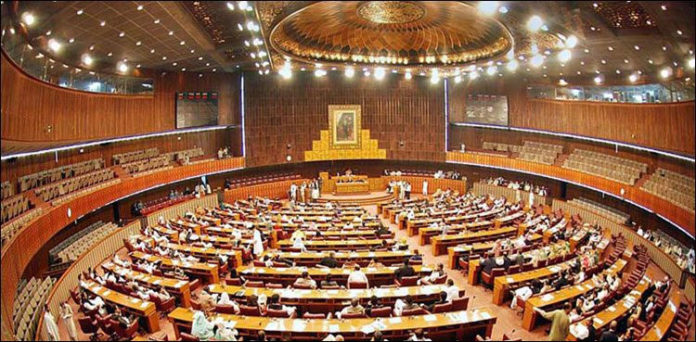
ISLAMABAD: The government on Thursday came under fierce opposition fire in the National Assembly over Pakistan’s decision to join the US President Donald Trump–led “Board of Peace”, defending the move as a principled step taken in the interest of the Palestinian people, while opposition parties warned it could undermine national sovereignty, parliamentary authority and the Palestinian cause itself.
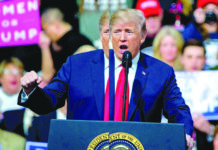
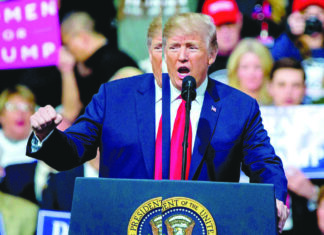
The controversy erupted a day after leaders and senior officials from 19 countries, including Pakistan, appeared alongside President Trump at a signing ceremony in Davos, Switzerland, formalising the charter of the newly created body.
Originally presented as a mechanism to oversee post-war peace in Gaza after Israel’s two-year onslaught, the Board of Peace’s mandate envisages a broader role in resolving international conflicts.
Opening the government’s defence in the House, Parliamentary Affairs Minister Dr Tariq Fazal Chaudhry said Pakistan’s position on Palestine was “clear, principled, and consistent,” stressing that Islamabad had always raised the issue at international forums. He said joining the board was guided by national interest and the collective priorities of the Muslim Ummah, not domestic or external political pressures.
Referring to United Nations Security Council resolutions calling for a permanent ceasefire and reconstruction of Gaza, the minister said Pakistan’s participation was meant to support these objectives while safeguarding Palestinian rights and Pakistan’s own interests. He urged lawmakers not to turn the issue into political point-scoring and called for unity on matters of foreign policy. However, the explanation failed to placate the opposition.
Jamiat Ulema-i-Islam Fazl (JUI-F) chief Maulana Fazlur Rehman delivered a blistering critique, warning that Pakistan must not become part of any initiative that could lead to the disarmament of Hamas. He said those responsible for the suffering of Palestinians were themselves part of the board.
“Expecting peace from Trump is living in a fool’s paradise,” Fazl told the House, noting that Trump chaired the board and selected its members unilaterally. He questioned how peace could emerge from a forum where Israeli Prime Minister Benjamin Netanyahu would sit alongside Muslim leaders while Gaza continued to be bombed.
“We must not accept the Board of Peace under any circumstances,” he said, adding that more than 70,000 civilians had been killed in Gaza during Israel’s onslaught, with over 100,000 dying of hunger and more than 150,000 rendered homeless. He also questioned why parliament — or even the cabinet — had not been taken into confidence before joining the board.
Fazl further argued that the creation of such a body, despite the existence of the United Nations and its Security Council, amounted to setting up a parallel authority. “Wherever the US goes in the name of peace, it leaves destruction behind,” he said, citing Afghanistan, Iraq and Libya.
Pakistan Tehreek-e-Insaf (PTI) Chairman Barrister Gohar Ali Khan also criticised the government for bypassing parliament. He questioned whether Pakistan would be expected to play a role in disarming Hamas and stressed that, unlike a UN body, the Board of Peace lacked international legitimacy.
PTI leaders Asad Qaiser and Sheikh Waqas Akram echoed the criticism, warning of diplomatic repercussions and noting that there was not a single Palestinian representative on the board. “Any decision unacceptable to Palestinians is unacceptable to the PTI,” Akram said, accusing Trump of seeking to bypass the UN system for his own strategic ambitions.
In a formal statement, the PTI rejected Pakistan’s participation in the board, calling for withdrawal until a comprehensive consultative process was undertaken. The party demanded parliamentary scrutiny, consultations with all major political leadership — including party founder Imran Khan — and even a referendum to ensure public confidence.
The statement reiterated PTI’s long-standing position in support of an independent Palestinian state with Al-Quds Sharif as its capital, stressing that Pakistan’s foreign policy must reflect national consensus, constitutional norms and the UN Charter.
As the debate raged, the issue exposed deep political and institutional fault lines over how major foreign policy decisions are taken — and who gets to decide — amid growing concerns that Pakistan’s alignment with the Board of Peace could redefine its diplomatic posture at a critical moment for the Palestinian cause.



firma rehperi