












A student from Balochistan has gained international acclaim after developing an innovative technique to transform banana stems into sustainable natural fiber, placing Pakistan on the global map of green innovation.
Mohammad Sarfraz, a researcher at the Balochistan University of Information Technology, Engineering and Management Sciences, received the Discover Natural Fiber Initiative Award at the Heimtextil International Exhibition held in Frankfurt. The competition featured entries from more than 100 research institutions and companies worldwide.
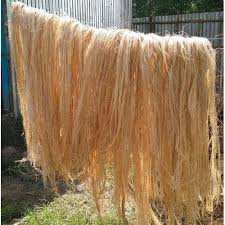
Sarfraz’s project stood out for its ability to convert agricultural waste into high-quality, environmentally friendly fiber. His work demonstrated how discarded banana stems can be processed into a valuable resource, highlighting Pakistan’s untapped potential in sustainable technologies.
Dedicating the award to his teachers and the youth of Balochistan, Sarfraz shared that the research spanned four years of experimentation and refinement. He expressed pride in competing successfully against projects from well-established European institutions.
His supervisor, Dr. Mohammad Qasim, head of textile engineering at the university, described the achievement as proof that young talent from Balochistan can compete at an international level when provided with the right support and opportunities.
The project follows a three-step process, beginning with fiber extraction from banana waste, followed by its conversion into yarn and composite materials, and finally the production of fabric and other usable products.
Industrial partner Mohammad Fawwad Supriya confirmed strong interest from international markets. Several European companies have shown readiness to collaborate, and a German firm has already signed an agreement to manufacture and market products made from the banana fiber developed in Pakistan.
According to Fawwad, the initiative is expected to generate employment and help reduce poverty in Sindh and Balochistan. Fiber production has already begun in Sukkur and Lasbela, with future plans to involve around 4,000 households in the next phase.
To support large-scale adoption, Sarfraz has designed affordable machines locally. A unit comprising two machines costs between Rs700,000 and Rs800,000 and can produce up to 1,000 kilograms of fiber per acre of banana waste.
Experts estimate that Pakistan has the capacity to generate nearly 500 million kilograms of natural fiber annually from banana waste alone, potentially creating up to one billion dollars in global market value.
Beyond economic benefits, the project contributes to environmental protection by reducing the burning and dumping of banana waste, practices that currently lead to air and water pollution.
Sarfraz’s achievement illustrates how innovation driven by local talent can turn agricultural waste into a powerful engine for sustainable growth and economic opportunity.