












- Information minister condemns KP CM Afridi for ‘supporting Afghan regime narrative’
- Emphasizes Pakistan’s resolve against Fitna-al-Khawarij and extremist elements, saying Paigham-e-Amman Committee to counter terrorist propaganda
- Says militants bear no link to Islam, foreign funding exposed for extremist outfits
- Calls for collaboration with media, academia, civil society to fight misinformation
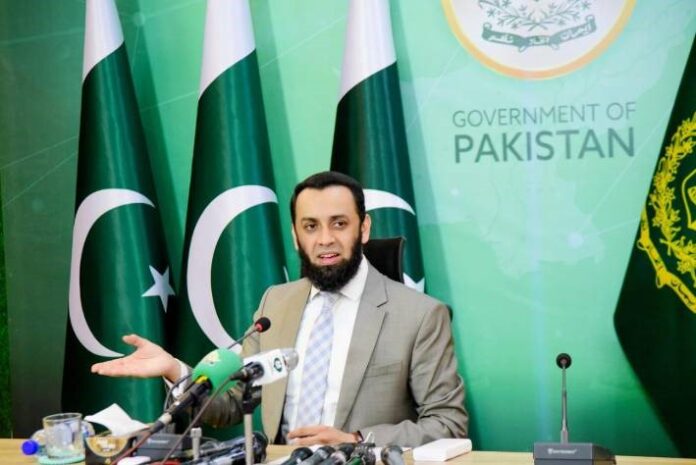
ISLAMABAD: Federal Minister for Information and Broadcasting Attaullah Tarar on Monday strongly condemned Khyber Pakhtunkhwa Chief Minister Sohail Afridi’s remarks, accusing him of acting as a spokesperson for the Afghan regime. Tarar highlighted that the world is aware of Afghan support for militant groups and cited “irrefutable evidence” of Afghan soil being used against Pakistan to sponsor terrorism.
Describing Afridi as the “epitome of lies and hypocrisy,” the minister called his comments “shameful and highly condemnable,” asserting that while Pakistan’s people and security forces have paid a heavy price in the fight against terrorism, the leadership of Pakistan Tehreek-e-Insaf continues to support extremist elements. He added that Fitna-al-Khawarij and their sympathizers cannot tolerate Pakistan’s economic and social progress, urging Afridi to align with the national interest.
No room for terrorist ideology, says Tarar
Addressing the Qaumi Paigham-e-Amman Committee conference in Islamabad, Tarar reaffirmed that terrorist elements would not be allowed to advance their narrative or ideology. He emphasized that the nation stands united in its resolve to eliminate terrorism in all its forms, combining both kinetic and non-kinetic measures under the leadership of Prime Minister Muhammad Shehbaz Sharif and Field Marshal Syed Asim Munir.
Tarar lauded the role of religious scholars in safeguarding Pakistan’s ideological frontiers and promoting peace. He announced that the Paigham-e-Amman Committee, representing all minorities, would actively counter terrorist propaganda and spread Islam’s message of harmony across the country. The committee’s secretariat has been formally established to support initiatives fostering societal stability.
The minister underlined that terrorists are bound by neither religion nor nationality and stressed that extremist groups, including Fitna-ul-Hindustan and Fitna-al-Khawarij, receive foreign funding while targeting innocent civilians. He reaffirmed that militants apprehended or eliminated bore no link to Islam.
Call to combat misinformation in the digital age
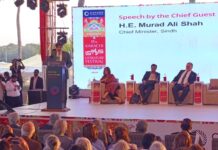
In a separate address at the Institute of Business Administration (IBA) Karachi on “Facts Survive AI: Fighting Misinformation Together,” Tarar emphasized the urgent need to combat misinformation, disinformation, and fake news, especially in the era of Artificial Intelligence.
He highlighted government initiatives, including the establishment of Pakistan’s first Digital Communication Department under the Ministry of Information and Broadcasting and the ministry’s social media efforts to verify or label content as misinformation. He commended IBA’s iVerify system and urged broader collaboration among media houses, academia, civil society, and government agencies.
The minister stressed that AI-generated content should be clearly labeled and responsible AI usage promoted, particularly in sectors like fintech, agri-tech, health tech, and education. He called upon younger generations—Gen Z and Gen Alpha—to play a leading role in defeating misinformation and upholding facts.
Public-private collaboration, global perspective
Tarar highlighted ongoing cooperation with the UNDP, Center for Excellence in Journalism, and other stakeholders to tackle misinformation effectively. He noted that the World Economic Forum Global Risks Report 2024 identified misinformation as the biggest short-term global risk, surpassing issues like climate change and nuclear threats.
He urged Pakistan’s media industry, including the Pakistan Broadcasters Association (PBA) and All Pakistan Newspaper Society (APNS), to actively participate in countering fake news, promising the government’s full support. Tarar emphasized that cohesive public-private partnerships and ethical education on AI are essential for ensuring factual information reaches the public and that AI is not misused for ideologies contrary to Pakistan’s national interests.