














For any student of international relations and geopolitics; there are very symmetrical trends which indicate that in a unipolar world, despite the fact that the policies are pushed and dictated by the USA, the apparent visibility of its military power seldom crosses the B-52 threshold; symbolic flights even for just refueling purposes, if not else? The only exception has been the June 2025 B-1 Lancer bombing raids of Fordow atomic sites in Iran.
Why we see these trends emanates from the fact that after the devastating wars in Afghanistan and Iraq, despite the fact that the occupation did not leave the aforementioned states too soon; but the eventual surrender to the people of these countries meant that these wars were nothing but a burden on the treasury. The resources which could have been spent on other heads of expenditure went there.
A closer look at the US elections after the two invasions reveals a very distinct antiwar slant; where the voters appreciated those candidates who opposed wars; or in other words opposed sending too many American sons and daughters to the call of duty; a sentiment which first made its presence felt much earlier after the futile Vietnam war ending 1975, but knocked the door again in 2008/09.
Later US deployments in the Middle East on sporadic basis, especially in Lebanon, also brought body bags; when the 243 or so US Marines were killed in a single strike attributed decades later to a Lebanese Amal/Hezbollah operative Emad Mughniyeh. It was not before the 2001 Afghanistan war in the backdrop of 9/11 and Iraq invasion in 2003 under the pretext of the WMD that the US economy and the polity felt the heat of the war fought in the foreign lands; a sentiment even picked up by vocalist groups like Status Quo way back in 1986 in their famous song “In the Army Now”.
Wars by nature are resource draining initiatives; which, if the initial victory is not achieved and the war effort gets into a stalemate, can eat away any economy. That precisely happened between the years 2001 to 2011 when both the fronts of Afghanistan and Iraq were blazing with IEDs and continuous human losses. The balance sheets were reflective of internal debts and the deficits ran to billions and trillions.
Apparently, the human development indicators got the hit and the loss of sons and daughters in the foreign assignments coupled with what the voter called ‘misplaced expenditure priorities’ created a firm voter block; which we might call the decisive swing vote in the South Asian context, which opposed war. The obvious choice for the US voters after the two terms of war mongering Republicans were the circumstantial antiwar democrats who forwarded Barak Obama as the choice for the President of the United States. Obama’s ascent was precisely on the note of minimizing wars outside the borders but quietly subletting wars under the vague banners; actually, subletting the same to the willing stakeholders and partners.
The first test of that strategy was witnessed in the case of the Syrian civil war during 2011 to 2024; the local stakeholders were encouraged to wage a proxy war; with apparently the USA looking like to be unconcerned about what was happening until 2013-onwards period, when the USA and Russians were face to face with Iran and the Syrian Baath setup supported by the Russians while the Jihadists again supported by the USA through Qatar and Turkey, in terms of finance as well as logistics; with southern districts of Turkey playing the same role for Syria, which Pakistan played in the 1980s for the USA in the case of Afghanistan.
These quickset solutions might benefit the unipolar calculations; as they continue to call the shots; but the ally states’ governance structures continue to be trapped in the quagmire of ‘regimentation’, ‘dictatorship’ and evolution of a democratic polity into a military one; where ‘sincere words of advice’ might see their natural path ‘wanting’. With cold war, war on terror 1, 2 and 3 behind, what is needed is; what in reality can be construed as a utopian wish for the rule of logic; not brute power. The director of the 2023 movie Umro Ayyar might have precisely wished that to be communicated.
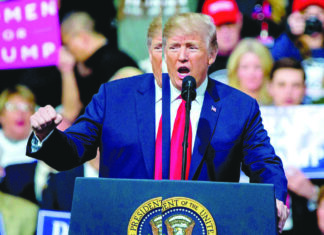
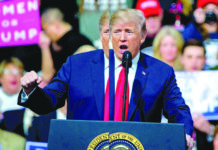
The succeeding Republicans again did not want to pursue war either. The Trump era was punctuated with the earlier laying down of the foundations of the ‘Abraham Accords’. The only indirect war; that one again with Iran under the pretext of containing Houthi influence in the Arabian Peninsula and Yemen, which started during the Obama years continued during the Trump years. The Biden years were basically uneventful; as the period looked more like a transitional period. The Biden government did not act out of the way for the IDF but never abandoned support for it.
With the second Trump era heralding with a ceasefire between Hamas and IDF and the prisoner exchange; in a way signaling that the USA was not for war but for peace; but that was in fact another deceptive smokescreen where the USA was pulling back and going for more political solutions around the globe in conflicts where it has its strategic interests; while in practice it was letting its regional partners, soldiers of fortune, non-state actors do its job.
The range of indirect US interventions through its regional allies ranges from interfering in regional conflicts in Africa; specifically in Sudan or even in the Maghreb region (and now Nigeria); where nation states now not more than a wasteland and a cause of concern for the United Nations are being intervened into through support for the warlords having no mass following but sophisticated weapons in their possession. Here it is pertinent to note that that interference has recently manifested itself in investments by the allied states; with finances from one ally and military expertise from another ‘willing’ ally.
Without naming the states, a cursory look at the Middle East, South Asia and Far East reveals that the USA has encouraged states having deep pockets to invest in the arms and ammunition needs of the rogue elements as it did in the case of Syrian civil war and combine that with expertise available; as has been observed in the case of Indonesia and other ‘willing states’ providing the largest contingent for the proposed Gaza peacekeeping force; a potentially controversial ‘policing job’. In fact the USA had maintained what can be called the ‘looking the other way attitude’ with respect to their governance issues, especially the human rights issues of states opting to be willing allies.
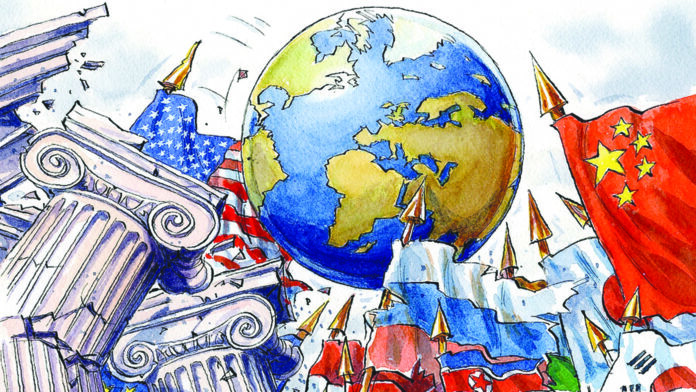
In that way, the US influence, despite the fact that the US firepower is depleting with the passage of time, has been able to maintain its nuisance value in one way or another. Another observation voiced by independent journalists and analysts especially of South Asian origin has been the ascent of Israel as the real time US policy tool. It might look odd to restate it; but the fact remains that the Abraham Accords, the near-genocide in Gaza, the neutralization of resistance as well as Hamas, with secular militant organization PLO already toothless, has been done by the IDF with the final beneficiary the USA. Here it is pertinent to note that the so-called East, in the form of China and Russia, has in fact stopped short of posing any real threat to the unipolar domination.
These quickset solutions might benefit the unipolar calculations; as they continue to call the shots; but the ally states’ governance structures continue to be trapped in the quagmire of ‘regimentation’, ‘dictatorship’ and evolution of a democratic polity into a military one; where ‘sincere words of advice’ might see their natural path ‘wanting’. With cold war, war on terror 1, 2 and 3 behind, what is needed is; what in reality can be construed as a utopian wish for the rule of logic; not brute power. The director of the 2023 movie Umro Ayyar might have precisely wished that to be communicated.