














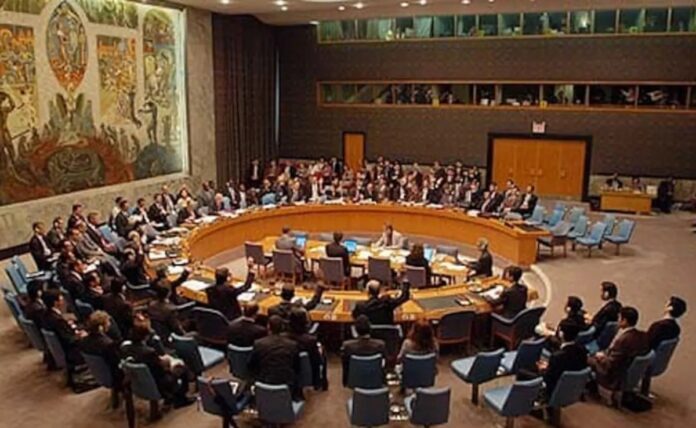
Pakistan has informed the UN Security Council that terrorism emanating from Afghanistan remains the “gravest threat” to its national security. Ambassador Asim Iftikhar Ahmad, speaking at the Council’s briefing on Afghanistan, outlined the ongoing operations of various terrorist groups, including Daesh-K, Al-Qaeda, Tehreek-e-Taliban Pakistan (TTP), and others, which continue to operate from Afghan sanctuaries.
Ambassador Iftikhar stated that over 60 terrorist camps exist in Afghanistan, acting as hubs for cross-border attacks. He presented “credible evidence” of collaboration among these groups, highlighting their joint training, illicit weapons trade, and coordinated attacks on Pakistan’s civilian and military targets.
The ambassador also addressed the online threat posed by these groups, noting that nearly 70 propaganda accounts linked to Afghan IP addresses were being used to promote extremist agendas. He called for stronger cooperation with social media platforms to curb this activity.
Iftikhar further revealed that Pakistan and China had requested the UN’s 1267 Sanctions Committee to list the BLA and Majeed Brigade, urging prompt action on the proposal. He described the TTP as the largest terrorist group on Afghan soil with around 6,000 fighters. Pakistan has thwarted several infiltration attempts, often at a heavy cost, with 12 Pakistani soldiers recently martyred while defending the borders.
The ambassador also addressed Afghanistan’s ongoing economic and humanitarian crisis, emphasizing the insufficient funding for the UN’s 2025 Humanitarian Needs and Response Plan, which has only received 27% of its required funds. He called for fairer sharing of the refugee burden, highlighting Pakistan’s long history of hosting Afghan refugees with limited international support.
Despite the end of civil war in Afghanistan, Iftikhar stressed that the situation remained concerning, urging continued engagement rather than isolation to achieve lasting peace.