Dar reviews Pakistan’s diplomatic strategy as US-Iran conflict escalates with fresh attacks
Foreign Minister Ishaq Dar reviews Pakistan’s diplomatic priorities and preparations as US-Iran exchanges escalate around the Strait of Hormuz, pushing oil prices higher and heightening regional fears.

High-level Foreign Office meeting assesses diplomatic priorities and preparations for upcoming international engagements
Pakistan reiterates support for dialogue, urges both sides to honour Islamabad Memorandum of Understanding
Renewed fighting around Strait of Hormuz fuels fears of wider regional conflict and fresh surge in global oil prices
Dar stresses close coordination and effective implementation of diplomatic initiatives to safeguard Pakistan’s national interests
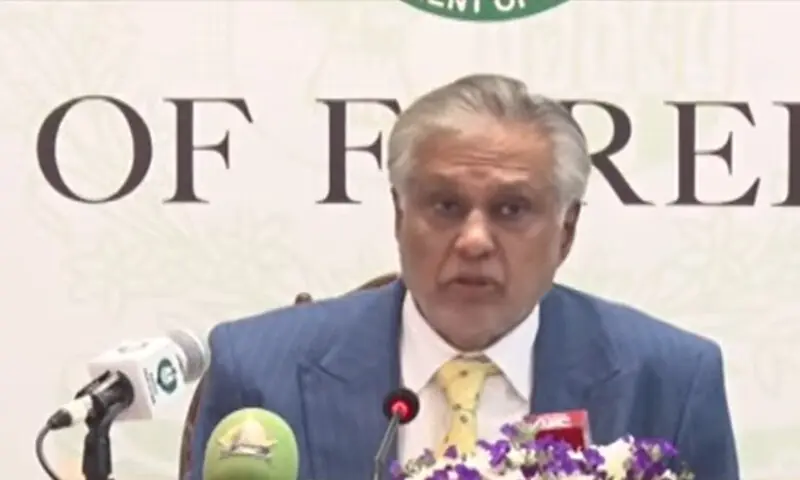
ISLAMABAD: Deputy Prime Minister and Foreign Minister Senator Muhammad Ishaq Dar chaired a high-level meeting on Saturday to review Pakistan's diplomatic priorities and preparations for upcoming international engagements as the conflict between the United States and Iran intensified with fresh exchanges of attacks across the Middle East, further heightening regional tensions and concerns over global energy security.
According to the Foreign Office, Dar presided over a meeting attended by Foreign Secretary Ambassador Amna Baloch and senior officials of the Ministry of Foreign Affairs to review the country's diplomatic agenda and preparations for forthcoming engagements.
The meeting took place as the US Central Command (CENTCOM) announced that American forces had carried out another round of strikes against Iran on Saturday night, targeting Iranian military coastal surveillance and air defence facilities, maritime capabilities, as well as missile and drone storage sites.
The latest strikes followed the eighth consecutive night of fighting between the United States and Iran. Tehran, meanwhile, warned on Saturday that it would launch a "full-scale offensive" if US attacks continued, saying it had targeted American military sites in Kuwait, Bahrain and Jordan. The conflict, which began on February 28, has spread across the Gulf region, disrupting shipping through the strategic Strait of Hormuz and driving global oil prices higher.
According to the Foreign Office, the deputy prime minister reviewed Pakistan's recent diplomatic engagements during the meeting.
"The meeting covered follow-up actions, ongoing diplomatic priorities, and preparations for upcoming engagements," the Foreign Office said in a statement.
Deputy Prime Minister/Foreign Minister Senator Mohammad Ishaq Dar @MIshaqDar50 held a meeting with Foreign Secretary Ambassador Amna Baloch and senior officials of the Ministry of Foreign Affairs and discussed recent diplomatic engagements.
The meeting covered follow-up actions,… pic.twitter.com/W9MucBl3c8— Ministry of Foreign Affairs - Pakistan (@ForeignOfficePk) July 18, 2026
It added that Dar emphasized the importance of close coordination, effective implementation of diplomatic initiatives and sustained efforts to advance Pakistan's foreign policy objectives and safeguard the country's national interests.
Pakistan has positioned itself as a reliable mediator between the United States and Iran since the conflict erupted in February and has consistently worked to prevent a broader regional confrontation.
Islamabad maintains cordial relations with both Washington and Tehran and played a key role in facilitating the signing of the Islamabad Memorandum of Understanding (MoU) in June before hostilities resumed last week after the United States accused Iran of unprovoked attacks on vessels transiting the Strait of Hormuz.
The Islamabad MoU is an interim 14-point peace framework under which Washington and Tehran agreed to hold negotiations aimed at reaching a comprehensive settlement of the conflict within a 60-day period.
Since the resumption of hostilities, Pakistan has repeatedly urged all parties to honour the provisions of the Islamabad MoU and resolve their differences through dialogue and diplomacy.
The renewed military exchanges over the strategically vital Strait of Hormuz have once again pushed global oil prices sharply higher, raising concerns over inflationary pressures in countries far beyond the immediate conflict zone.
The vital maritime corridor, through which a significant share of the world's oil and gas supplies passes and which Iran insists it controls, has once again emerged as the focal point of the escalating confrontation that reignited last week.

Comments
No comments yet. Be the first to join the discussion!