March 2, 2026
Pakistan urges immediate de-escalation after US-Israel strikes on Iran
Pakistan's Foreign Minister Ishaq Dar emphasizes the need for immediate diplomatic efforts to de-escalate tensions after recent US-Israel strikes on Iran, warning of a fragile regional environment.
March 2, 2026

-- Dar defends Pakistan’s 'measured' military response to Afghanistan
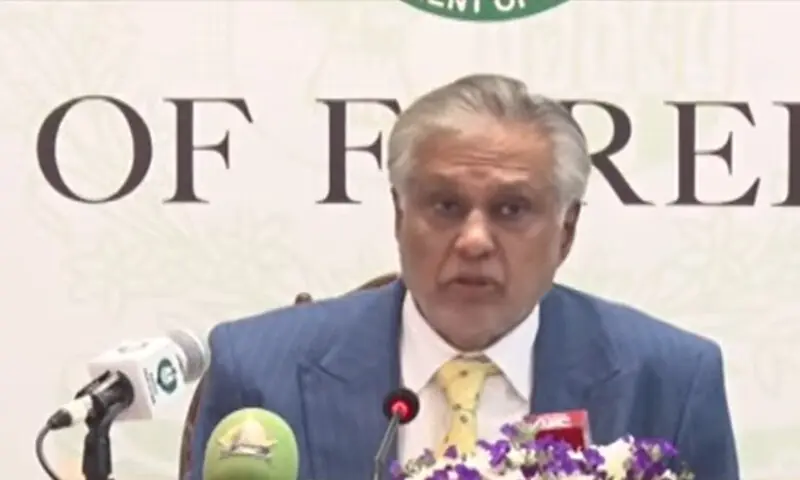
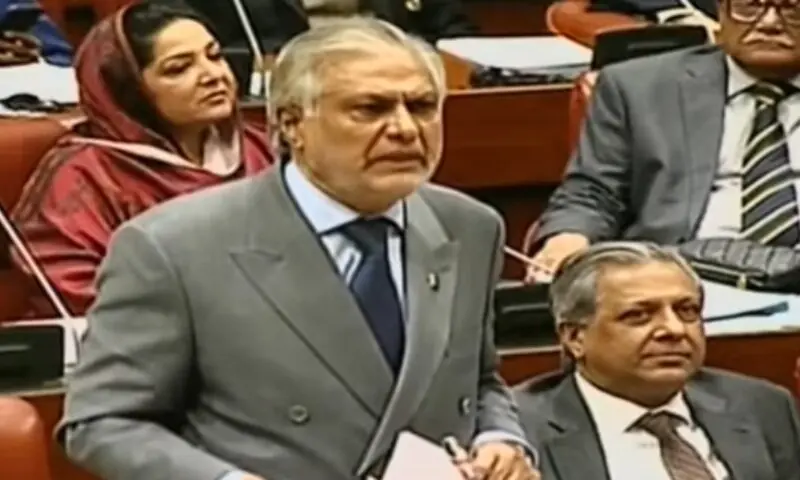
ISLAMABAD: Deputy Prime Minister and Foreign Minister Ishaq Dar on Monday said Pakistan was making “full diplomatic efforts” to defuse soaring regional tensions following attacks by the United States and Israel on Iran, warning that developments over the past 72 hours were “very, very worrisome.”
Addressing a media briefing in Islamabad, Dar said the latest escalation had significantly heightened tensions in an already fragile environment, particularly at a time when diplomatic channels were active.
“We are making full diplomatic efforts and requesting all parties to de-escalate,” he said, stressing that Pakistan’s consistent position was rooted in adherence to the UN Charter and international law, including respect for sovereignty and territorial integrity.
He noted that Prime Minister Shehbaz Sharif had engaged international stakeholders during his recent visit to Austria, including discussions with the International Atomic Energy Agency, and described the feedback as positive.
Concern over targeting of leadership
Dar expressed alarm over what he described as the targeting of Iran’s Supreme Leader, Ali Khamenei, calling it a violation of international norms.
“We are concerned over the violation of norms as well as international law … that heads of state and government have been targeted,” he said.
He revealed that he had spoken last week with Iran’s Foreign Minister Abbas Araghchi, conveying Pakistan’s condemnation of the attacks and urging restraint, diplomacy, and dialogue.
While acknowledging Iran’s right to self-defence, Dar also condemned retaliatory strikes against Saudi Arabia, Bahrain, Jordan, Kuwait, Qatar, the United Arab Emirates and Oman, saying there could be “no double standards” when it comes to international law.
At the United Nations Security Council, Pakistan’s permanent representative reiterated condemnation of the attacks on Iran and called for urgent diplomatic engagement, he added.
“Dialogue and diplomacy are the only way forward,” Dar stressed, saying Pakistan stood in solidarity with brotherly countries and was urging maximum restraint at all levels.
Mediation between US and Iran
Recalling previous and recent rounds of negotiations between Washington and Tehran, including talks in Geneva and Oman, Dar said Pakistan had consistently encouraged both sides to pursue a “win-win” solution through dialogue.
“They were both positive and forthcoming,” he said, adding that Islamabad remained ready to support a peaceful resolution of outstanding issues.
He also expressed regret over the death of a Pakistani national during Iran’s strike on Abu Dhabi, noting that millions of Pakistanis reside in Gulf states and that diplomatic missions were actively coordinating with local authorities.
‘Operation Ghazab lil-Haq’ in self-defence
Turning to Afghanistan, Dar said Pakistan desired good relations with all neighbours but would not tolerate its soil being used for terrorism.
He said Islamabad had repeatedly urged Kabul to prevent groups such as the Tehreek-i-Taliban Pakistan (TTP), Balochistan Liberation Army (BLA) and Majeed Brigade from operating from Afghan territory.
Following what he termed “serious violations” and repeated attacks that resulted in soldiers being martyred weekly, Dar said Pakistan had no choice but to launch Operation Ghazab lil-Haq.
“We have the capacity, the will and the kinetic capability to handle it in a meaningful way, but we have exercised extreme restraint,” he said.
He stated that prior to the full-scale operation, Pakistan conducted intelligence-based strikes on seven terrorist camps on February 21. The broader operation, he said, targeted 37 locations across Afghanistan, including in Kabul, Kandahar, Paktia, Nangarhar, Khost and Paktika.
Dar claimed that 415 Taliban regime personnel and militants were eliminated, 182 posts destroyed, 31 captured, and 185 tanks and armoured personnel carriers destroyed. He maintained that the strikes were “proportionate, minimum and measured,” carefully avoiding civilian populations.
Describing alleged Afghan Taliban actions across 53 locations in Khyber Pakhtunkhwa on the night of February 26 as “provocative” and unacceptable, he said Pakistan’s response was unavoidable.
“Pakistan has conclusive evidence” linking recent attacks in Bajaur and Bannu to TTP elements operating from Afghan soil, he asserted.
Reiterating Islamabad’s broader stance, Dar concluded: “Pakistan has always supported cessation of hostilities, upholding international law and resumption of diplomacy. We stand ready to extend support towards a peaceful and negotiated resolution — but our sovereignty and security are non-negotiable.”
0 Comments
No comments yet. Be the first to join the discussion!