Dar stresses ceasefire commitments in call with Kuwaiti foreign minister
Ishaq Dar told Kuwait’s foreign minister that ceasefire commitments under the Islamabad MoU must be upheld and further escalation avoided. The call came amid Kuwaiti concerns over attacks on its territory and reports of wider defence talks with Pakistan.

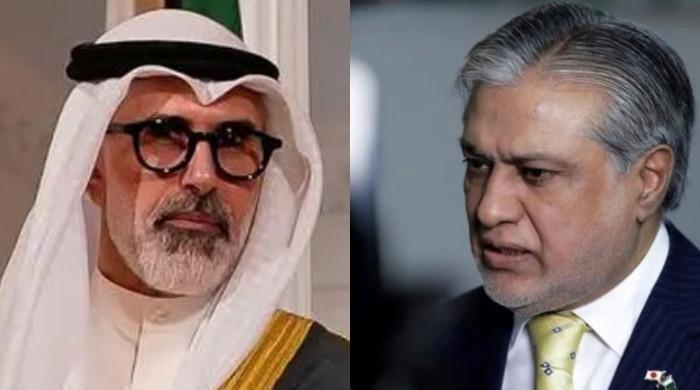
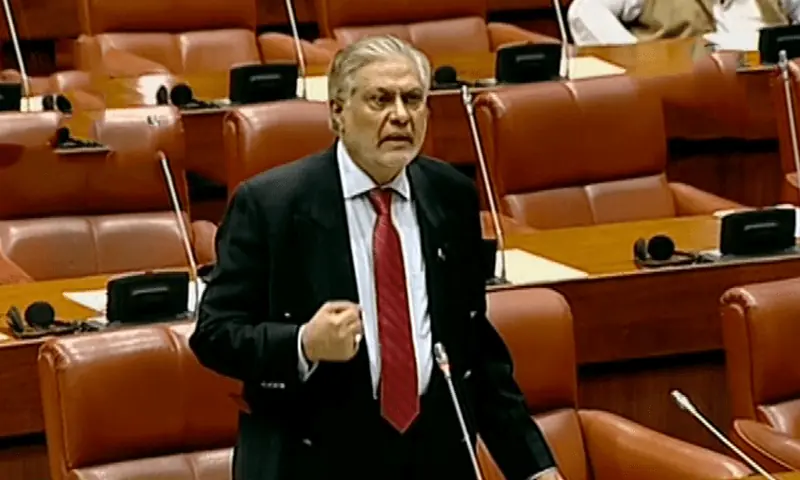
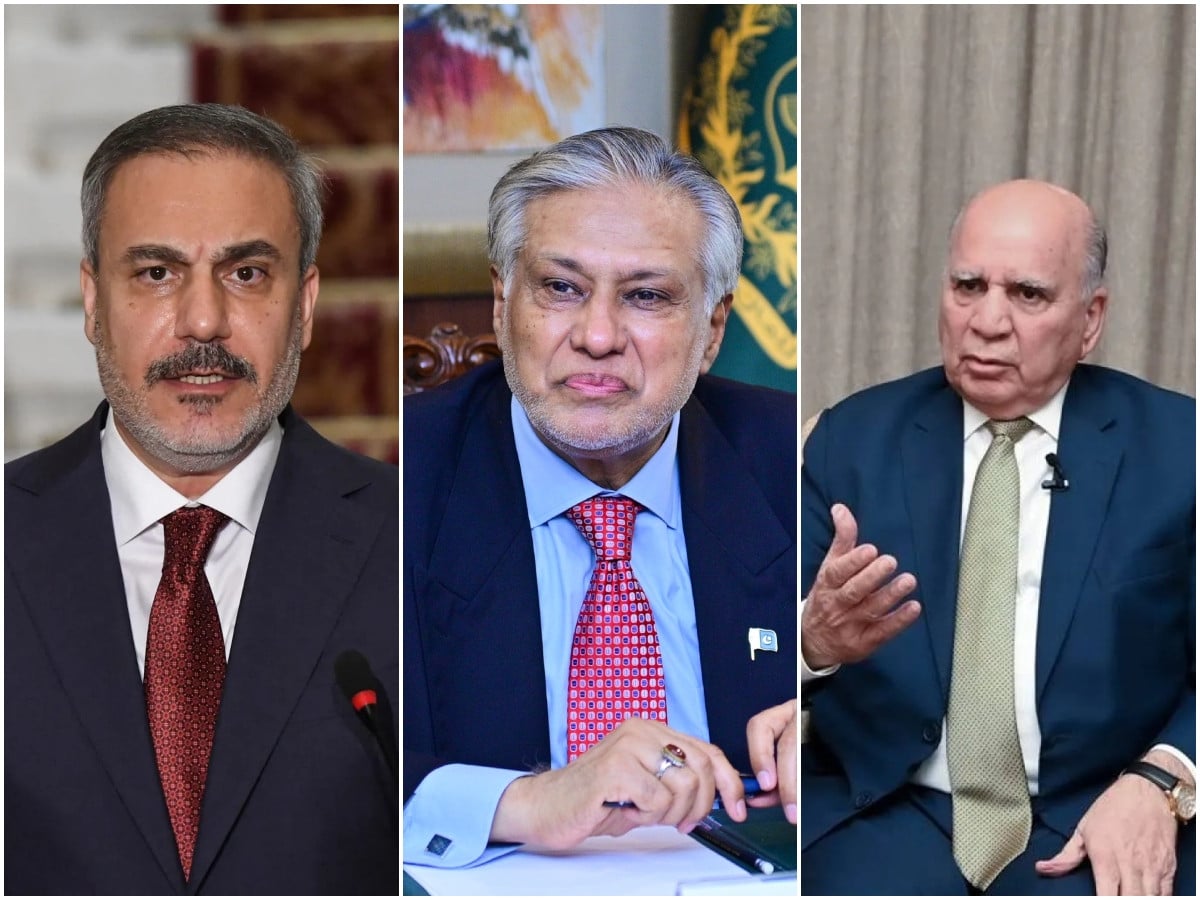
ISLAMABAD: Deputy Prime Minister and Foreign Minister Senator Ishaq Dar on Saturday urged adherence to ceasefire commitments under the Islamabad MoU and called for avoiding steps that could further heighten tensions in the Middle East, a Foreign Office spokesperson said.
The remarks came during a telephone conversation with Kuwaiti Foreign Minister Sheikh Jarrah Jaber Al-Ahmad Al-Sabah. The two ministers reviewed the latest regional situation during the call.
The Kuwaiti foreign minister conveyed his country’s deep concern over continuing attacks on Kuwaiti territory and expressed hope that all sides would act with restraint and that the Islamabad MoU would be fully implemented. He also appreciated Pakistan’s constructive and mediatory role in supporting dialogue and regional stability.
Dar stressed the need for immediate de-escalation and underscored respect for the sovereignty and territorial integrity of all states. He also said preserving regional peace and security must remain the top priority. The two sides agreed to stay in close contact on issues of mutual interest.
Kuwait raises concern over attacks
The development followed Kuwait’s accusation, made hours earlier, that Iran had targeted civilian locations and key infrastructure in the country after reported attacks on an oil facility and a power and water plant.
Kuwait’s foreign ministry said:
"The repeated targeting of these vital facilities reveals a systematic hostile approach targeting civilian sites and vital infrastructure that endangers the lives and safety of civilians"
Defence discussions with Pakistan
A day earlier, Pakistan and Kuwait were discussing an expanded defence arrangement linked to energy cooperation and investment, citing five sources familiar with the matter. The talks were still at an early stage and could be affected by increased tensions between the United States and Iran.
Concerns were growing in Islamabad that Pakistan’s mutual defence pact with Saudi Arabia, signed last year, could pull the country into the US-Iran conflict. After the Iran-aligned Houthi movement launched an attack on Saudi Arabia on Monday, Pakistan told Iran it would regard attacks on the kingdom as attacks on itself.
Kuwait has had a narrower defence agreement with Pakistan since 2023 covering training and joint exercises. Kuwait is now seeking a stronger Pakistani commitment similar to Islamabad’s arrangement with Saudi Arabia, including ground troops, fighter aircraft, drones, air defence systems and other defence-related support.
It remained unclear whether Pakistan was prepared to go that far, particularly as its agreement with Saudi Arabia stemmed from a long-standing alliance with Riyadh. A Pakistani government official said Kuwait wanted a broad package, and a security official familiar with the talks said: "Kuwait's wish list includes everything"
The same official added “But let me be clear about one thing: We are not and we cannot consider a deployment of combat troops at this stage.”
A Middle Eastern source confirmed that Kuwait and Pakistan had been in contact, including on defence procurement, but said:
"not clear this will amount to a defence pact per se."
Pakistan’s military media wing and Kuwait’s information ministry did not respond to requests for comment.
Broader regional interest
Pakistan and several Gulf states had, over the past year, seen value in pursuing new regional defence arrangements. Pakistan’s large military and domestic fighter jet production had made it a possible alternative or supplement to US security support as some Gulf states became more cautious about Washington’s reliability as an ally.
A source in the Middle East familiar with Kuwait’s security planning said that Pakistan was viewed positively in Kuwait because of its existing security relationship with Saudi Arabia, its defence development history and its ties with the United States. Turkiye, Pakistan and Saudi Arabia had been preparing a draft agreement for a separate mutual defence pact, while Bahrain was interested in a similar arrangement and Jordan had shown interest in a weapons and training deal.
Comments
No comments yet. Be the first to join the discussion!