Dar reinforces ceasefire commitments, engages regional partners after ‘Islamabad Talks’
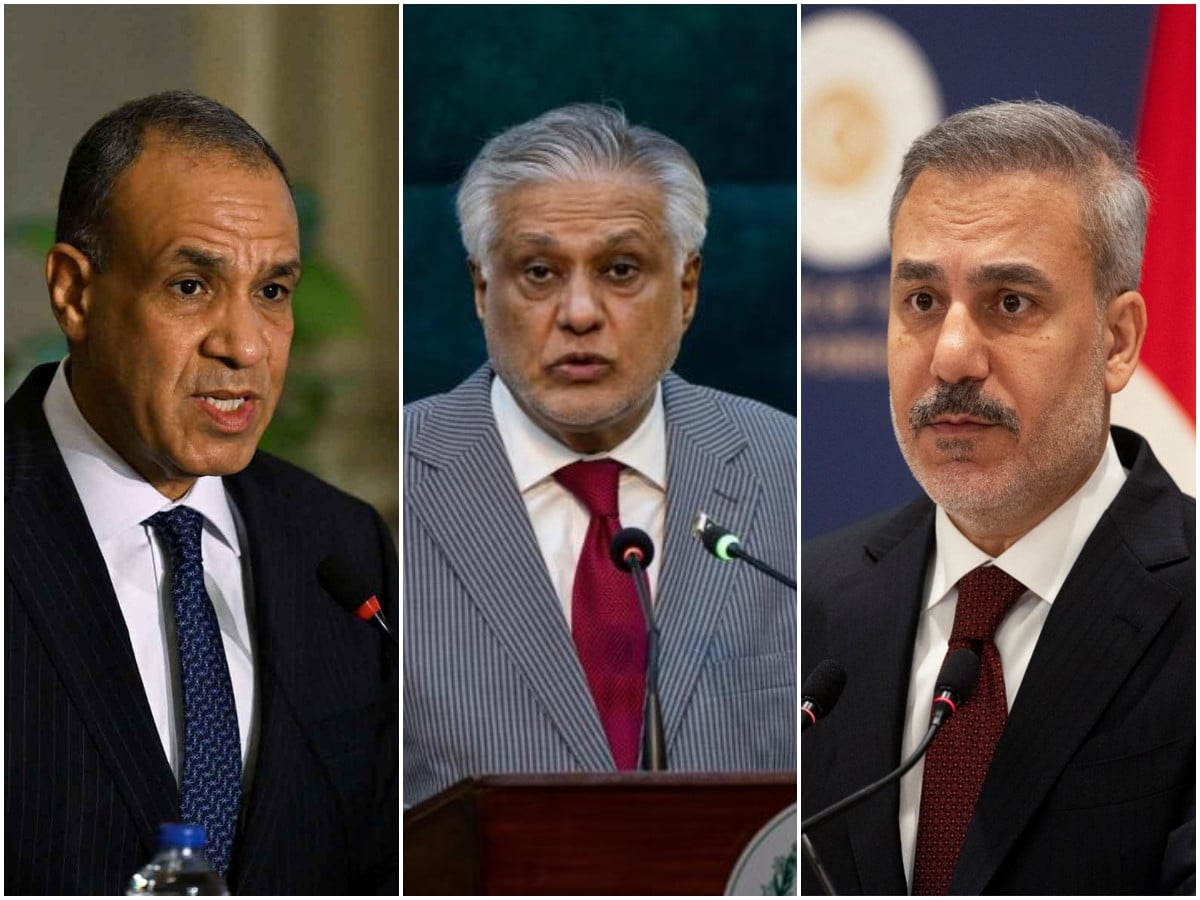
Foreign Minister Ishaq Dar held calls with Saudi, Egyptian and Turkish counterparts, reaffirming Pakistan’s role in facilitating Islamabad talks and urging strict ceasefire adherence after US–Iran talks ended without agreement.

FM Ishaq Dar holds key calls with Saudi, Egyptian and Turkish counterparts Washington-Tehran Talks ended without agreement
Reiterates commitment to sustained ceasefire and dialogue process, sharing updates on Islamabad-hosted negotiations with Saudi, Egyptian FMs
Urges regional leaders to uphold ceasefire commitments for stability, reaffirming Pakistan’s role as facilitator amid escalating Middle East tensions
Turkey praises Pakistan’s facilitation role in US–Iran engagement, invites FM Dar to Antalya Diplomacy Forum
ISLAMABAD: Deputy Prime Minister and Foreign Minister Ishaq Dar on Sunday held key telephonic talks with his counterparts from Saudi Arabia, Egypt and Turkiye, reaffirming Pakistan’s commitment to continued diplomatic engagement, dialogue, and ceasefire consolidation efforts aimed at promoting peace in the region, according to the Foreign Office (FO).
The conversations came after the conclusion of US–Iran talks held in Islamabad early Sunday morning, which ended without reaching any agreement.
In a statement, the Foreign Office said DPM/FM Dar first spoke with Saudi Foreign Minister Prince Faisal bin Farhan, during which he shared updates on the Islamabad Talks and underscored the importance of all parties strictly adhering to their ceasefire commitments.
Deputy Prime Minister/Foreign Minister Senator Mohammad Ishaq Dar @MIshaqDar50 spoke today with Saudi Arabia’s Foreign Minister, Prince Faisal bin Farhan @FaisalbinFarhan.
DPM/FM shared developments regarding the Islamabad Talks. He stressed the importance of all parties… pic.twitter.com/JlNqMoMcAp— Ministry of Foreign Affairs - Pakistan (@ForeignOfficePk) April 12, 2026
He reaffirmed Pakistan’s resolve to continue supporting diplomatic efforts and sustained dialogue for lasting peace and stability in the Middle East and beyond.
“FM Dar spoke today with Saudi Arabian Foreign Minister Prince Faisal bin Farhan. During the call, FM Dar shared developments regarding the Islamabad Talks, and stressed the importance of all parties adhering to their ceasefire commitments,” the FO said.
“Underscoring Pakistan’s role in facilitating the dialogue, he reaffirmed the resolve to continue supporting all diplomatic efforts and sustain dialogue to promote peace and stability in the region and beyond,” it added.
The FO noted that the call took place on the same day the Washington–Tehran talks in Islamabad concluded without agreement. The negotiations, facilitated by Pakistan, were aimed at restoring peace more than a month after the US and Israel launched attacks on Iran on February 28, triggering a conflict that later contributed to a global fuel crisis.
In a separate conversation with Egyptian Foreign Minister Dr Badr Abdelatty, Deputy PM and Foreign Minister Ishaq Dar reiterated the need for continued diplomacy and engagement to achieve sustainable peace, the FO said.
Deputy Prime Minister/Foreign Minister Senator Mohammad Ishaq Dar @MIshaqDar50 spoke with Egypt’s Foreign Minister, H.E. Badr Abdelatty today.
DPM/FM briefed his Egyptian counterpart on the ‘Islamabad Talks’ and Pakistan’s continued efforts in facilitating engagement between… pic.twitter.com/htjncZLlxu— Ministry of Foreign Affairs - Pakistan (@ForeignOfficePk) April 12, 2026
The statement added that FM Dar briefed his Egyptian counterpart on the Islamabad Talks and Pakistan’s continued facilitation efforts, stressing that all parties must uphold their ceasefire commitments.
“He emphasised that it is imperative for all the parties to uphold their commitment to the ceasefire,” the FO stated, adding that Dar reiterated the need for sustained dialogue and diplomacy for peace and stability in the region and beyond.
In another call, Turkish Foreign Minister Hakan Fidan commended Pakistan’s role in facilitating dialogue between Iran and the United States, according to the FO.
The Foreign Office said FM Dar shared developments regarding the Islamabad Talks and stressed the importance of maintaining ceasefire commitments.
Deputy Prime Minister/Foreign Minister Senator Mohammad Ishaq Dar @MIshaqDar50 spoke this evening with the Foreign Minister of Türkiye, Hakan Fidan@HakanFidan.
DPM/FM shared developments regarding the ‘Islamabad Talks’ and stressed the importance of all parties adhering to… pic.twitter.com/XEkxaSdYU8— Ministry of Foreign Affairs - Pakistan (@ForeignOfficePk) April 12, 2026
Both sides reaffirmed their support for diplomatic efforts aimed at sustaining dialogue and promoting peace and stability in the region and beyond.
FM Fidan also extended an invitation to FM Dar for the upcoming Antalya Diplomacy Forum later this month.
Pakistan has positioned itself as a facilitator in the peace process since the onset of the conflict, with Prime Minister Shehbaz Sharif and Deputy Prime Minister Ishaq Dar engaging regional and international leaders to promote dialogue and de-escalation.
On March 24, PM Shehbaz stated that Pakistan stood “ready and honoured” to host “meaningful and conclusive talks” between the United States and Iran.
The following day, Washington sent a 15-point peace proposal to Tehran through Pakistan, while Iran responded with its own five conditions for ending the conflict. Although Iranian media initially reported rejection of the US proposal, FM Dar on March 26 confirmed that “indirect talks” were underway, with Pakistan relaying messages.
Subsequently, foreign ministers from Saudi Arabia, Turkiye and Egypt visited Islamabad on March 29 and participated in a quadrilateral meeting focused on de-escalation in the Middle East. After the meeting, Dar said both Iran and the United States had expressed confidence in Pakistan’s facilitation role, adding that Islamabad would be honoured to host further dialogue “in the coming days.”
Later, FM Dar visited Beijing, where Pakistan and China issued a five-point initiative aimed at restoring peace and stability in the Gulf and Middle East.
Tensions escalated further on April 5 when then-US President Donald Trump issued a deadline for Iran to accept a ceasefire deal with Washington and allow maritime traffic through the Strait of Hormuz, a key global energy corridor through which around 20 per cent of the world’s oil and liquefied natural gas passed before the conflict.
“Tuesday, 8:00 P.M. Eastern Time,” he wrote, warning of strikes on Iranian infrastructure, including power plants and bridges, increasing pressure on diplomatic efforts.
Meanwhile, Iranian media reported that Tehran conveyed its response to the US proposal through Pakistan, again rejecting a ceasefire and calling instead for a permanent end to hostilities. The Iranian response reportedly included 10 clauses covering regional de-escalation, safe passage through the Strait of Hormuz, sanctions relief, and reconstruction.
On the day of the deadline, Trump further intensified his warnings, prompting global concern.
With hours remaining, PM Shehbaz Sharif publicly urged Trump to extend the deadline by two weeks, stating that diplomatic efforts for a peaceful settlement were “progressing steadily, strongly and powerfully.” He also requested Iran to allow continued Strait of Hormuz passage for a corresponding two-week period.

Comments
No comments yet. Be the first to join the discussion!