xAI ran 59 unpermitted turbines near Black communities
A Reuters analysis says xAI installed 59 unpermitted natural gas turbines for its Colossus 2 data centre project near predominantly Black communities in Mississippi and Tennessee. The dispute is now at the centre of a Clean Air Act lawsuit.

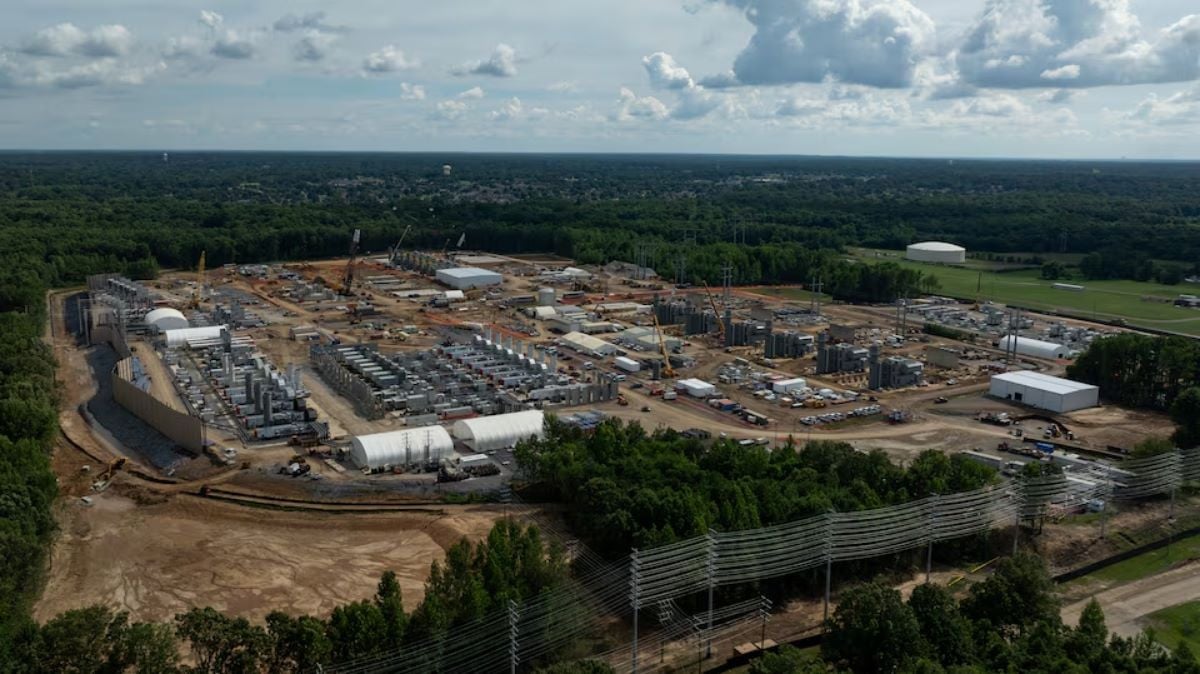
WASHINGTON: Elon Musk’s artificial intelligence company xAI installed 59 natural gas turbines for its Colossus 2 data centre project in Tennessee without first obtaining federal clean air permits, according to communications between regulators and company representatives reviewed by Reuters.
The potential emissions from the turbines are far above the level that would trigger a federal permit requirement. The pollution would be released near largely Black communities that government data shows already face disproportionately high rates of lung disease. Reuters said its findings had not previously been reported.
xAI had previously said it was operating 27 unpermitted turbines for Colossus 2 as of January and had argued that permits were not required. Reuters reported that the number it identified is roughly double that public figure. At least 57 of the 59 turbines are in Mississippi, just across the state line from Tennessee, where the Memphis data centre supports the Grok chatbot and other AI systems. Records reviewed by Reuters also showed two additional unpermitted turbines tied to the project at another site, though Reuters said it could not determine that location.
The communications were obtained through a public records request and included emails between Trinity Consultants, representing xAI and subsidiary MZX Tech, and the Mississippi Department of Environmental Quality, or MDEQ. Reuters said xAI did not respond to its request for comment.
Permit dispute and legal challenge
The turbines have become part of a broader environmental justice dispute over whether the rapid expansion of AI infrastructure is placing a heavier pollution burden on communities of colour. Civil rights groups including the NAACP and the Southern Environmental Law Center sued xAI in April seeking to stop the turbines from operating, arguing that the emissions fall under the federal Clean Air Act and that the units should not be running without permits.
Patrick Anderson, an attorney with the Southern Environmental Law Center, said the scale of the project raised serious concerns.
He added:
“This is an absolutely huge Clean Air Act violation that threatens public health.”
Reuters reported that obtaining a Clean Air Act permit would have subjected the project to extensive review and public comment, a process that can take years. In court filings, Mississippi regulators and xAI have argued that the turbines are exempt because they are mobile and intended to operate onsite for less than a year. MDEQ told Reuters:
"MDEQ has determined that portable/temporary turbines do not require an air permit,"The US Environmental Protection Agency said in January 2026 that temporary turbines exceeding emissions thresholds must still obtain permits. Reuters reported that the EPA also said it is considering changes that would allow regulatory flexibilities for portable units while continuing to protect public health.
The US Justice Department, in a June 15 filing in the lawsuit, said limiting the turbines could affect national security interests because xAI’s systems support US military operations, including operations involving Iran.
Emissions and community impact
Reuters said manufacturer emissions profiles for 32 of the 59 turbines were included in the emails it reviewed, including 30 units at the Southaven site. Based on that material, Reuters calculated that those 30 turbines alone could emit nearly 2,500 short tons of nitrogen oxide, 4,000 short tons of carbon monoxide and 22 short tons of formaldehyde each year if operated continuously at 80% of capacity. The EPA says gas turbines are typically run at loads of 80% or more for efficiency.
According to the American Lung Association, nitrogen oxides contribute to smog and respiratory inflammation, carbon monoxide reduces the body’s oxygen supply, and formaldehyde is a carcinogen. Reuters said the site’s potential emissions are far above the Clean Air Act threshold requiring permits for facilities capable of emitting more than 100 short tons a year of pollutants such as nitrogen oxide.
Ben King of Rhodium Group, who reviewed the Reuters analysis, said the project appears to be exceptionally large for an off-grid gas installation serving a single customer.
"This looks to be an unprecedented level of behind-the-meter gas being installed in one place,"Nicholas Mailloux, a postdoctoral researcher at the University of Wisconsin-Madison, told Reuters the nitrogen oxide output estimated for about half the turbines would place the facility among the country’s heaviest-polluting gas plants for that pollutant, comparable to the top 25 US gas plants based on EPA data for actual emissions.
Local residents and advocates also voiced concern. Southaven resident Shannon Samsa said:
"This is a massive amount of turbines and an unfathomable amount of air pollution,"She added:
“It’s not a hypothetical,” she said, “that air pollution is bad for you.”
Mary Rock, a senior attorney for Earthjustice, which is representing the NAACP and the Southern Environmental Law Center, said the case could shape how environmental law is applied to the AI industry.
"This sets up scenarios where the government can create sacrifice zones and tell communities they have to breathe illegal air pollution,"Reuters also cited a 2022 study by researchers at UCLA and Columbia University, published in Nature Energy, which found that previously redlined communities now face disproportionate exposure to pollution from fossil fuel facilities. Lara Cushing, a UCLA public health professor who co-authored the study, told Reuters:
"Air pollution from these and other sources contributes to systemic racial disparities in chronic disease and ultimately shorter lives,"Reuters said Mississippi regulators issued a permit in March for permanent turbines for Colossus 2, authorising construction of 41 gas-fired turbines. That approval came three weeks after the state’s only public hearing on the project.
Comments
No comments yet. Be the first to join the discussion!