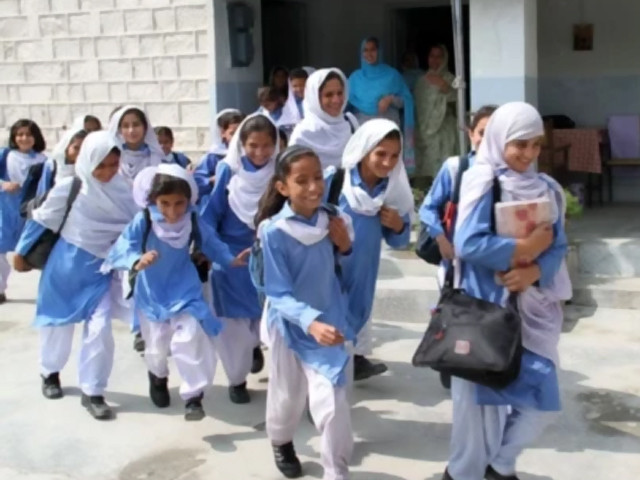
Over 25 million children remain out of school: report
A Civil Services Academy review says between 25.1 million and 26 million school-age children in Pakistan remain out of school despite policy commitments and a national education emergency. The report points to weak implementation, low funding and deep provincial disparities.

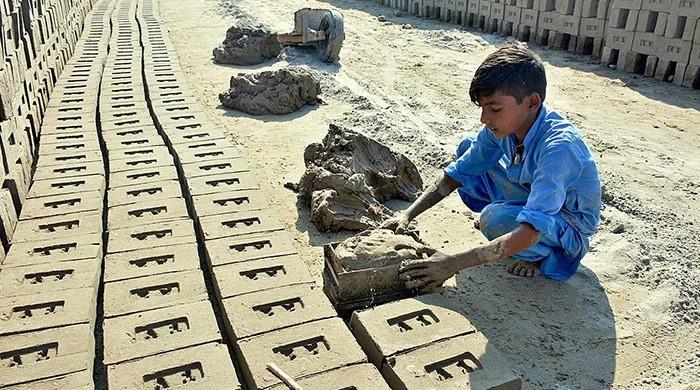
LAHORE: More than 25 million children in Pakistan are still out of school more than two years after the country declared a National Education Emergency, according to a comparative policy review prepared by the Civil Services Academy (CSA) and cited in a report published by The News.
The review says the country’s education crisis is no longer mainly about drafting policies, but about carrying them out. It says weak governance, fragmented administration, insufficient financing, poor integration of data and sharp differences across provinces continue to hinder progress under Article 25-A of the Constitution, which guarantees free and compulsory education.
All provinces have drawn up roadmaps under the National Education Action Plan (NEAP) 2026, but implementation has fallen further behind planning. It warns that without changes in governance, accountability and financing, the National Education Emergency could remain largely symbolic rather than becoming an effective response.
Citing Pakistan Institute of Education data, the review links the current situation to long-term systemic neglect. It says rapid population growth, poverty, weak institutional capacity and consistently low public spending on education have, over time, increased the number of children excluded from formal schooling.
National and provincial picture
The CSA review was compiled by five Policy Analysis Groups at the Pakistan Administrative Service Campus. It examines education systems in Punjab, Sindh, Khyber Pakhtunkhwa, Balochistan, Islamabad Capital Territory, Gilgit-Baltistan and Azad Jammu and Kashmir on indicators including effectiveness, equity, efficiency, ethical governance and feasibility.
It estimates that between 25.1 million and 26 million school-age children are currently out of school. The report, citing UNICEF assessments, says this gives Pakistan the world’s second-largest out-of-school child population.
The study says the declaration of a National Education Emergency on May 8, 2024 brought unusual political attention to the matter, but did not remove the disconnect between provincial conditions and centralised policy responses. It says each province faces different structural obstacles and therefore needs targeted interventions instead of a uniform approach.
Punjab carries the largest burden in absolute terms, with between 9.6 million and 10.4 million out-of-school children, the review says. According to the Punjab School Education Department’s 2026 baseline report, 6.4 million children in the province have never enrolled in school, while 3.16 million left after enrolling, indicating that retention is now as serious a challenge as access.
The report says Punjab has made progress through digital monitoring, governance reforms and public-private partnerships, but disparities remain wide. It says the out-of-school rate is 24% in rural Punjab compared with 14% in urban areas. In South Punjab, Rajanpur has a 48% out-of-school rate, followed by Dera Ghazi Khan at 46% and Muzaffargarh at 45%.
The review estimates Punjab needs around 35,000 additional classrooms at middle and secondary levels. It says poverty, child labour and household financial pressures continue to push children out of education.
In Sindh, the report describes the crisis as structurally different, saying the main problem is not initial entry into school but children’s inability to continue beyond primary education. It places the number of out-of-school children in the province at around 7.4 million, including 4.1 million girls, or 44% of Sindh’s school-age population.
Although Sindh has more than 36,000 primary schools, the report says it has only 2,634 middle schools and 1,674 secondary schools. It says this creates a severe bottleneck, leading to nearly 54% of children leaving education after completing primary school. The review also says floods in 2022 and 2024 damaged nearly half of public schools, worsening existing shortfalls, while poverty, child labour and entrenched feudal and patriarchal structures continue to disproportionately affect girls’ education.
Khyber Pakhtunkhwa accounts for about 4.9 million out-of-school children, or roughly 19% of the national total. It attributes the problem to mountainous terrain, security concerns, administrative fragmentation and a severe shortage of female teachers, especially in merged districts.
The report says that in Upper Kohistan, Torghar and Bajaur, the lack of girls’ schools and women teachers remains a major obstacle. It adds that conservative social norms further reduce girls’ enrolment in places where schools are staffed mainly by men.
Balochistan is described as the most structurally disadvantaged province. The review says the out-of-school rate there fell from 69% in 2023 to 45% in 2025, but major infrastructure deficits remain. Because of the province’s size, children often have to travel about 30 kilometres to reach primary schools and up to 360 kilometres for secondary education, making regular attendance difficult in many districts.
Of Balochistan’s 15,270 schools, 3,617 are non-functional or ghost institutions, the report says. Among operating schools, 79% do not have electricity, 56% lack sanitation facilities and 49% do not have boundary walls. It adds that girls make up 78% of all out-of-school children in the province.
Federal territories, funding and proposed reforms
The review also questions assumptions that federal territories are relatively stable in education terms. In Islamabad Capital Territory, it says enrolment is 85% in urban areas but drops to 62% in rural areas, while more than 60 informal settlements remain outside formal education planning frameworks.
In Gilgit-Baltistan, the report says Diamer district has a 42% out-of-school rate. In Azad Jammu and Kashmir, it says nearly half of children drop out before completing primary school, with maternal illiteracy and remote geography identified as major factors.
Despite differing regional circumstances, the review identifies one common constraint: very low public investment in education. It says Sindh spends nearly 90% of its education budget on salaries and administrative expenses, leaving little for development, while Balochistan allocates 81% of its education budget to salaries.
Punjab, by contrast, has announced a Rs100 billion package for school improvement, along with expanded outsourcing and partnership-based schooling models. It adds that Pakistan’s overall education spending remains well below international benchmarks, reinforcing concern that fiscal commitment has not matched population pressures or constitutional responsibilities.
The CSA review says the crisis is now shaped less by a lack of diagnosis and more by repeated failure to implement known solutions. It recommends a structural overhaul beginning with a unified National Student Registry linked to Nadra’s B-Form system for real-time tracking of enrolment, attendance and dropout patterns across provinces.
The absence of a reliable national database has left millions of children effectively invisible within the system, as provinces continue to rely on outdated census figures or fragmented administrative records that do not adequately capture migration, informal settlements and dropout trends.
Comments
No comments yet. Be the first to join the discussion!