June 25, 2026
Pakistan emerges as global peacemaker and rising middle power: Ishaq Dar
Ishaq Dar says Pakistan’s diplomacy and mediation—especially US-Iran talks—have boosted its global profile. He adds the country is now viewed as a peacemaker and rising middle power, with economic strength as the next goal.
June 25, 2026

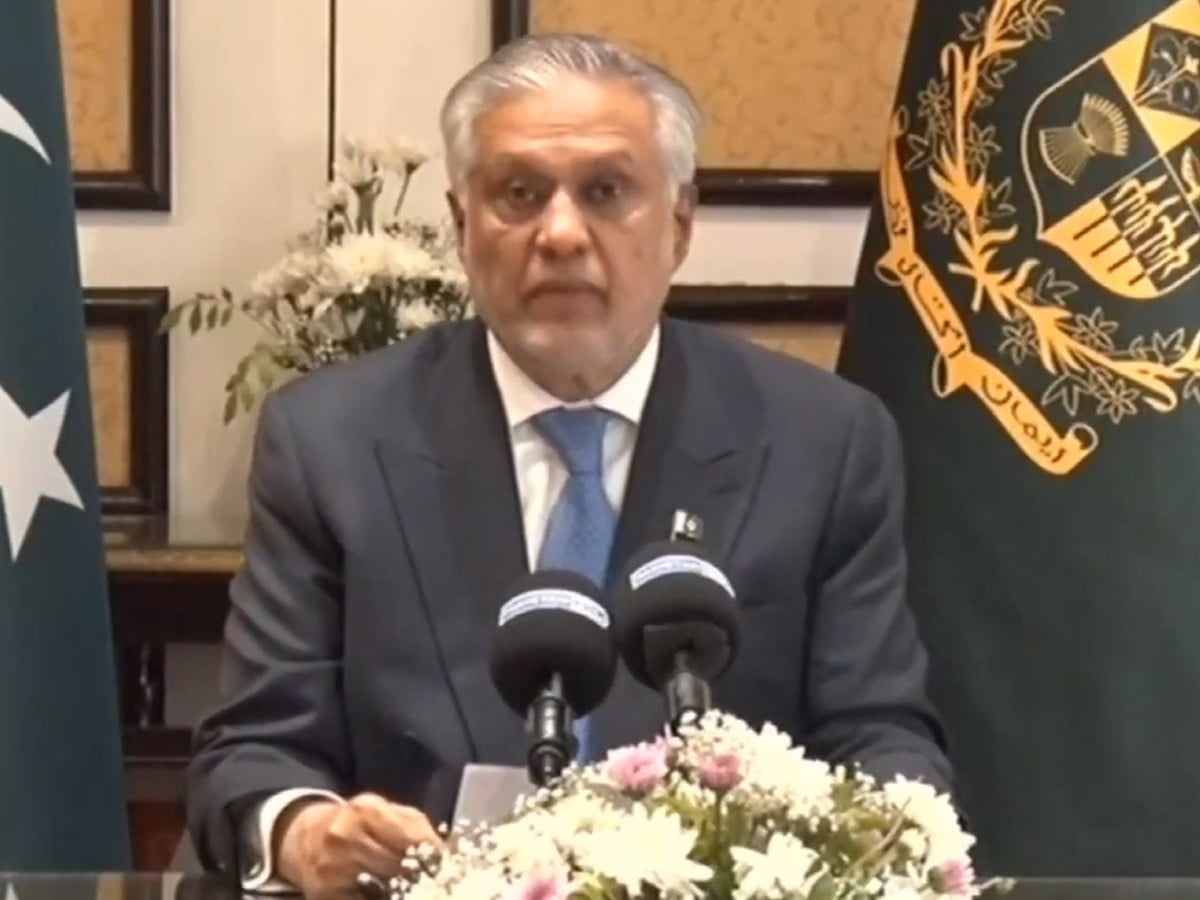
LAHORE: Deputy Prime Minister and Foreign Minister Senator Mohammad Ishaq Dar on Thursday said Pakistan has earned growing international recognition as a “peacemaker” and an emerging “middle power”, attributing the country's enhanced global stature to its successful diplomatic engagement and mediation efforts in regional conflicts.
Speaking to media representatives at Data Darbar, Dar said Pakistan’s recent role in facilitating dialogue between the United States and Iran had significantly elevated its international profile and reinforced confidence in its diplomatic capabilities.
The foreign minister observed that perceptions of Pakistan abroad had changed markedly in recent years.
“Today, Pakistan is being recognised around the world as a peacemaker,” Dar said. “A country that was once viewed primarily through the prism of terrorism is now being acknowledged as a middle power and a net contributor to regional and international security.”
He noted that claims of Pakistan’s diplomatic isolation had proven unfounded, pointing to the country's increasing visibility and relevance in international affairs.
“Countries that previously paid little attention to Pakistan are now discussing its role and contributions on major global platforms,” he remarked.
Dar attributed the country’s recent diplomatic successes to the collective efforts of Prime Minister Shehbaz Sharif, Chief of Army Staff and Chief of Defence Forces Field Marshal Syed Asim Munir, and Pakistan’s diplomatic corps.
“The captain of this team is Prime Minister Shehbaz Sharif,” he said, adding that the premier, Field Marshal Asim Munir and officials of the Foreign Office had worked tirelessly to advance Pakistan’s foreign policy objectives.
The deputy prime minister praised the coordinated efforts of civilian and military leadership in strengthening Pakistan’s diplomatic outreach and promoting dialogue as a means of conflict resolution.
Referring to Pakistan’s mediation efforts between Washington and Tehran, Dar said Islamabad had facilitated engagement between two countries that had not maintained direct negotiations for decades.
He stressed that Pakistan had acted as an honest and impartial facilitator, seeking to promote peace and stability without becoming a party to the dispute.
According to Dar, extensive diplomatic efforts were undertaken behind the scenes by Pakistan’s political leadership, military establishment and diplomatic representatives, much of which remained outside public view due to the sensitive nature of mediation.
“A mediator must remain neutral and cannot become part of the conflict,” he observed.
The foreign minister reiterated Pakistan’s principled position on regional conflicts, particularly concerning Iran.
He said Pakistan was among the first countries to condemn attacks on a fellow Muslim nation while simultaneously encouraging restraint, diplomacy and peaceful engagement to prevent further escalation.
Dar maintained that Pakistan’s approach had consistently been guided by the pursuit of peace, stability and constructive dialogue.
Turning to domestic priorities, Dar said Pakistan had successfully achieved major strategic milestones by becoming both a nuclear and missile power.
He stressed that the country’s next objective should be to transform itself into a strong economic power.
“Allah enabled Pakistan to become a nuclear power and later a missile power. The next challenge is to become an economic power,” he said.
The deputy prime minister credited former prime minister Nawaz Sharif for overseeing Pakistan’s nuclear tests in 1998 and supporting the development of the country’s missile programme.
He also praised Prime Minister Shehbaz Sharif for steering economic recovery efforts and restoring stability to key sectors of the economy.
Dar said Pakistan had ranked among the world’s leading economies in 2017 and expressed confidence that the country was once again moving in a positive economic direction.
He pointed to improving economic indicators, enhanced investor confidence and greater political stability as signs of progress.
“The country’s image has improved, stability has returned and Pakistan is moving steadily toward growth and development,” he stated.
The deputy prime minister also congratulated devotees on the occasion of the 983rd Ghusl Mubarak of Hazrat Data Ganj Bakhsh (RA) and commended the ongoing expansion of the Data Darbar complex.
He described the project as the largest development initiative undertaken at the historic shrine and praised the efforts of Punjab Chief Minister Maryam Nawaz, the Auqaf Department and associated teams for their contributions.
Dar said investments in religious and spiritual centres helped strengthen social cohesion and foster national prosperity.
Concluding his remarks, the deputy prime minister urged citizens and devotees to pray for Pakistan’s continued success and prosperity.
“When you visit this sacred place, remember Pakistan in your prayers,” he said. “Pray that Allah enables Pakistan to become an economic power just as He enabled it to become a nuclear and missile power.”
He expressed confidence that with unity, stability and sustained economic reforms, Pakistan would continue its journey toward greater national strength and international prominence.
0 Comments
No comments yet. Be the first to join the discussion!