June 24, 2026
LHC says civil courts cannot decide citizenship disputes
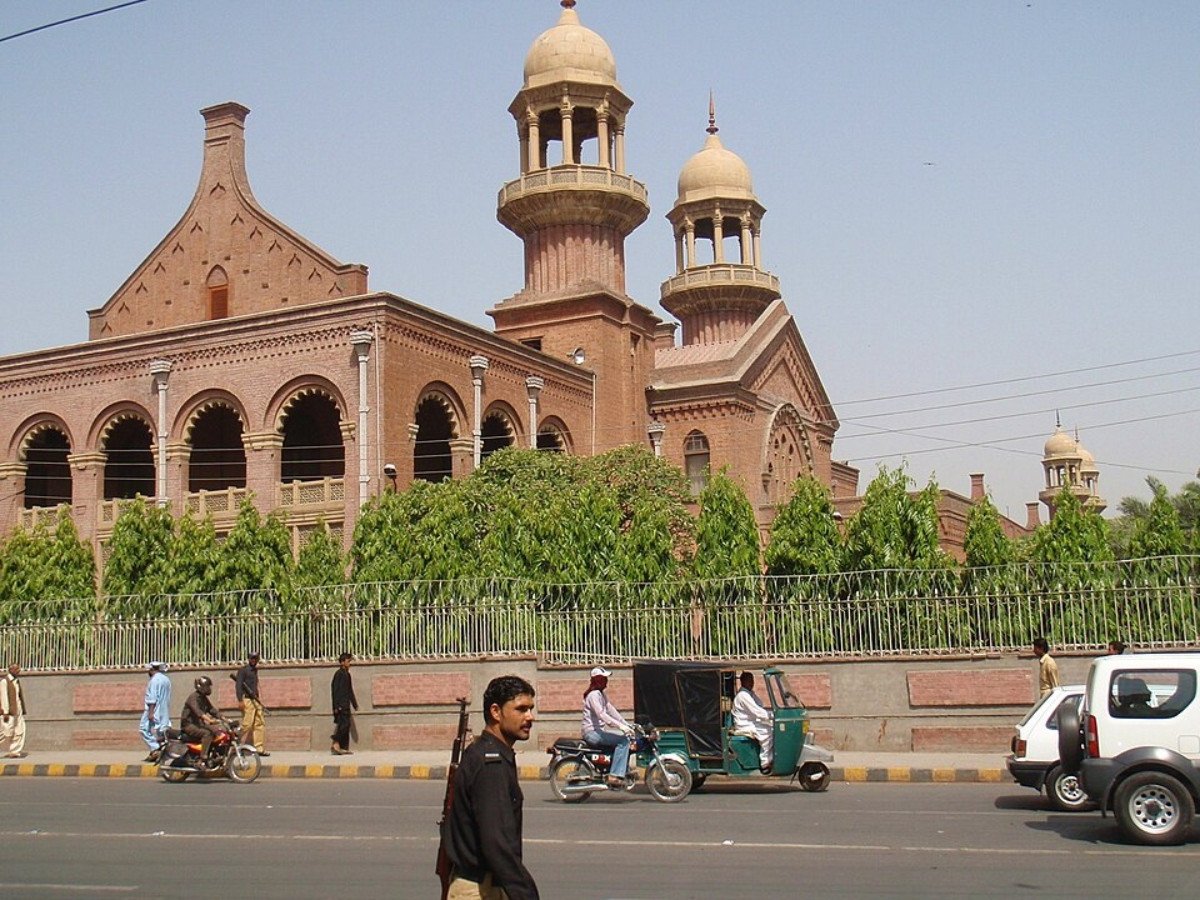
The Lahore High Court has ruled that civil courts cannot directly decide citizenship disputes that fall under the Pakistan Citizenship Act and Nadra laws. The court allowed Nadra’s petition against lower court rulings that had declared two respondents to be Pakistani citizens.

June 24, 2026

LAHORE: The Lahore High Court has ruled that civil courts cannot directly hear suits seeking a determination of Pakistani citizenship when the matter falls within the domain of authorities created under the Pakistan Citizenship Act, 1951, and laws governing the National Database and Registration Authority (Nadra).
Justice Mohsin Akhtar Kayani issued the ruling while allowing a civil revision petition filed by Nadra against concurrent judgements of two lower courts in Sialkot that had decided in favour of Khalid Khan and another respondent.
According to the case record cited in the judgement, Nadra had blocked the respondents’ Computerised National Identity Cards after placing them in the alien category. Their case was later referred to a Joint Verification Committee made up of the Special Branch, the Intelligence Bureau and the ISI for further scrutiny of their nationality status and that of their family members.
The judgement said the respondents and their family members could not be verified as Pakistani nationals, although they had obtained Pakistani CNICs. They later filed a suit, and their counsel argued before the high court that both lower courts had already declared them Pakistani citizens and that receiving CNICs from Nadra was their inalienable right. The counsel also maintained there was no evidence showing that the respondents belonged to the alien category.
Court’s observations
Justice Kayani observed that during and after the Afghan war, many refugees came to Pakistan and managed to obtain NICs or CNICs while altering their identities despite being refugees or Afghan citizens.
Referring to the inquiry report, the judge noted that officials had interviewed the respondents’ father, who said he was born in Mohmand Agency in 1964 and later moved to Gujranwala. The court noted that he was unaware of when and where his own father had died and also lacked details about his brothers and sisters. Justice Kayani said these circumstances created suspicion and that the inquiry report called for technical evidence from the respondents to rebut the allegation that they fell in the alien category.
The judgement said the respondents were required to discharge their burden through public record from before 1979, including a birth certificate, NIC or CNIC, passport, government employment record or matriculation certificate, to show that their father was born in Pakistan before 1979 and that he and his family members had been registered in Pakistan as citizens.
“If there is no such document, then they are to be treated as being in the alien category. Surprisingly, both the courts below have not considered this aspect,” Justice Kayani maintained.
The judge said this was not a straightforward matter in which the report of the Joint Verification Committee could be brushed aside, particularly as the inquiry had been carried out by officials from the ISI, Nadra and police authorities, and no justiciable answer had been given by the respondents’ father. He also said the respondents had succeeded in obtaining Pakistani CNICs despite being ineligible, and regretted that the trial and appellate courts had failed to consider the relevant facts and documents presented by Nadra.
Jurisdiction under citizenship law
Justice Kayani held that disputes involving dual nationality, citizenship by birth, descent, naturalisation or deprivation of citizenship were not simply matters concerning correction of Nadra records. He said such cases involved the determination of legal status under citizenship law and therefore could not be directly decided by civil courts.
At the same time, the judgement clarified that excluding civil jurisdiction did not place statutory authorities beyond judicial review. The judge observed that the high court’s constitutional jurisdiction under Article 199 would remain available where an authority acted without lawful authority, violated mandatory legal requirements, denied due process, acted mala fide or infringed fundamental rights.
0 Comments
No comments yet. Be the first to join the discussion!