June 22, 2026
PHC says Afghans claiming Pakistani citizenship must first approach Nadra
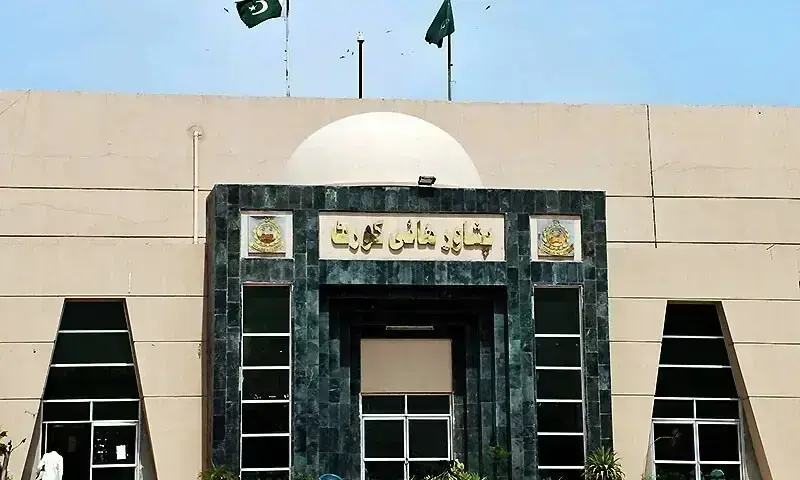
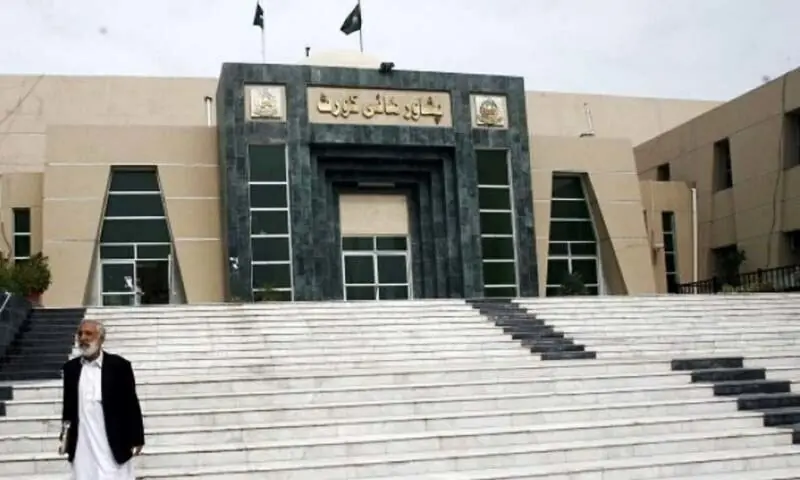
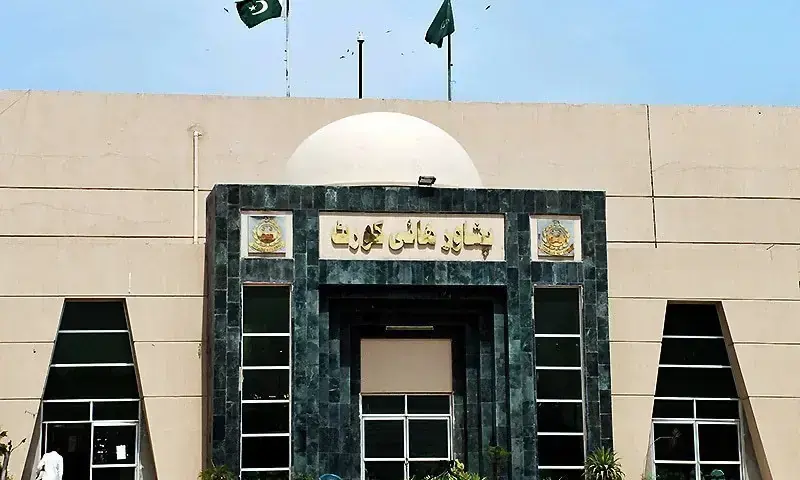
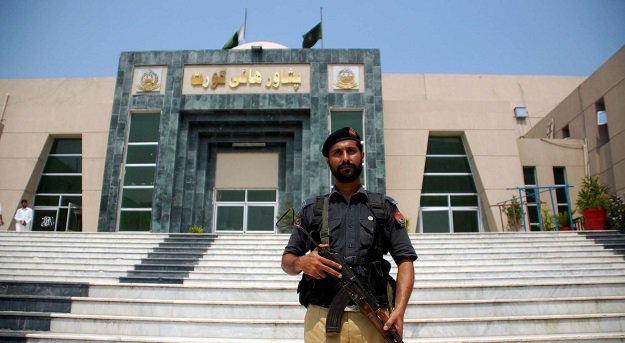
The Peshawar High Court has ruled that petitions by ACC and PoR holders claiming Pakistani citizenship are not maintainable unless applicants first seek relief from Nadra. The court directed Nadra to decide such cases within four months.

June 22, 2026
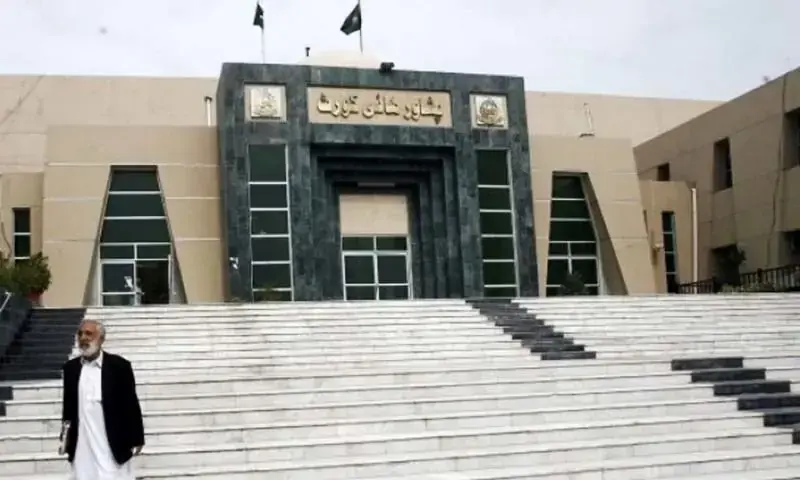
PESHAWAR: The Peshawar High Court (PHC) has declared non-maintainable 127 petitions filed by holders of Proof of Registration (PoR) cards or Afghan Citizen Cards (ACC) who said they were Pakistani citizens and sought court declarations to that effect, directing them to first seek citizenship clearance certificates from the National Database and Registration Authority (Nadra).
A bench comprising Justice Wiqar Ahmad and Justice Farah Jamshed disposed of the petitions in a 21-page detailed judgement. The petitioners had argued that they were Pakistani citizens by descent and that their inclusion in Nadra’s database as Afghan nationals through ACC or PoR cards was erroneous. They had asked the court to declare them Pakistani citizens.
The bench held that the petitioners had not first used the mechanism already available with Nadra for issuance of clearance certificates and cancellation of ACC or PoR cards. In its ruling, the court said constitutional jurisdiction should not be invoked at the first instance where factual verification was required and an effective alternative remedy was already available.
“When an effective alternate mechanism already exists, issues involved in these constitutional petitions cannot be resolved without a process of factual determination, where process of verification can effectively be conducted under the policy furnished by Nadra, resort to constitutional jurisdiction of this court, and that too as a measure of first instance, is not at all justified,” the bench ruled.
Directions to Nadra
The court said the petitioners, if they chose to do so, could apply to Nadra for issuance of clearance certificates. It added that all persons claiming to be Pakistani citizens and saying ACC or PoR cards had wrongly been issued in their names could also approach the authority for the same purpose.
The bench directed Nadra not to deny service to such applicants and to handle all relevant cases under the policy already framed for that purpose. It ordered that all applicants appearing at designated Nadra registration centres must be entertained and issued proper tokens without exception. They are to be given specific dates for submission of required documents, and written acknowledgement must be issued when documents are submitted.
The court further directed that where documents were complete, cases should be referred to special verification boards through written intimation. It also ordered Nadra to create a mechanism under which applicants would receive proper acknowledgement of attendance on each appearance before the boards.
According to the judgement, cases are to be processed and finally decided within four months from the date of application or issuance of the first token, provided applicants comply with Nadra’s timelines. The bench said that if delay occurred because of the applicant, it should be recorded in Nadra’s database and produced before the court if the applicant later filed a petition.
When court petitions may be entertained
The bench observed that while verification proceedings were pending, writ petitions should ordinarily not be entertained because they would be premature and not maintainable. It said only after four months had passed from the first application, and where a petitioner could show that all required documents had been submitted and appearances before the board had been made but Nadra had still not finalised the matter, could a writ petition be entertained.
The judgement said such petitioners would have to attach proof of document submission and attendance before the boards, and in the absence of compliance with that process, writ petitions would not be entertained. The court also directed Nadra to modify its standard operating procedures in line with the judgement.
Nadra’s position before the court
The petitioners were represented by several lawyers, including Saifullah Muib Kakakhel, Hamza Jamshed, Malik Shehbaz, Faheem Marwat, Arif Jan, Amanullah Peerzada, Shan Asghar, Zeenab Yousafzai, Hamid Hussain, Abdur Rehman and Zul Qarnain. They contended that the petitioners had not been entertained at Nadra registration centres, prompting them to move the high court.
Additional Attorney General Sanaullah Khan appeared for the federal government, while Nadra Director Operation Shahid Ali Khan appeared along with law officers Abdur Rauf, Mohammad Mubarak and Shahid Imran Gigyani. Shahid Ali Khan denied the claim that Nadra centres were refusing service to such applicants.
He told the court that Nadra had received around 26,000 applications in such matters. Of those, 17,884 had been rejected because the applicants could not establish that they were Pakistani citizens, around 2,200 applicants had been issued clearance certificates after verification of their status as Pakistani citizens, and 6,637 had not turned up to pursue the verification process, leaving their cases pending.
He further stated that authority to issue clearance certificates under Section 19 of the Pakistan Citizenship Act, 1951, had been devolved to the registrar general, who is the chairman of Nadra. He added that the authority had established a proper institutional mechanism and framed a comprehensive policy to deal with such cases.
0 Comments
No comments yet. Be the first to join the discussion!