

June 24, 2026
Balochistan Police athletes shifted to duty posts after sports programme suspension
A report says Balochistan Police has suspended sports activities and reassigned 125 quota-recruited athletes to policing and administrative duties. The move has sidelined footballers, boxers and other competitors, including some selected for international events.

June 24, 2026
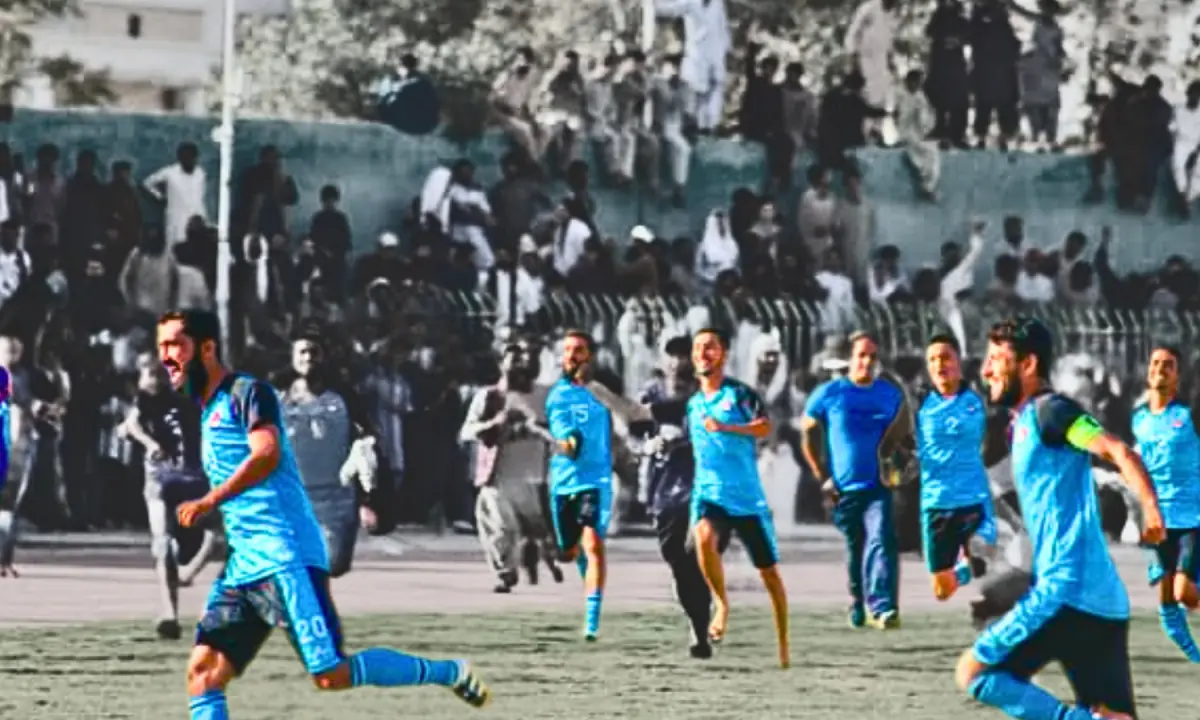
QUETTA: A large group of athletes recruited under the Balochistan Police sports quota have been reassigned to policing and administrative duties after the department suspended its sports activities, affecting footballers, boxers, karate players and other competitors who had been serving through the programme.
The Pakistan Police Football team, one of the province’s most prominent sides, is no longer taking part in ongoing competitions despite having won the Balochistan Gold Cup in 2022 and the National Games title the following year. Players who had been training and competing full-time are now posted at police stations, checkpoints, patrol assignments and police lines.
Athletes entered the force through competitive sports trials under the Police Sports Programme rather than the standard recruitment route. They were appointed as Grade 7 constables, received government salaries and were mainly expected to focus on sports, although they could be deployed during emergencies such as elections or polio campaigns. The arrangement dates back to 1972, when Balochistan Police was assigned responsibility for the Pakistan Police football team, while other sports departments were overseen by federal institutions and provincial bodies.
Under the previous system, athletes reported to the sports ground, marked attendance with the sports officer, trained during the day and signed out in the evening, without being required to report to police stations or headquarters. Although they later received basic instruction in areas such as weapon handling, drill and discipline, they were not recruited or trained as frontline personnel for counterterrorism or broader law-and-order operations.
Players describe abrupt change
The shift came at the end of 2025, when team members returning from Karachi after the 35th National Games learned through a notification shared on goalkeeper Javed Akhtar’s WhatsApp group that sports activities in Balochistan Police had been suspended and athletes were being assigned to security and office duties.
Hamza, identified as a defender who joined the Pakistan Police Football team through sports trials in 2021, said watching matches from the sidelines while in uniform had been painful.
“Sometimes it feels like I am watching the death of my own career,” Hamza said.
Akhtar is now deployed on security assignments during high-alert situations, while another footballer, Kami, has been tasked with crowd management at checkpoints. Many athletes had left their education incomplete or turned away from other career options because sport had offered them a path forward.
Officials cite security pressures, coaches question rationale
Sports officials said athletes were told that a worsening law-and-order situation had created a need for additional manpower in policing and security, reducing space for competitive sports programmes. However, coaches and players disputed that justification.
Sardar Raheem Mohammad Shahi questioned whether removing around 124 athletes from sport could materially affect the province’s broader security situation.
“The law and order situation has existed for decades,” Shahi said. “Yet the teams continued to function. Football survived through difficult periods before, so why should it be different now?”
Concern has spread beyond the department. Nehal Khan, chairman of the Hudda Sports Action Committee, argued that these athletes had not been trained to deal with security threats and that placing them in dangerous settings put both lives and years of sporting development at risk.
International competitors and veteran coaches affected
The impact extends beyond football. Muhammad Azam Shad joined the department in 2005 as a karate athlete, went on to represent Pakistan internationally, won titles including the Peace and Friendship Cup in Iran, and coached athletes who later became Asian champions. He is now performing municipal-style tasks including cleaning drains, sweeping roads and collecting garbage.
It also highlights the case of 43-year-old boxing coach Waheed Agha, who spent 25 years in the sport and trained gold medal winners, but was not released from duty to coach students preparing for a competition in Tanzania.
Police athletes selected to represent Pakistan abroad are still awaiting departmental permission to compete. Boxer Muhammad Umair has been selected to represent Pakistan in Sri Lanka in July, while another international boxer, Abdul Saboor, has also been chosen for overseas competition. Both are continuing to perform 12-hour police duties and have not yet been cleared to travel.
Economic pressure limits options
Many of the affected athletes belong to working-class families in Balochistan and support households dependent on daily-wage work, tailoring or rickshaw driving, making resignation difficult despite frustration over stalled sporting careers and limited promotion prospects.
Hamza said he had considered leaving the job but could not do so because of family responsibilities. “I even thought about resigning,” Hamza said. “But poverty and responsibility towards my family would not allow it.”
A reinstatement order dated December 2025 says 125 athletes recruited through sports quotas were reassigned from sporting roles to checkpoints, patrols and police stations. While football matches continue to draw crowds in Quetta, many of the athletes who once featured in those competitions are now on active duty instead of on the field.
0 Comments
No comments yet. Be the first to join the discussion!


