June 22, 2026
Trump Turns Turtle
President Trump shifts from maximum pressure on Iran to backing a peace agreement, arguing escalation would damage global markets. The change reflects economics and geopolitical realities as Washington seeks stability.
June 22, 2026

Having to change course
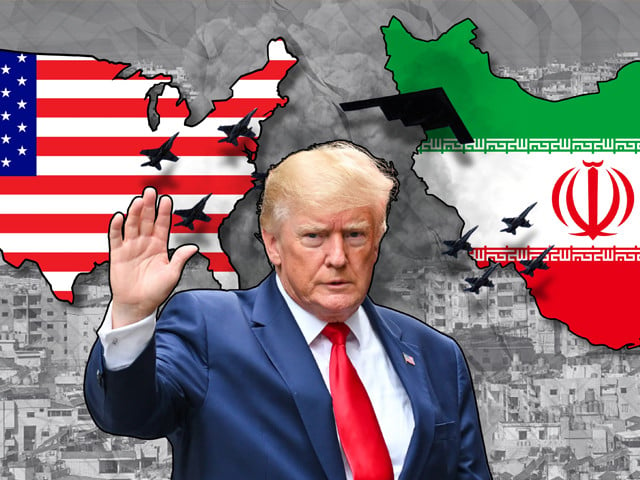
Politics is full of surprises, but few developments in recent history have been as dramatic as the transformation of President Donald Trump's position on Iran. Only months ago, Washington's rhetoric revolved around maximum pressure, overwhelming force, and the language of unconditional surrender. Iran was portrayed as an adversary that could be subdued through military power and economic strangulation.
Today, the same President is defending a peace agreement with Iran, advocating reconstruction, supporting the return of frozen Iranian assets, criticizing aspects of Israeli military conduct in Lebanon, and warning against actions that could derail the ceasefire he now champions.
The question is obvious: What changed?
How did a leader who once spoke of destroying Iran's military capabilities become the chief defender of an agreement designed to reintegrate Iran into regional stability? How did the USA move from threats of escalation to discussions of reconstruction and diplomacy? The answer lies in the collision between ideology and reality.
At the outset of the conflict, many in Washington appeared convinced that overwhelming military pressure would quickly force Tehran into submission. Yet as the confrontation unfolded, it became increasingly clear that military victories do not automatically translate into strategic success.
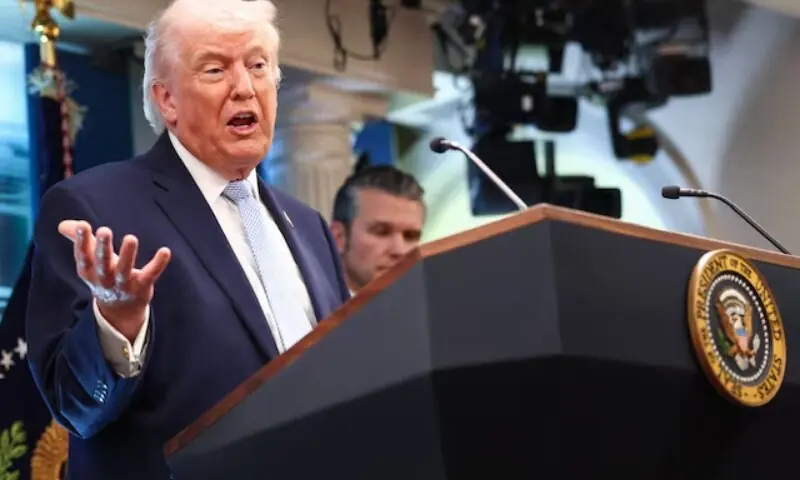
President Trump himself provided clues to this transformation during his remarks at the G7 Summit. Defending the agreement, he openly acknowledged that continuing the war would have imposed catastrophic economic costs on the world economy.
History will determine whether this policy succeeds. But one conclusion is already clear: faced with the prospect of economic turmoil, diplomatic isolation, and an open-ended conflict, Washington changed course. Trump did not simply negotiate a deal with Iran. He redefined the USA's approach to the conflict itself. And in doing so, he may have altered the future trajectory of the Middle East for years to come
"If we didn't do this deal," Trump declared, "we could have dropped more bombs for another three weeks, two years, whatever. But you would never have the Strait of Hormuz open. Your market would go down at levels nobody had ever seen before." This statement reveals the first and perhaps most important reason for Washington's change of course: economics.
The prospect of prolonged conflict threatened global energy markets, international trade routes, and investor confidence. Every discussion of peace pushed markets higher. Every hint of escalation drove uncertainty into global commerce. Trump himself repeatedly noted that financial markets reacted positively whenever negotiations appeared likely to succeed. For a president who closely associates economic performance with political success, the message from the markets was impossible to ignore.
The second factor was geopolitical reality. The USA is not Israel. Israel's strategic focus is naturally centred on its immediate neighbourhood. The USA, however, is a global superpower whose interests span every continent. Washington must maintain relationships with Europe, Asia, Africa, Latin America, and the Muslim world simultaneously.
As the conflict expanded, US policymakers increasingly recognized that unlimited support for military escalation carried substantial diplomatic costs. Relations with Gulf states, broader Muslim-majority countries, and important global partners risked deterioration.
This broader perspective became increasingly evident in Trump's remarks. Speaking about Lebanon, he departed sharply from traditional rhetoric. "I feel very bad for Lebanon," Trump said. "It was a great culture. It was an incredible culture. For the last 50 or 60 years they have been living in hell."
Even more strikingly, he publicly criticized the Israeli approach to Hezbollah, arguing that "when two drones are shot into the desert and dropped harmlessly, you don't have to knock down buildings in Beirut." Such comments would have been almost unimaginable from a US President at the beginning of the conflict.
The third factor was the realization that economic warfare and military operations have limits. Trump repeatedly emphasized that the objective of preventing nuclear proliferation had been achieved. He argued that Israel's greatest security concern was the possibility of an Iranian nuclear weapon. His message to Israeli critics was simple: the agreement delivers exactly what Israel has always claimed to want.
Vice President JD Vance reinforced this position even more bluntly. Responding to criticism from members of the Israeli cabinet, Vance stated: "Donald J. Trump is the only head of state in the entire world who is sympathetic to the nation of Israel at this moment in time." He added a pointed reminder: "Two-thirds of the defensive weapons that have protected Israel have been built by American hands and paid for by American tax dollars."
Most remarkably, Vance challenged the assumption that military force alone could solve every security challenge. "You can't just kill your way out of solving every single national security problem that you have," he said. Those words represent a profound shift in tone from Washington.
For decades, US officials often defended Israeli military actions without publicly questioning the underlying strategy. Vance's comments suggest growing frustration within the Administration regarding what it perceives as the absence of a long-term political solution.
A fourth factor was military sustainability. Wars consume resources at extraordinary rates. Ammunition stockpiles, advanced weapons systems, naval deployments, and logistical support all impose enormous burdens on national budgets. Trump himself highlighted the staggering financial cost of continued operations, noting that hundreds of millions of dollars were being spent in a matter of days. Even the world's strongest military cannot wage unlimited campaigns without consequences.
The fifth factor was the fear of global economic disruption. Trump repeatedly argued that keeping the Strait of Hormuz open was essential not only for regional stability but also for preventing worldwide economic turmoil. He warned that prolonged conflict could have triggered severe disruptions to shipping, energy supplies, and international trade. At one point he bluntly stated that the world was avoiding a potential economic disaster. Rather than presiding over a global downturn, Trump chose to pursue a settlement that promised lower oil prices, stronger markets, and renewed economic confidence.
Another revealing moment came when Trump addressed the issue of frozen Iranian assets. Historically, US administrations have often treated sanctions and frozen funds as permanent leverage. Yet Trump acknowledged a fundamental principle that surprised many observers. "We have taken their money," he said. "It's not our money. It's their money." He went even further."If we didn't give it back, nobody would ever invest in the dollar again."
This statement reflects a recognition that America's financial power ultimately depends on trust in the international system. If foreign governments believe their assets can be permanently confiscated, confidence in that system inevitably erodes.
Perhaps the most significant transformation, however, occurred at the level of strategic vision. As the conflict unfolded, Washington increasingly realized that its interests and Israel's interests were not always identical. The USA must manage relationships with dozens of nations across the Middle East. It must protect global commerce, preserve alliances, maintain military readiness, and avoid unnecessary economic shocks. Israel's concerns are immediate and regional. America's concerns are global. At some point, Washington appears to have concluded that continued escalation served neither US interests nor global stability.
This helps explain why Trump increasingly praised diplomatic efforts involving regional actors, including Pakistan and Qatar. He publicly acknowledged their role in facilitating negotiations and reducing tensions. In doing so, he signaled a broader shift away from confrontation and toward managed coexistence.
None of this means that Trump has become soft on Iran. On the contrary, he repeatedly emphasized that military force remains available if Tehran violates the agreement. His position is not one of surrender but conditional engagement. The difference is that Washington now appears to view diplomacy as the preferred mechanism and military action as the last resort rather than the first.
That is a major transformation. Whether critics describe it as pragmatism, realism, or strategic necessity, the shift is undeniable. The president who once spoke primarily of bombs now speaks of reconstruction. The administration that once emphasized pressure now speaks of investment and economic recovery. The government that once focused exclusively on confrontation now emphasizes stability, trade, and regional normalization.
History will determine whether this policy succeeds. But one conclusion is already clear: faced with the prospect of economic turmoil, diplomatic isolation, and an open-ended conflict, Washington changed course. Trump did not simply negotiate a deal with Iran. He redefined America's approach to the conflict itself. And in doing so, he may have altered the future trajectory of the Middle East for years to come.
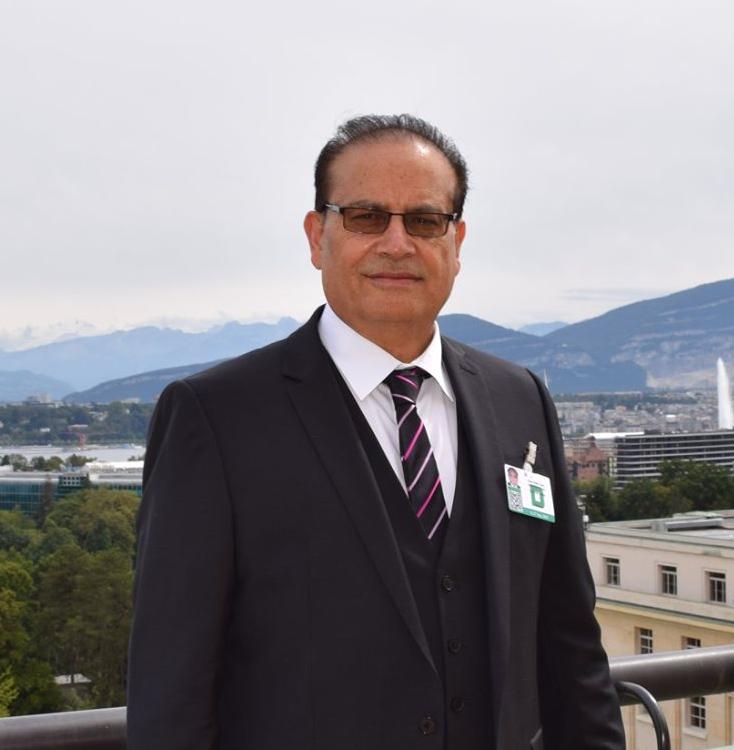
The writer retired as Press Secretary the President, and is former Press Minister at Embassy of Pakistan to France and former MD, Shalimar Recording & Broadcasting Company Limited
View all articles →0 Comments
No comments yet. Be the first to join the discussion!