June 21, 2026
PSX posts strong weekly gains but slips below 180,000 on renewed Middle East tensions
The PSX extended its rally during the week, though the KSE-100 index slipped back below 180,000 in the final session as Middle East tensions resurfaced. Analysts said macroeconomic improvement and budget optimism continued to support sentiment.

June 21, 2026
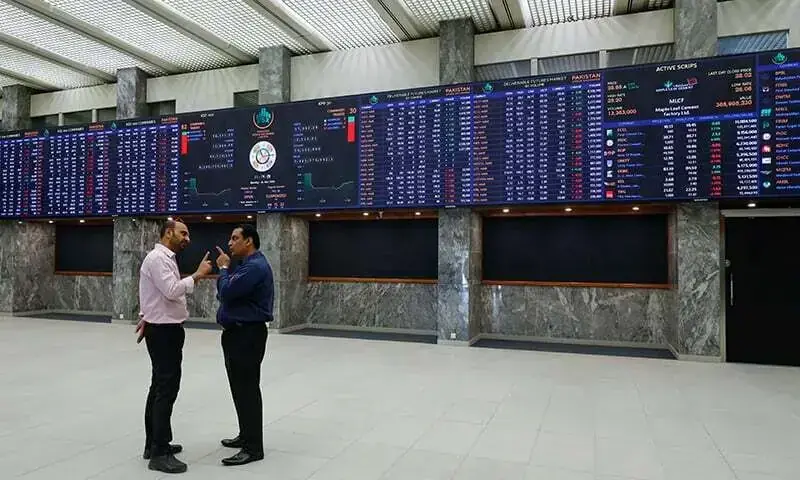
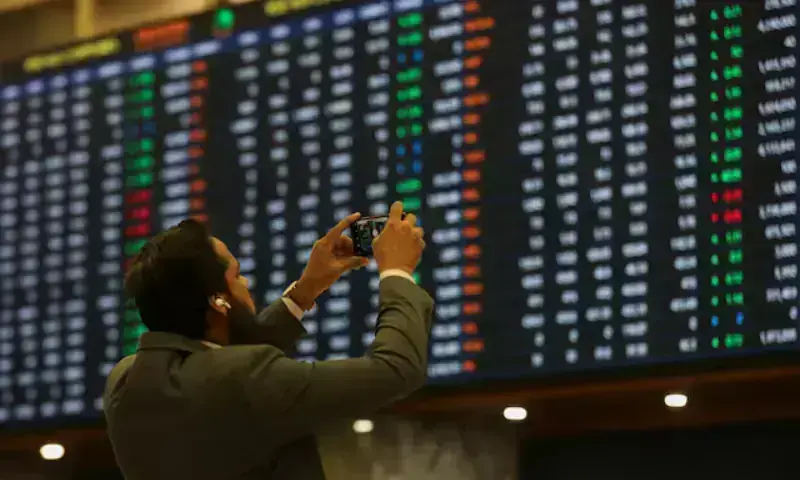
KARACHI: The Pakistan Stock Exchange extended its upward run during the outgoing week, with the benchmark KSE-100 index briefly moving above the 180,000 level for the first time since February before losing that mark in the final session amid fresh concerns over the Middle East.
According to Topline Securities, the KSE-100 index rose by 6,523 points, or 3.8pc on a week-on-week basis, to settle at 178,922.75. The rally was supported by expectations of progress in US-Iran diplomacy, easing worries about regional tensions and helping push global oil prices lower. However, profit-taking emerged on Friday after a planned round of US-Iran talks in Switzerland was scrapped amid escalating Israeli attacks in the region.
Arif Habib Ltd said optimism linked to the federal budget and hopes of an improvement in US-Iran relations helped drive the week’s gains. It added that reports of ceasefire violations and renewed uncertainty in the region restricted the rally in the last trading session. AKD Securities also said sentiment was aided by a budget viewed positively by sectors including cement, steel, refineries, textiles, pharmaceuticals and technology, along with cuts in super tax for individuals and corporates.
Macroeconomic data supports sentiment
Several economic indicators released during the week added support to the market. Pakistan posted a current account surplus of $459 million in May, compared with a deficit of $276m in April. Net foreign direct investment increased to $214m from $54m a month earlier, while the real effective exchange rate rose to 106.15 in May from 105.84 in April.
The State Bank of Pakistan’s Monetary Policy Committee kept the policy rate unchanged at 11.5pc, citing a balance between lingering inflation pressures and manageable external sector risks. Data released during the week also showed large-scale manufacturing grew 6.1pc year-on-year in April, though it fell 8.3pc month-on-month. For the first 10 months of FY26, large-scale manufacturing was up 6.4pc.
Technology exports climbed 13pc year-on-year to $373m in May and made up 45pc of total services exports. Power generation declined 0.9pc from a year earlier to 12,638 gigawatt-hours in May, but increased 33pc month-on-month because of seasonal factors. Cumulative power generation in 11MFY26 rose 1.6pc to 115,268 GWh.
Trading activity and investor flows
Market participation improved during the week, with average daily trading volume reaching 1.14 billion shares and average daily turnover standing at Rs63bn. In investor flows, insurance companies and individual investors were net sellers, with equity sales of $58m and $10m respectively. Mutual funds and corporates were net buyers, purchasing shares worth $65m and $7m.
In the latest Pakistan Investment Bonds auction, the government raised Rs649bn against a target of Rs350bn. Yields fell by 34 to 116 basis points across the two-, three-, five- and 10-year tenors, while bids for the 15-year bond were rejected. The five-year tenor saw the highest participation.
Stocks, reserves and outlook
Banking shares made the largest contribution to the KSE-100 index’s gains, adding 2,047 points. They were followed by cement, investment banking, exploration and production, and power sector stocks. Among individual companies, UBL, Engro Holdings, Hub Power, Pakistan Petroleum and OGDC were the biggest positive contributors.
Elsewhere, gas output fell 2.2pc week-on-week to 2,955 million cubic feet per day, while crude oil production declined 3.1pc to 66,707 barrels per day. The country’s liquid foreign exchange reserves increased by $70m to $22.7bn as of June 18. State Bank reserves were recorded at $17.2bn and commercial bank holdings at $5.5bn, providing import cover of around 2.7 months. The rupee also edged up 0.02pc during the week to close at Rs278.25 against the dollar.
Analysts expect trading to remain cautious in the coming sessions because of Muharram holidays and continuing uncertainty in the Middle East. Even so, improving macroeconomic indicators, lower bond yields and expectations of strong corporate earnings are seen as factors that could continue to support the market. The KSE-100 index is currently trading at a price-to-earnings ratio of 8.3 times, with a dividend yield of 6.1pc.
0 Comments
No comments yet. Be the first to join the discussion!