June 17, 2026
The ceasefire fallout
Pakistan’s finance minister says the Strait of Hormuz reopening after a US-Iran ceasefire won’t quickly return the economy to normal. Oil prices may ease, but LNG supply, damages, and lower tax revenues could strain IMF targets.

June 17, 2026

The reopening of the Strait of Hormuz might not mean a quick return to the pre-war normal
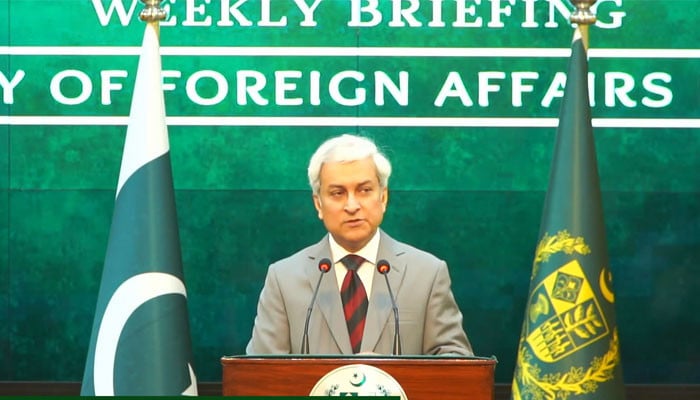
The reopening of the Strait of Hormuz, following the ceasefire between the USA and Iran, agreed on Sunday, to be signed on Friday, will not mean a return to normal, warned Finance Minister Muhammad Aurangzeb while talking to an international news agency after the ceasefire agreement was made. Senator Aurangzeb said the country’s economic projections would increase, but added that it was still too early to revise the budget. True, the international oil price should go down, and the threat of economic strangulation because of fuel shortages has receded so far as to be virtually invisible. That decline should lead to a fall in the pump price of fuel, with the resulting boost of economic activity and curb on inflation. However, it must also be seen how the world’s economies react to what has been a constriction in fuel supply. While the supply distortion for aluminium should correct itself more or less smoothly, the same cannot necessarily be said for fertilizer. Pakistan’s economy is not immune to these currents.
Another point that Senator Aurangzeb referred to was the damaged production facilities, He said that the government had projected that supply chains would take a year to return to normal. His reference was clearly to LNG, which Pakistan was importing from Qatar, and whose production facilities had been hit by Iran. LNG is so crucial to Pakistan that the initial shortage caused electricity loadshedding.
What he did not mention was that the fall in the price of oil would mean losses in taxes, because many of the taxes on fuel are percentages of the price of fuel, as opposed to the ad valorem taxes, which are fixed amounts charged per litre. The collection for the first type goes up with the international price, so collection falls when the price comes down. It might be remembered that the last time prices came down rapidly, the Federal Board of Revenue took a hit. Already, the government has become dependent on the petroleum development levy, which has been projected at Rs 1.7 trillion for the fiscal year about to begin, for revenue, with the original claimed intention of developing the sector long forgotten. The FBR has benefited from the rise in the oil price, and would lose from the fall. Because fuel demand is inelastic, the fall in price is unlikely to create fresh demand. Any fall in revenue would make it hard to meet IMF targets, which is Senator Aurangzeb’s headache.
The Editorial Department of Pakistan Today can be contacted at: [email protected].
View all articles →0 Comments
No comments yet. Be the first to join the discussion!