June 12, 2026
Apache Down, Peace Deal Up?
The reported downing of a U.S. Apache helicopter over the Persian Gulf intensifies pressure on Washington as it tries to pursue diplomacy with Iran and manage regional flare-ups amid Lebanon tensions.

June 12, 2026

Is the glass half-full?
The reported downing of a U.S. Apache attack helicopter over the Persian Gulf has emerged as one of the most consequential developments since the ceasefire and diplomatic process began following Pakistan’s mediation efforts earlier this year. More than the loss of a sophisticated military platform, the incident has exposed the increasingly complex realities confronting all parties involved in the conflict. It has highlighted Iran’s continuing ability to resist militarily, demonstrated the vulnerability of even the most advanced weapons systems, and intensified the pressure on policymakers in Washington to decide whether the future lies in diplomacy or escalation.
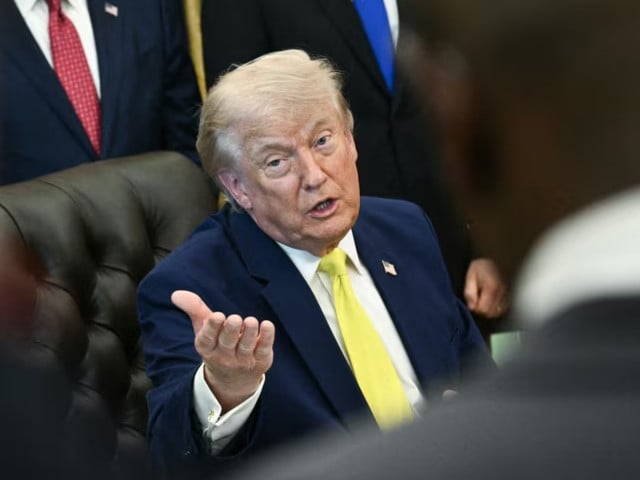
President Trump responded by stating that the USA would have to respond to the attack. Yet the challenge confronting Washington extends far beyond retaliation. The USA now finds itself caught between competing strategic realities. On one hand, it seeks to maintain deterrence and demonstrate military credibility. On the other hand, it is increasingly aware that further escalation could jeopardize broader diplomatic objectives and drag the region into an even more dangerous confrontation.
What makes the current moment particularly significant is that it comes while Washington is actively attempting to pursue a negotiated settlement with Iran. At the same time, Israel continues to pursue military operations that increasingly appear to diverge from US priorities.
This divergence has become especially visible in Lebanon. President Trump has reportedly expressed frustration over continued military operations that risk undermining the fragile diplomatic process. Iran has repeatedly insisted that any lasting agreement must include an end to hostilities in Lebanon and the withdrawal of Israeli forces from disputed areas. From Tehran’s perspective, regional peace cannot be divided into separate compartments. The future of Lebanon, Gaza, and broader Middle Eastern security are interconnected components of the same strategic equation.
History often turns on moments that initially appear tactical but later reveal themselves to be strategic. The reported downing of the Apache helicopter may prove to be one such moment. It may become the event that compels policymakers to reconsider old assumptions, redefine national interests, and pursue new diplomatic possibilities. If wisdom prevails, it could mark the beginning of a new chapter in US-Iran relations and create the conditions for a broader regional peace
The result is that President Trump faces growing pressure from every direction. Within the USA, ordinary citizens are increasingly concerned about rising fuel prices, inflation, supply chain disruptions, and economic uncertainty. What was originally presented as a campaign designed to pressure Iran is increasingly imposing costs on US households. Higher energy prices, transportation expenses, and business uncertainty have transformed a distant conflict into a domestic political challenge.
Members of Congress, political commentators, and policy experts are also questioning the long-term objectives of the conflict. Many argue that the war lacks a clearly defined strategic end state and risks becoming another open-ended military engagement in the Middle East. The growing skepticism reflects a broader public mood that increasingly favors diplomacy over military escalation.
Compounding these pressures is the 2026 FIFA World Cup. The tournament will be unprecedented in scale and significance. For the first time in history, three countries— the USA, Canada, and Mexico— will jointly host the world’s largest sporting event. Organizers hope the tournament will showcase not only football but also the technological, cultural, and organizational capabilities of North America.
For President Trump, therefore, securing a diplomatic breakthrough before the World Cup begins carries substantial political and strategic value. Such an achievement would allow him to claim that his administration prevented a wider regional war, restored stability to energy markets, and removed a significant geopolitical risk before one of the most watched sporting events in human history.
Against this backdrop, the reported loss of the Apache helicopter creates several possible paths forward. The first possibility is restraint. Washington could avoid a major military response and instead accelerate diplomatic engagement. Such a strategy would prioritize negotiations and attempt to transform the incident into an opportunity for renewed diplomacy.
The second possibility is escalation. The USA could conclude that failure to respond decisively would weaken deterrence and encourage further attacks. Under this scenario, Washington could expand military operations, potentially triggering a broader regional confrontation involving multiple actors.
The third possibility is a calibrated response. The USA could conduct limited military actions intended to restore deterrence while avoiding a full-scale escalation. Such an approach would seek to balance military credibility with diplomatic flexibility.
Of these options, the third appears the most practical. It would allow Washington to respond to the incident without completely abandoning the possibility of a negotiated settlement. Yet even this approach carries risks, particularly if miscalculations trigger unintended consequences.
The most effective path forward may be for Washington to clearly and publicly define its interests independently from Israel’s broader regional agenda. The USA could state unambiguously that its objectives are limited to regional stability, freedom of navigation, economic security, and the protection of American interests. By dissociating itself from any broader regional ambitions pursued by Israel, Washington could fundamentally transform the diplomatic landscape.
Such a move would immediately create space for direct negotiations between the USA and Iran. For decades, efforts at reconciliation have repeatedly collapsed under the weight of regional crises and competing agendas. A clear declaration that Washington seeks neither regime change nor participation in wider regional rivalries could remove one of the principal barriers preventing a durable settlement.
Under such circumstances, a peace agreement between Washington and Tehran could move forward on a fast-track basis. Both countries possess strong incentives to avoid a prolonged confrontation. The USA seeks economic stability, secure energy supplies, and freedom from another expensive military commitment. Iran seeks sanctions relief, economic normalization, security assurances, and international reintegration. These objectives are not inherently incompatible and could form the basis of a comprehensive agreement.
Such an arrangement would effectively leave Iran and Israel to manage their own disputes without direct US involvement. Supporters of this approach argue that regional actors are ultimately best positioned to establish their own security balances and define their own relationships. They contend that excessive external involvement has often prolonged rather than resolved conflicts.
History demonstrates that Israel’s strategic position has benefited enormously from decades of US political, economic, diplomatic, and military support. Advocates of strategic separation argue that if Israel were required to rely primarily upon its own capabilities and resources, it might reassess some of its regional policies and adopt a more pragmatic approach toward its neighbours. In their view, only under such circumstances would Israel begin to behave as a normal state operating within the accepted norms of international relations rather than as a state shielded by the overwhelming support of a superpower.
Whether one agrees with this assessment or not, the debate itself is becoming increasingly difficult to ignore. The fundamental question facing Washington is whether US interests are best served by continuing to align its regional strategy with Israel’s or by pursuing a more independent course centred exclusively on US priorities.
History often turns on moments that initially appear tactical but later reveal themselves to be strategic. The reported downing of the Apache helicopter may prove to be one such moment. It may become the event that compels policymakers to reconsider old assumptions, redefine national interests, and pursue new diplomatic possibilities. If wisdom prevails, it could mark the beginning of a new chapter in US-Iran relations and create the conditions for a broader regional peace.
The writer retired as Press Secretary the President, and is former Press Minister at Embassy of Pakistan to France and former MD, Shalimar Recording & Broadcasting Company Limited
View all articles →0 Comments
No comments yet. Be the first to join the discussion!