

June 12, 2026
Let’s not blame the state
A new take on Aristotle: the state is a means to citizens’ flourishing. But the “sleeping” state persists when people stop engaging—so civic action, not blame, drives accountability.
June 12, 2026

If we don’t participate, the state will sleep
This semester, I am teaching an Ancient Political Philosophy course to undergraduate students pursuing their degrees in Political Science. The course is a foundational course in which students get an idea about what should be at the base of any political setup through the insights of Greek philosophers Socrates, Plato and Aristotle and, in the beginning, we try to understand the insights of these philosophers in the light of their contexts. However, when students come across the political philosophies of the above philosophers, they start drawing parallels through questions between the political setups they are in and the political setups in which political philosophers existed, and sometimes this makes the whole conversation quite interesting.
The other day, we were having a discussion over Aristotle’s theory of state where Aristotle is of the view that the state is not an end, rather the state is a means to an end. In simple words, the ultimate purpose of the state is to invest in citizens so that they can contribute effectively to community life. Aristotle’s take on the state became a point of debate when a student posed a question about whether the state is really there for citizens. His concern over the state’s not performing its role reflected a general perception which we normally find in everyone’s view around us, and perhaps rightly, because when it comes to the provision of fundamental rights to citizens, the overall picture is not that much encouraging.
We need to invest in the reflective skills of all students in general and students of social sciences in particular because this is one of the best ways to expand the scope of political consciousness in any society which will certainly play a role in making the state accountable for catching up to its assigned role
To some extent, I agree with the popular perception of the state, and that is that the state is sleeping on its role. However, this is, I think, a partial view of the picture. A state going into sleep over its assigned role does not happen independently; rather this happens when people collectively sleep over their assigned role. In a healthy political setup, people and state are bound in a contract that we call the constitution. Just like in any contract, parties in the contract keep a check over their interests in the contract, the contract between the state and citizens works in the same way.
In a healthy political setup, citizens have political consciousness and constantly interact with the state for the protection of their interests which they have been promised in the constitution, and, in this way, they make sure that the state catches up to its assigned role. The interaction between the state and citizens can happen through media platforms, and in any political setup where there is a constant interaction going on between the state and citizens, the chances of the state getting along with things in sleeping mode are slim.
However, when people stop interacting with the state, the state gets a chance to sleep over its assigned role. I personally think that the popular perception we find all around, that the state is sleeping in its assigned role, is because the majority of us don’t believe in interacting with the state. I believe that the day the majority of us reclaim our space in the political setup we are in by raising our voice, the chances of the state continuing with things in sleeping mode will become minimal. In a politically conscious society, the state can’t sleep.
In Pakistan, when it comes to interaction between the state and citizens, there are still a lot of gaps. While it’s everyone’s duty to consciously play a proactive role in this domain, it’s the primary duty of students of social sciences to not only own this interaction not only as an academic exercise but also as moral obligation; as in social sciences our primary job is not only to theoretically understand political setups but to contextualize those theoretical insights in our settings and provide solutions to the social and political problems we are facing in our contexts.
At the department of Political Science and International Relations in the University of Management and Technology, I personally have initiated a short certificate course in which students are trained on how to write op-eds for newspapers. The purpose of the course is to train students to be reflective over their theoretical insights and bring issues of their contexts in public discourse, thus spearheading the interaction between state and citizens.
We need to invest in the reflective skills of all students in general and students of social sciences in particular because this is one of the best ways to expand the scope of political consciousness in any society which will certainly play a role in making the state accountable for catching up to its assigned role. The course is on-campus and is open for all the students.
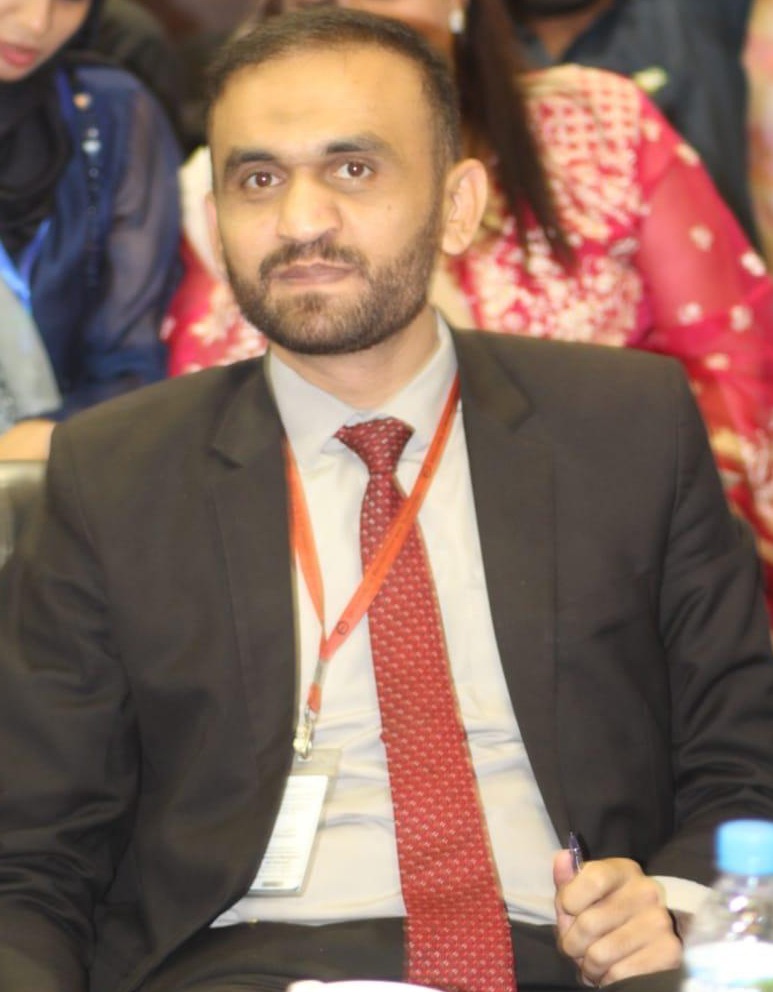
Inamullah Marwat is a lecturer at the Department of Political Science & International Relations at the University of Management & Technology (UMT), Lahore. He can be reached at [email protected]
View all articles →0 Comments
No comments yet. Be the first to join the discussion!


