June 12, 2026
Agriculture posts 2.89pc growth despite flood damage, survey shows
Pakistan’s agriculture sector grew 2.89% in 2025-26 despite the 2025 monsoon floods, according to the Economic Survey. Gains in sugarcane, wheat, rice and livestock helped offset weaker cotton and maize output.

June 12, 2026
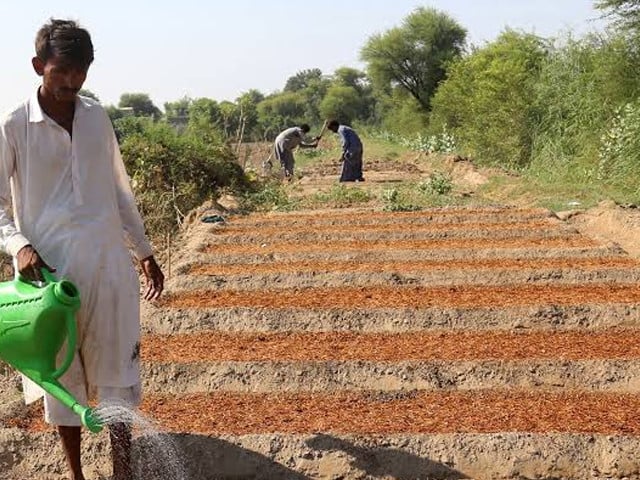
ISLAMABAD: Pakistan’s agriculture sector grew by 2.89% in 2025-26, up from 1.53% in the same period last year, according to the Economic Survey of Pakistan 2025-26, which said the improvement came despite the severe monsoon floods of 2025 that had threatened output in key farming areas.
The survey said government support and timely interventions helped the sector absorb the shock and perform better than initially expected. It added that agriculture contributes 23.4% to the national GDP and employs 33.1% of the country’s workforce. It also pointed to a more supportive policy setting, including the creation of the National Agriculture and Food Security Council, as part of broader food security planning.
Crop sector returns to growth
The crop sub-sector, which had shrunk by 1.01% in 2024-25, recorded growth of 1.44% this year. Output from the five major crops — cotton, rice, sugarcane, maize and wheat — rose by 0.65%, compared with a sharp contraction of 13.19% a year earlier.
According to the survey, the recovery was led by sugarcane, wheat and rice, which helped offset lower production of cotton and maize. Sugarcane registered the strongest increase, rising 6.2% to 89.45 million tonnes from 84.24 million tonnes last year, supported by a larger cultivated area and a 3.7% gain in yield.
Wheat production increased by 4.3% to 29.61 million tonnes from 28.40 million tonnes. The survey attributed the improvement to the Interim Wheat Policy 2025-26 as well as better access to certified seed and fertiliser. Rice output rose 2.8% to 9.99 million tonnes from 9.72 million tonnes, driven by a 6.6% increase in yield despite a reduction in cultivated area.
Cotton and maize remained under pressure. Cotton output slipped 0.5% to 7.05 million bales as growers moved to more profitable crops, while maize production fell 2.7% to 8.79 million tonnes due to the impact of floods on yields. The category of other crops still expanded by 2.43%, helped by a 31.4% increase in pulses, 12.6% growth in vegetables and a 2.8% rise in fruits.
Livestock remains the largest component
The livestock sub-sector grew 3.75% in 2025-26, compared with 2.95% in the previous year, and accounted for 62.4% of agriculture’s value addition and 14.6% of GDP, the survey said. Gross value addition in the sector rose from Rs6,004 billion to Rs6,229 billion.
The survey said overall livestock output increased by 3.46% despite a 4.5% drop in green fodder availability, attributing the result to better animal husbandry practices and government backing. Milk production was estimated at 74,689 thousand tonnes, up from 72,343 thousand tonnes a year earlier. Total meat production increased to 6,314 thousand tonnes, with poultry meat posting the largest gain at 2,826 thousand tonnes.
Pakistan’s poultry industry, described in the survey as making the country the world’s 11th-largest poultry producer, has recorded an average annual growth rate of 8.1% over the past decade and now provides employment to more than 1.5 million people.
Exports and farm inputs
The survey said the government has indicated its intention to develop livestock as an export-oriented sector. Meat exports have increased from $196 million in 2015 to more than $500 million in FY25. It added that the National Meat Sector Transformation and Export Council, formed under the prime minister, has set a target of lifting exports to nearly $700 million by 2028.
Forestry and fishing also posted growth, at 2.02% and 1.66% respectively. On the input side, fertiliser nutrient offtake during July-March 2025-26 reached 3,795 thousand tonnes, showing an 11.4% increase from last year. Nitrogen offtake rose 14.8% and potash use increased 26.2%, while phosphate offtake fell 1.9% because of higher prices, according to the survey.
0 Comments
No comments yet. Be the first to join the discussion!