June 11, 2026
Govt unveils Pakistan Economic Survey: Four-year highs across the board despite a year of shocks
Pakistan’s economy grew 3.7pc in FY2025-26, according to the Economic Survey presented by Finance Minister Muhammad Aurangzeb. The rate was higher than last year’s 3.18pc but below the official 4.2pc target.

June 11, 2026
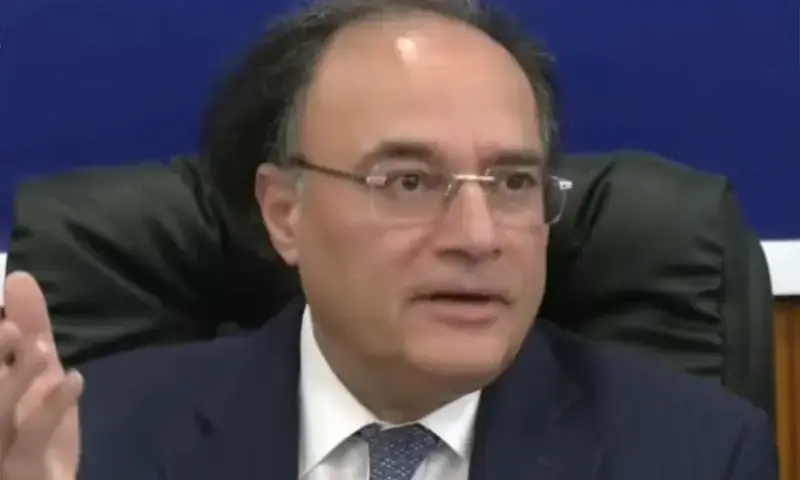
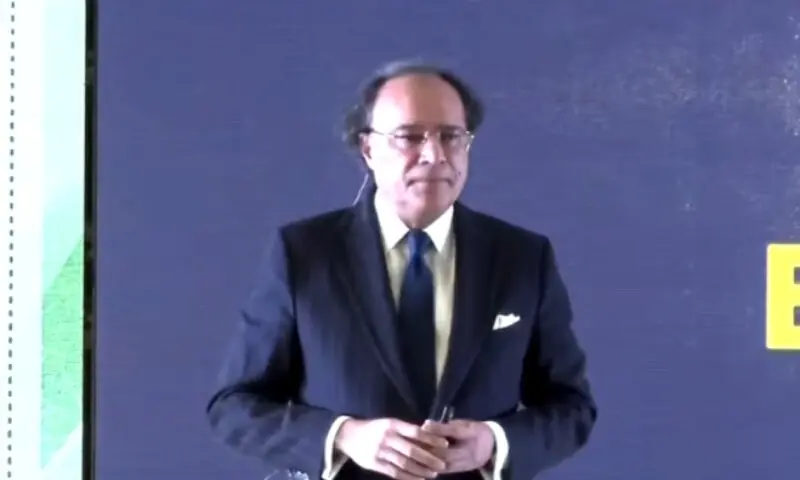
ISLAMABAD: Pakistan's economy grew at its fastest pace in four years during FY2025-26, the government said Thursday as Finance Minister Muhammad Aurangzeb presented the Pakistan Economic Survey — an annual stocktaking that this year carried an unusually dramatic backdrop of floods, tariff pressures, and a regional war.
GDP growth came in at 3.7 per cent for the outgoing fiscal year, edging past last year's 3.18pc but falling short of the government's own target of 4.2pc. Aurangzeb attributed the miss squarely to the Middle East conflict, which he said disrupted projections that had otherwise been on track. Against a global economy that itself slowed — world GDP growth declined to 3.1pc from 3.7pc over the same period — the finance minister framed Pakistan's performance as a hard-won result rather than a shortfall.
"These challenges tested Pakistan's resilience," he said, listing the headwinds in sequence: uncertainty over US tariffs at the fiscal year's opening, catastrophic floods in August and September 2025, and the regional conflict that erupted in March 2026. Through all of it, he argued, the government held its course.
The total size of the economy has reached a historic high of Rs126.9 trillion, with GDP per capita income climbing to $1,901 from $1,751 the previous year.
Manufacturing leads the recovery
The most striking sectoral number came from large-scale manufacturing, which posted growth of 6.1pc — its highest in four years — with positive performance recorded across 16 of its 22 sub-sectors. Aurangzeb was careful to underline the breadth of that recovery. "It is not one single sector leading this. It is broadband growth," he said, pointing to year-on-year demand increases of 31pc in automobiles, 17pc in fertiliser, 10pc in cement, 9pc in mobile phones, and 5pc in petroleum. Overall, the manufacturing sector expanded 6.6pc on the back of that LSM performance.
Services, agriculture hold up
The services sector, which accounts for nearly 58pc of Pakistan's GDP, grew 4.9pc — again the highest in four years. Within it, communication and information services expanded 7.52pc, a figure the minister highlighted for its relevance to the country's digital economy ambitions.
Agriculture grew 2.89pc, more than doubling last year's 1.53pc, a result Aurangzeb described as particularly noteworthy given that the sector absorbed the brunt of the 2025 floods. The crop sub-sector returned to positive territory at 1.44pc after a period of contraction, while livestock continued its consistent upward trend.
Fiscal consolidation, inflation, and the external account
Beyond growth, the survey painted a picture of meaningful fiscal tightening. The fiscal deficit narrowed sharply to 0.7pc of GDP from 2.6pc in the same period last year — a consolidation driven by a 10.1pc rise in tax revenues and a 23pc reduction in markup payments, which Aurangzeb said had significantly expanded the government's fiscal room. The primary surplus improved to 3.2pc from 3pc.
On inflation, CPI averaged 6.2pc between July and April of FY26, up from 4.7pc in the corresponding period last year — a rise the survey attributed to the external shock created by geopolitical tensions toward the end of the third quarter. The minister, however, pointed to the longer trajectory: inflation has fallen from a peak of 28pc, with the policy rate now standing at 11.5pc.
The external account told a more nuanced story. The current account posted a marginal surplus of $72 million during July-March, a steep drop from the $1.7 billion surplus recorded in the same period last year. Workers' remittances remained a crucial buffer, rising 8.2pc to $30.3 billion. Aurangzeb pushed back against framing remittances and exports as competing priorities. "This is not an and/or discussion. This is an and/and discussion," he said, acknowledging the need to grow exports while defending remittances as a structural feature of Pakistan's external position that was not going away.
The bigger picture
The survey's own language — describing the economy as having "accelerated its growth momentum" — reflects a government that sees FY26 as confirmation that its stabilisation programme, anchored by the IMF's Extended Fund Facility, is beginning to convert into something more durable. Improved macroeconomic management, exchange rate stability, and LSM recovery are cited as the primary drivers.
The growth trajectory over the past four years tells its own story: from a contraction of 0.2pc in FY2023, through 2.6pc in FY2024 and 3.2pc in FY2025, to 3.7pc today. The direction is consistent. Whether it is fast enough — and whether it can be sustained as external pressures persist — will define the conversation heading into the next fiscal year.
More details expected as the press conference continues.
0 Comments
No comments yet. Be the first to join the discussion!