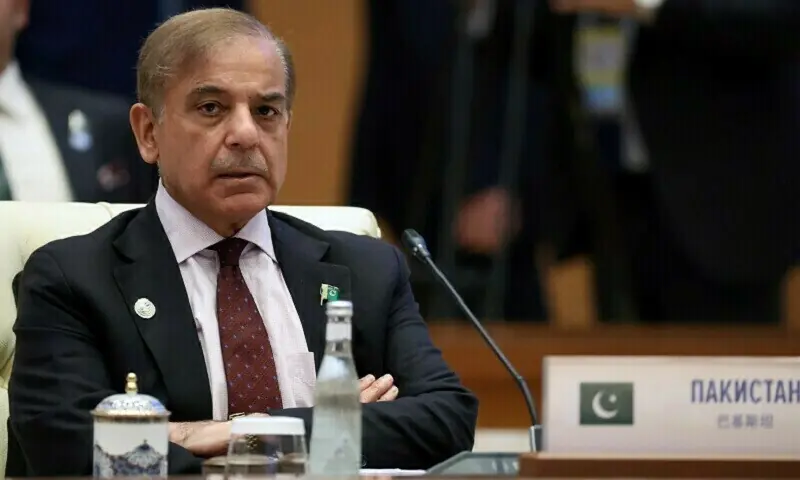
Hegseth tips hat to PM, CDF over peace diplomacy
US Defence Secretary Pete Hegseth has praised Prime Minister Shehbaz Sharif and Field Marshal Asim Munir for their role in US-Iran peace efforts. He said Washington and Islamabad are developing a true friendship.


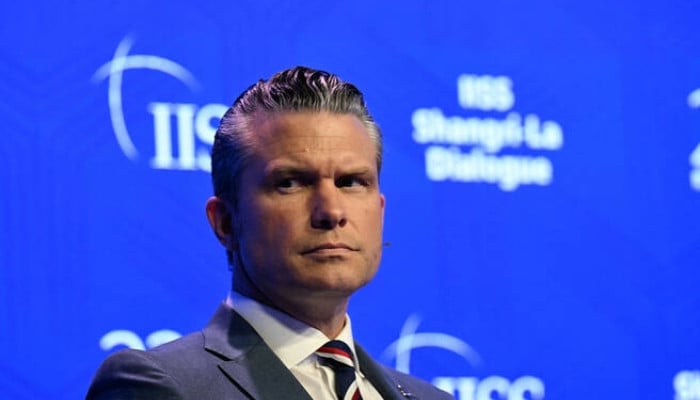
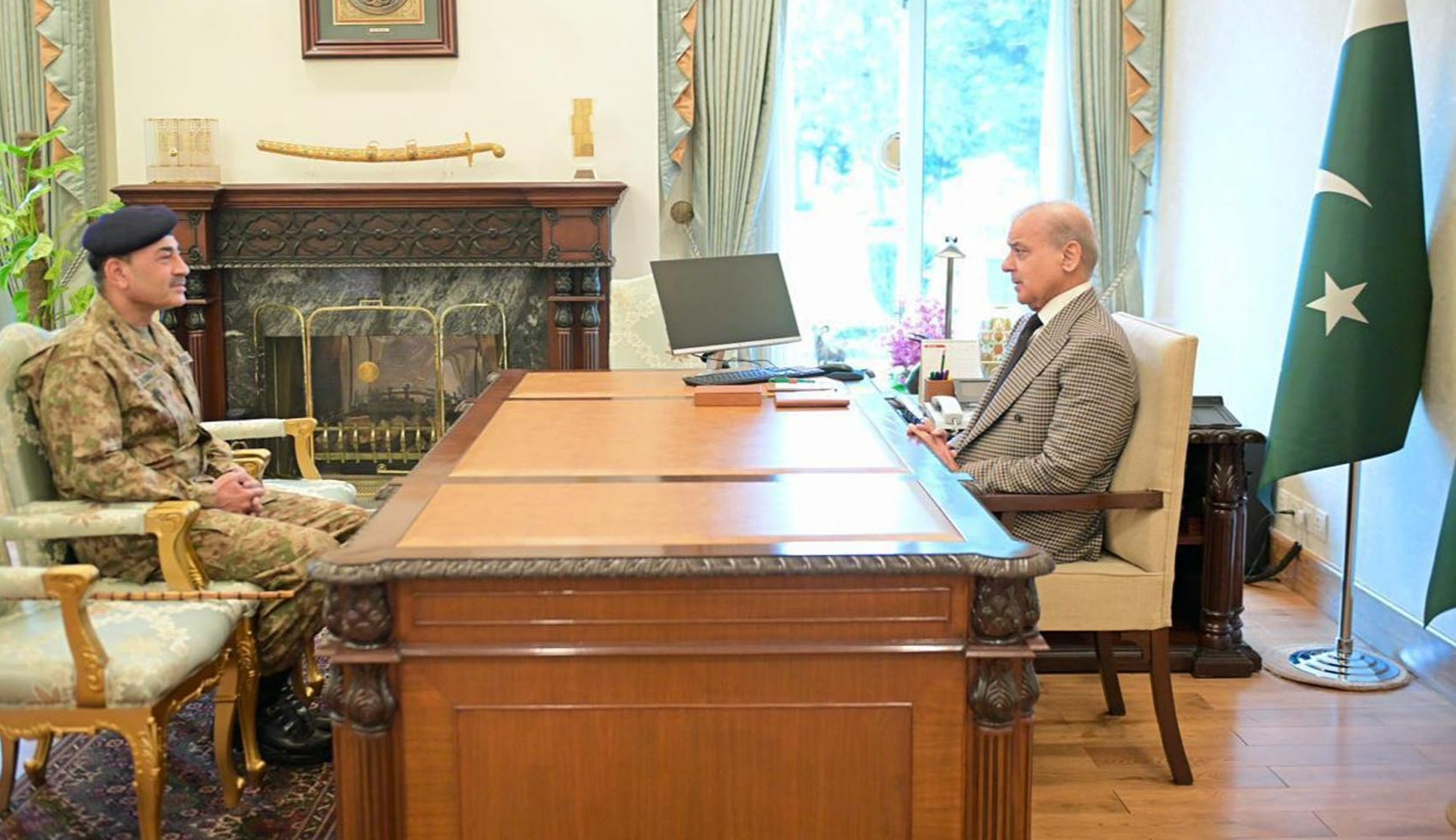
ISLAMABAD: United States Defense Secretary Pete Hegseth has praised Prime Minister Shehbaz Sharif and Chief of Defence Staff and Chief of the Army Staff Field Marshal Asim Munir for their part in efforts linked to US-Iran peace talks, saying ties between Washington and Islamabad are moving towards what he described as a true friendship.
Speaking at the Shangri-La Dialogue in Singapore while responding to a question, Hegseth said Pakistan’s leadership had played a role in the negotiations. He said he could have mentioned Pakistan alongside India while discussing regional issues.
"I mentioned India here, but I very easily could have mentioned Pakistan and the role that the field marshal and the prime minister are playing in peace negotiations. I think an unexpected development and a true friendship [are] developing there, which I think is important," he said.
The remarks point to a marked warming in Pakistan-US relations over the past year, particularly in terms of Washington’s engagement with Pakistan’s military leadership. This has unfolded even as US ties with India have seen occasional strains, with New Delhi continuing to reject President Donald Trump’s assertion that he helped secure the ceasefire that ended the May 2025 conflict between Pakistan and India.
India, deterrence and missile capabilities
Despite commending Pakistan, Hegseth also reaffirmed India’s place in US policy in the Indo-Pacific. In his address to the summit, he described India as a critical anchor in maintaining regional balance and said it was upgrading its military to shoulder a greater part of the security burden, especially in the Indian Ocean. He also said the United States remained committed to co-producing weapons with India.
When asked about India’s long-range missile programme, Hegseth said both India and Pakistan viewed one another as security threats and were therefore likely to keep advancing missile systems as part of deterrence planning. Referring to both states as nuclear-capable, he said each side would see understandable threats from the other, even if Washington might assess some of those issues differently.
"I think both sides are going to see understandable threats coming from the other, maybe some of which we see differently, and countries are going to want to develop ICBM threats," he said, adding that Washington was not currently singling out either country as a threat to the United States.
"But we're not pointing fingers, at least from our view, right now, at either country and calling them a threat to us."
Hegseth also said the United States was grateful for the contribution both countries had made, in their respective ways, to peace efforts around the world.
Diplomatic momentum after May conflict
Both Washington and Islamabad have maintained the position that Trump brokered the ceasefire between Pakistan and India during the May 2025 conflict, a claim denied by Indian Prime Minister Narendra Modi and one that has reportedly irritated Trump.
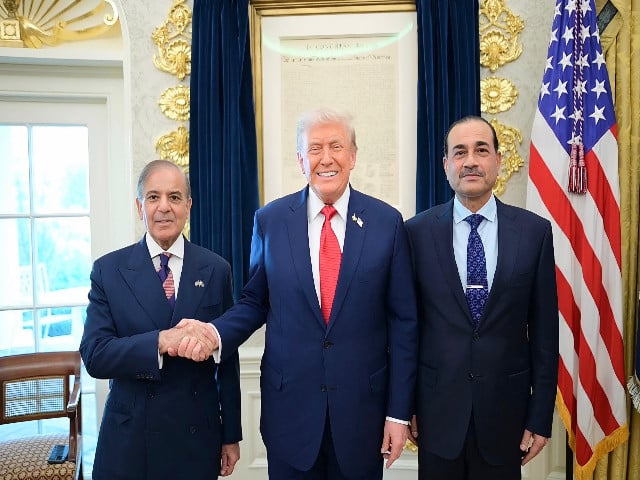
Diplomatic contacts between Pakistan and the United States rose sharply after Trump helped secure that ceasefire during the brief war. Since then, the two sides’ leaders have exchanged positive gestures and publicly appreciated one another’s leadership at international forums. Prime Minister Shehbaz Sharif also nominated Trump for the Nobel Peace Prize in recognition of his mediation role.
Trump, for his part, has repeatedly praised the prime minister and Pakistan’s military leadership, including by referring to Field Marshal Munir as his favourite field marshal. Pakistan is seeking to convert the recent goodwill into economic gains by pursuing a more favourable trade arrangement with the United States, including tariff relief and wider access for Pakistani exports.
Pakistan’s role in US-Iran contacts
Most recently, after war broke out between the United States and Iran in February this year, Pakistan emerged as a peace intermediary. Islamabad facilitated a two-week ceasefire between the two countries on April 8, followed by important talks in Islamabad on April 11 and 12 attended by senior delegations from both sides.
Those discussions did not produce a final agreement to end the conflict. Since then, Washington and Tehran have continued exchanging proposals and counter-proposals in an effort to find common ground and move towards a second round of direct talks aimed at ending the war.
Comments
No comments yet. Be the first to join the discussion!