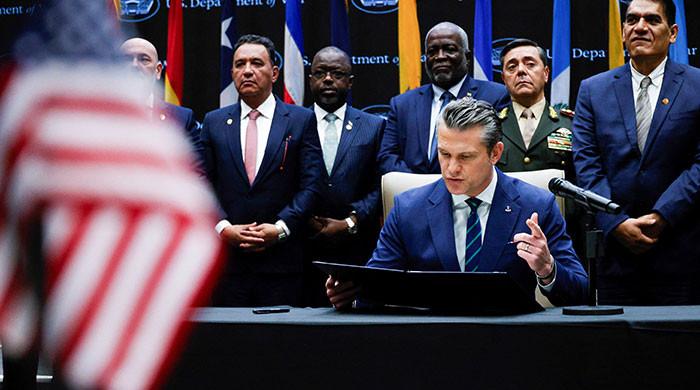
Hegseth says Pakistan-US friendship is growing amid Iran peace efforts
US Defence Secretary Pete Hegseth has praised Pakistan’s role in efforts to revive US-Iran talks, saying a true friendship is growing between Washington and Islamabad. His remarks came as a broader peace deal with Tehran remained unresolved.

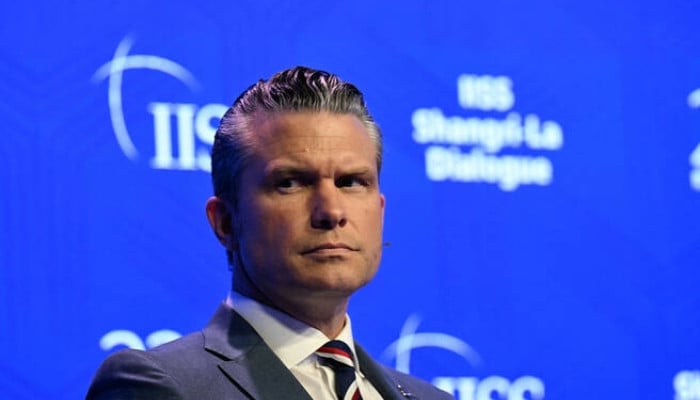
SINGAPORE: US Defence Secretary Pete Hegseth said on Saturday that ties between Washington and Islamabad were developing into what he described as a true friendship, while praising Pakistan’s role in efforts to help revive negotiations between the United States and Iran.
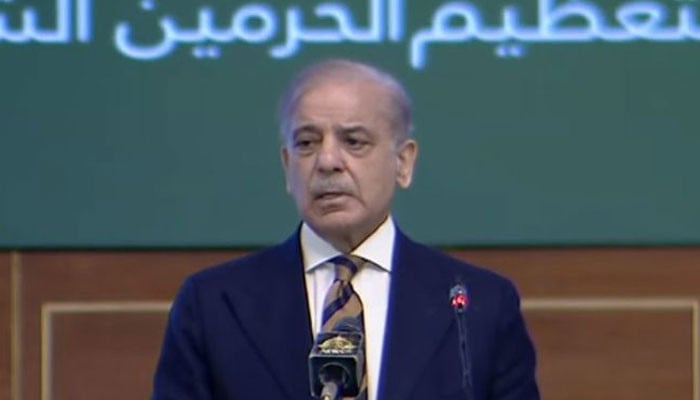
Speaking at the Shangri-La Dialogue in Singapore, Hegseth commended Prime Minister Shehbaz Sharif and Chief of Defence Forces Field Marshal Syed Asim Munir for their part in the diplomatic process involving Tehran and Washington.
At the forum, Hegseth said Pakistan was playing an important part in the ongoing effort to move the two sides back towards talks after six weeks of conflict in the Middle East. He said PM Shehbaz and Field Marshal Munir were playing an outstanding role in the negotiations.
In his remarks, the US defence secretary said:
"Pakistan is a true friend of the US"The comments came as a peace agreement remained out of reach. A White House official quoted by AFP said President Donald Trump will only agree to a deal with Iran if all of his conditions are met. The White House had also indicated that Trump was nearing a decision on a possible agreement, while Tehran maintained that there was still no final deal to end the conflict.
An Iranian state media report challenged several central elements of Trump’s description of the proposed arrangement, with sources calling his remarks a mixture of truth and lies. Trump has previously repeated demands that Iran must never develop nuclear weapons and must reopen the Strait of Hormuz, among other conditions. On Friday, shortly before attending a two-hour meeting in the White House Situation Room, he reiterated that position but did not reach a decision on a deal with Iran.
Conflict and mediation
The latest diplomatic push follows hostilities that began on February 28, when the US and Israel launched coordinated strikes on Iran, prompting Tehran to target US bases in the region and effectively shut the Strait of Hormuz, disrupting global energy markets.
The fighting ended after Pakistan brokered a two-week ceasefire on April 8. Pakistan later hosted delegations from Tehran and Washington in Islamabad for direct talks, described as the first such dialogue between the two countries in around 47 years.
Those talks ended without a breakthrough, with the US and Iran remaining divided on several issues, including the Strait of Hormuz and Tehran’s nuclear and missile programmes. Despite that deadlock, Pakistan continued trying to bring both sides back into negotiations and also helped mediate an extension of the ceasefire.
On Friday, Iranian President Masoud Pezeshkian thanked Pakistan for what he called its initiative and effective efforts to reach an agreement with the United States. He made the remarks in a post on his official X account after separate telephone conversations with PM Shehbaz and Malaysian Prime Minister Anwar Ibrahim.
The United States has repeatedly maintained that Pakistan remains the key mediator in its talks with Iran.
Comments
No comments yet. Be the first to join the discussion!