April 26, 2026
Supreme Court expands judicial cooperation with China, Turkiye
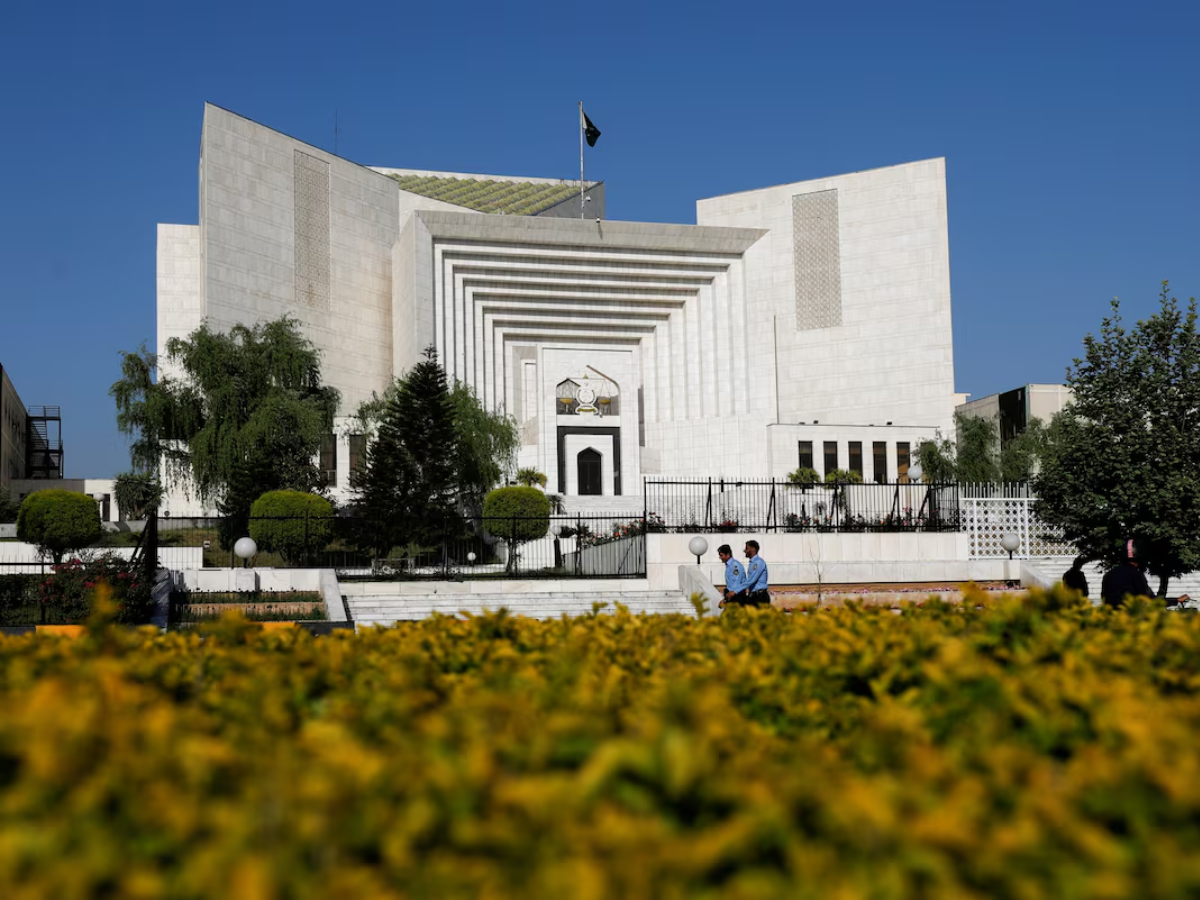
The Supreme Court says it is expanding judicial cooperation with China and Turkiye through MoUs, training programmes, exchanges and technology-focused engagement. The court said the effort is part of its push for a modern and globally connected judiciary.

April 26, 2026

ISLAMABAD: The Supreme Court of Pakistan has said it is continuing to deepen judicial cooperation with China and Turkiye through sustained engagement and institutional partnerships as part of its stated goal of building a modern, technology-enabled and globally connected judiciary.
According to an announcement, a Memorandum of Understanding signed with the Supreme People’s Court of China in August 2025 was a key development in that process. The court said the agreement created a formal mechanism for judicial exchanges, technology integration, capacity-building and cooperation in emerging areas of law.
The announcement said earlier engagement had helped pave the way for that arrangement. A high-level judicial delegation, which included the district and sessions judge of Gwadar and a lady senior civil judge from Lakki Marwat, took part in the 20th Conference of Chief Justices of SCO Member States in Hangzhou in April 2025. According to the court, those contacts later developed into technical cooperation, structured training programmes and reciprocal visits, showing a move from symbolic interaction to practical collaboration.
Focus on district judiciary and training
The Supreme Court said cooperation with China has included participation in senior-level judicial conferences, specialised training initiatives and structured nominations to SCO-related judicial forums. A notable aspect of this engagement has been the inclusion of high-performing judges from the district judiciary, especially those posted in remote and underserved areas, with the aim of strengthening capacity at the trial court level.
As part of these efforts, the district and sessions judge of Ghotki and the president of the Supreme Court Bar Association participated in the 9th China-South Asia Legal Training Programme in Shanghai in May 2025, the announcement said. A court associate of the Supreme Court of Pakistan later joined the 8th China-AALCO Exchange and Research Programme on International Law in Beijing in July 2025.
The court also said a delegation led by the chief justice of the High Court of Balochistan, and including a lady additional sessions judge from Quetta and a senior civil judge from Mithi, Tharparkar, is scheduled to attend the Forum of Justices of Local Courts of China-SCO countries in July 2026.
In addition, a top-performing lady senior civil judge from Bannu and a senior civil judge from Dera Ghazi Khan have been nominated for the 10th China-South Asia Legal Training Course in Shanghai in May 2026, according to the announcement.
Technology cooperation and Turkiye MoU
The Supreme Court said a specialised delegation of IT officers from the apex court and the high courts is also due to visit the Supreme People’s Court of China in Beijing in July 2026. The purpose of the visit, it said, is to obtain first-hand understanding of technology integration and digital transformation in judicial processes, particularly the use of artificial intelligence.
The court said these developments show that the MoU with China is being actively used to promote judicial capacity, institutional innovation and cross-jurisdictional learning.
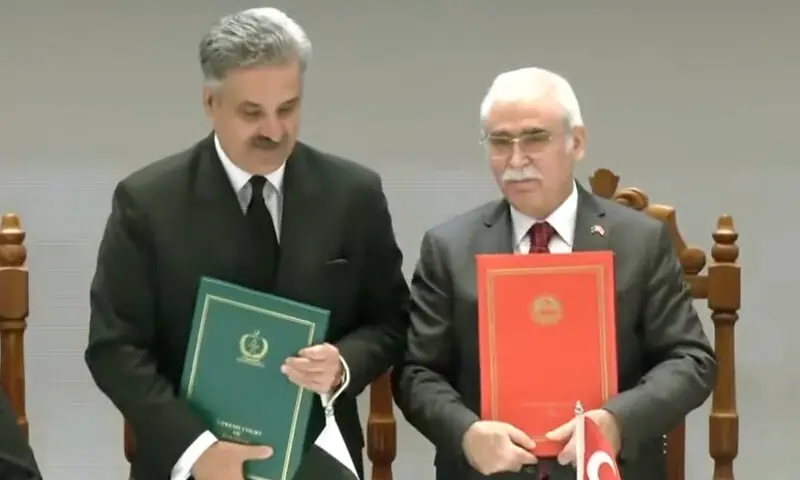
On Turkiye, the Supreme Court said another MoU was signed with the Constitutional Court of Turkiye in April 2026, describing it as an important step in formalising bilateral judicial cooperation. According to the announcement, the agreement provides a structured platform for judicial exchange, technology integration and joint capacity-building initiatives.
The court said this engagement was built on continued interaction at the highest judicial level. A high-level judicial delegation’s participation in the 63rd anniversary of the Constitutional Court of Turkiye in April 2025 helped lay the basis for deeper institutional cooperation. This was followed by a reciprocal visit to Pakistan in April 2026 by a delegation led by the president of the Constitutional Court of Turkiye, which, the Supreme Court said, reinforced both sides’ commitment to long-term collaboration.
0 Comments
No comments yet. Be the first to join the discussion!