Trump pauses Iran strikes after outreach from PM Shehbaz, Iran signals two-week ceasefire
Pakistan says Iran and the US agreed to an immediate ceasefire, including Lebanon. Trump pauses Iran strikes for two weeks if the Strait of Hormuz reopens, with talks planned in Islamabad April 10.

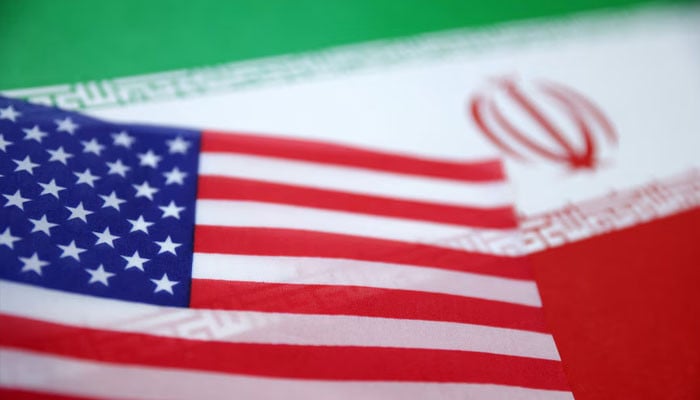
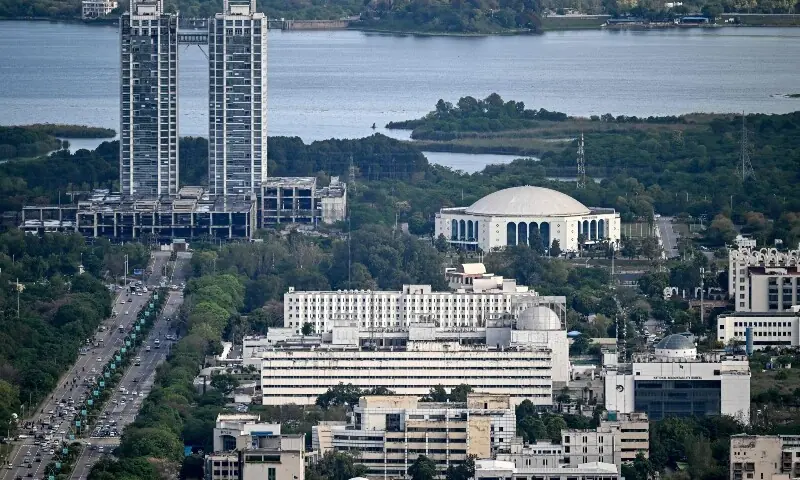
ISLAMABAD: Pakistan said on Wednesday that Iran and the United States, along with their allies, had agreed to an immediate ceasefire, including in Lebanon, and invited both sides to Islamabad on April 10 for talks aimed at securing a lasting settlement.
Prime Minister Shehbaz Sharif announced the development in an early-morning post on X, welcoming the ceasefire and thanking the leadership of both countries. He said both sides had shown “remarkable wisdom and understanding” and remained constructively engaged in efforts to promote peace and stability.
Expressing hope for a positive outcome, the prime minister said the proposed Islamabad talks could help achieve sustainable peace and lead to further progress in the coming days. He also invited delegations from both sides to Islamabad on April 10 for negotiations towards a final agreement on all outstanding disputes.
However, White House Press Secretary Karoline Leavitt said the United States had not yet formally agreed. She said discussions were taking place about in-person talks, but nothing would be final until announced by the president or the White House. A White House official also said Israel had agreed to the ceasefire arrangement between Washington and Tehran.
The breakthrough followed a request from Pakistan, after US President Donald Trump said early on Wednesday that he would suspend the bombing of Iran for two weeks if Tehran fully reopened the Strait of Hormuz.
Iran, in turn, said it would halt its defensive operations if attacks against it stopped, and added that safe passage through the Strait of Hormuz could be ensured for a two-week period.
Trump’s statement came less than two hours before his ultimatum to Iran, set to expire at 8pm ET on April 8, was due to end. A day earlier, he had again warned Tehran, saying “a whole civilisation will die tonight”, as Iran showed no sign of accepting his demand.
With only hours remaining before the deadline, Prime Minister Shehbaz wrote on X that diplomatic efforts to end the conflict in the Middle East were moving forward steadily and had the potential to produce meaningful results soon.
He urged President Trump to extend the deadline by two weeks to give diplomacy a chance. Pakistan, he said, was working as a facilitator in efforts between Tehran and Washington to end hostilities in the Middle East, which began when the US and Israel launched strikes in Iran on February 28.
The prime minister also appealed to Iran to reopen the Strait of Hormuz for two weeks as a goodwill measure. He described it as a vital maritime corridor through which 20 per cent of the world’s oil and liquefied natural gas had flowed before the war began.
He said Pakistan sincerely requested its “Iranian brothers” to allow the route to reopen for the same two-week period and called on all parties to observe a ceasefire everywhere so diplomacy could work towards a conclusive end to the war.
Soon afterwards, Trump said on Truth Social that he had spoken with Prime Minister Shehbaz Sharif and Chief of Defence Forces and Chief of Army Staff Field Marshal Asim Munir.
He said that, based on those conversations, and provided Iran agreed to the complete, immediate and safe opening of the Strait of Hormuz, he had decided to suspend the bombing of Iran for two weeks.
Trump said the pause would amount to a “double sided” ceasefire. He added that the decision came because the US believed it had already met its military objectives and was close to a definitive agreement for long-term peace with Iran and the wider Middle East.
He also said Washington had received a 10-point proposal from Iran and considered it a workable basis for negotiations. According to Trump, most past points of contention between the two countries had already been addressed, and the additional two weeks would allow the agreement to be finalised.
Trump further said that, in his view, the long-running crisis was now close to resolution.
Iranian Foreign Minister Abbas Araghchi later shared a statement on behalf of Iran’s Supreme National Security Council, saying Tehran would halt its defensive operations if attacks against the country stopped.
He thanked Prime Minister Shehbaz and Field Marshal Munir for what he described as their tireless efforts to end the war in the region.
Referring to Shehbaz’s request and to renewed negotiations with Washington, Araghchi said Iran was prepared to move towards de-escalation. He added that safe passage through the Strait of Hormuz would be possible for two weeks in coordination with Iran’s armed forces and subject to technical limitations.
Separately, Iran’s state-run Press TV outlined what it said was Tehran’s 10-point proposal, which the US had accepted. The reported terms included non-aggression against Iran, continued Iranian control over the Strait of Hormuz, recognition of Iran’s right to uranium enrichment, the lifting of primary and secondary sanctions, the removal of UN Security Council and International Atomic Energy Agency Board of Governors resolutions against Iran, compensation for damage inflicted on Iran, the withdrawal of US combat forces from the region, and an end to war on all fronts, including against Hezbollah in Lebanon.
Following the prime minister’s announcement, Deputy Prime Minister and Foreign Minister Ishaq Dar held phone calls with the foreign ministers of Morocco, Saudi Arabia, Turkiye and Egypt within about half an hour, according to the Foreign Office.
The FO said Dar discussed the latest developments in the Middle East and the broader region, and briefed his counterparts on Pakistan’s continuing efforts to promote dialogue and diplomacy in support of peace and stability.
The foreign ministers of Saudi Arabia, Turkiye and Egypt had also been in Islamabad last week for a quadrilateral meeting focused on de-escalation in the Middle East.
After that meeting, Dar said both Iran and the US had expressed confidence in Pakistan’s role as a facilitator and that Islamabad would be honoured to host talks in the coming days.
A day later, Dar travelled to Beijing, where Pakistan and China issued a five-point initiative aimed at restoring peace and stability in the Gulf and the Middle East.
Prime Minister Shehbaz had earlier, on March 24, said Pakistan stood ready and honoured to host meaningful and conclusive talks between the US and Iran.
On March 25, Iran’s state-owned Press TV reported that Tehran had rejected an American proposal to end the US-Israeli war. Citing a senior political-security official, the report said Iran had laid out five conditions for ending the conflict.
Those conditions included a complete halt to aggression and assassinations, concrete guarantees that war would not be imposed again on the Islamic Republic, clearly defined payment of war damages and reparations, an end to the war across all fronts and resistance groups in the region, and international recognition of Iran’s sovereign authority over the Strait of Hormuz.
On Monday, Iranian media reported that Tehran had sent its response to a US proposal for ending the war through Pakistan, once again rejecting a ceasefire and insisting instead on a permanent end to the conflict.
That response reportedly contained 10 clauses, including an end to fighting in the region, a protocol for safe passage through the Strait of Hormuz, the lifting of sanctions, and reconstruction.
Both earlier rejections came before Trump warned of wider attacks on Iran if Tehran refused to strike a deal with Washington.
Manal Jaffery is a news editor at Pakistan Today with extensive experience in journalism, reporting, newsroom editing and digital content production. Her work covers national and international news, with a focus on accuracy, clarity and timely reporting.
View all articles →Comments
No comments yet. Be the first to join the discussion!