

Fake credential case involving foreign nationals moved out of ATC
A Karachi anti-terrorism court has transferred a fake documents case to a sessions court, ruling that the allegations relate to fraud and forgery rather than terrorism. The case involves three suspects booked by the FIA.

KARACHI: An anti-terrorism court (ATC) has ordered the transfer of a fake documents case to a sessions court after ruling that the matter does not fall within its jurisdiction.
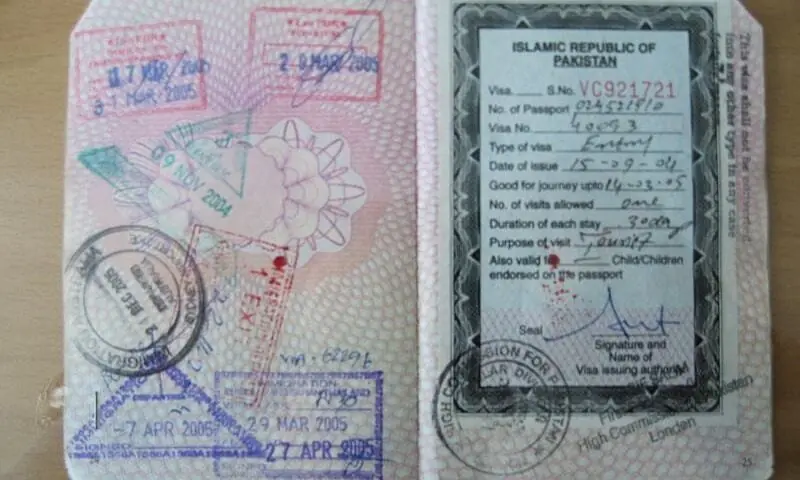
The case involves three suspects — Aliya Batool Zaidi, her brother-in-law Syed Sohail Mehdi, and Syed Kazim — who were booked by the Federal Investigation Agency (FIA) for allegedly creating forged documents for foreign nationals, including individuals linked to North Korea, to help them secure remote IT jobs.
The FIA registered the case following a communication from the Ministry of Interior based on a report by the Multilateral Sanctions Monitoring Team (MSMT). The report identified a Pakistan-based entity, The Solution Tree, and Aliya Batool as key facilitators in generating fraudulent credentials. These reportedly included fake passports, driver’s licences, social security cards, utility bills, bank statements, and university diplomas. Payments were allegedly made through cryptocurrency platforms such as Ethereum and USDC, as well as services like Payoneer.
According to the FIR, Aliya Batool was arrested and, during interrogation, told investigators that she had worked with her brother-in-law’s IT company and was involved in image editing and preparing forged documents. She further claimed that orders for such credentials were received from foreign clients based in the United States, China, Hawaii, North Korea, Ukraine and other countries through Syed Sohail Mehdi, and were then passed on to her for execution.
Acting on her statement, the FIA later arrested Sohail Mehdi and seized digital evidence linked to the case.
Subsequently, Aliya Batool filed a post-arrest bail application before ATC-II through her counsel. During the proceedings, the court asked the FIA to clarify whether the allegations met the legal threshold for terrorism under the Anti-Terrorism Act (ATA).
However, the prosecution failed to establish a connection between the alleged offences and any act of terrorism. The court observed that no evidence had been presented to show links with a proscribed organisation or actions falling under Section 6 of the ATA.
In its order, the court stated that even if the allegations were accepted at face value, they constituted offences related to cheating, forgery, and the use of fake documents under the Pakistan Penal Code (PPC), rather than terrorism. It also noted the absence of any element involving violence, coercion, intimidation, or public fear.
“The mere assertion of foreign links or alleged violation of UN-related provisions does not by itself attract the definition of terrorism,” the court observed, adding that the case was essentially a “white-collar, cyber and financial crime.”
The matter has now been transferred to the District and Sessions Court (South) Karachi for further proceedings.
The FIA had initially registered the case under Sections 420, 468, and 109 of the PPC, along with relevant provisions of the Anti-Terrorism Act.
Comments
No comments yet. Be the first to join the discussion!


