Government defends web monitoring system in National Assembly
The government told the National Assembly that Pakistan’s web monitoring system is meant to regulate unlawful online content and does not violate privacy. Lawmakers questioned oversight, legality and the role of private telecom operators.

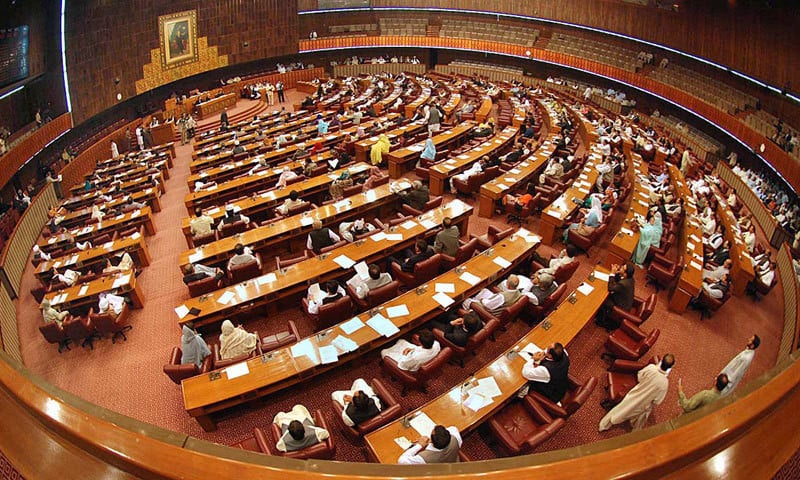
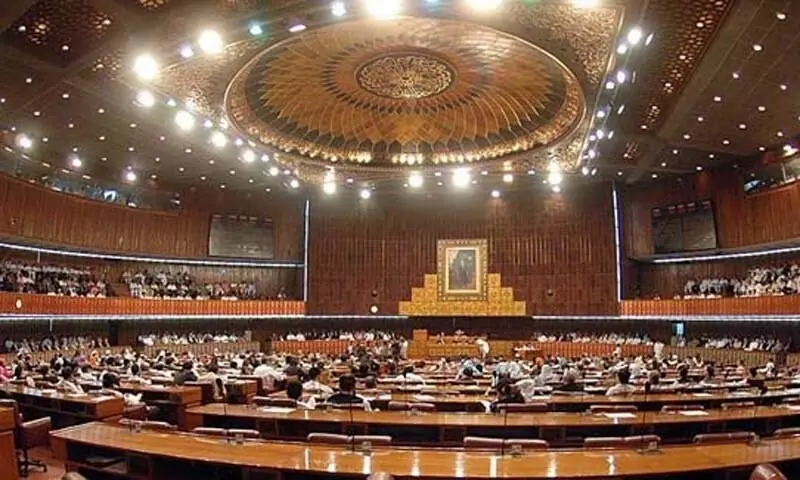
ISLAMABAD: The government on Thursday told the National Assembly that Pakistan’s web monitoring system is intended to regulate unlawful online material and does not breach citizens’ privacy, as lawmakers pressed for clarity on oversight, legality and the involvement of private telecom operators.
During question hour, the parliamentary secretary for IT said the system had been operating since 2007 and had been upgraded from time to time, including what she described as a comprehensive overhaul in 2019.
She said the Pakistan Telecommunication Authority is responsible for monitoring internet traffic and ensuring compliance with laws related to online content.
It is not correct to say that the government or PTA has no role in this system.
she said, adding that the authority continuously monitors and blocks unlawful or blasphemous content.
According to the parliamentary secretary, no public money had been spent on the system. She described it as a mechanism designed to track data traffic rather than intrude on individual privacy.
She also said international platforms were being regulated through formal arrangements, including memorandums of understanding with companies such as TikTok and Meta. She added that access to some services could be restricted on security grounds.
Referring to X, she said the platform had not been blocked by the PTA, but on the instructions of the Interior Ministry for security reasons.
Lawmakers raise questions over authority and accountability
Earlier, members of the assembly questioned the transparency and legal basis of the system, particularly in light of the reported use of infrastructure procured by private telecom operators.
MNA Sharmila Faruqui said the official response indicated that the monitoring system had been procured by private operators without government funding and without PTA involvement in procurement, which, she said, raised questions about authority and accountability.
If private telecom operators are carrying out monitoring at a national level, who authorized them, and who is monitoring them?
she asked.
Faruqui said the lack of direct government ownership or financial participation created concerns about oversight and responsibility. She warned that such an arrangement could leave citizens vulnerable to unchecked surveillance.
MNA Noor Alam Khan also questioned the model under which the system was financed. He said that if private operators had installed and maintained the infrastructure, the cost would eventually be passed on to consumers.
Are these private operators charitable organizations, or are they recovering costs from the public?
he asked.
Khan also raised constitutional concerns and asked whether the system could run afoul of Article 14, which guarantees the right to privacy and dignity of individuals. He said monitoring functions should remain firmly within the state’s domain in order to prevent misuse by private entities.
He further sought an explanation of the legal basis for restricting access to X, asking whether such decisions were being taken under a defined legal framework or through administrative directives.
Comments
No comments yet. Be the first to join the discussion!