At UNSC, Pakistan urges diplomacy over force on Iran nuclear issue
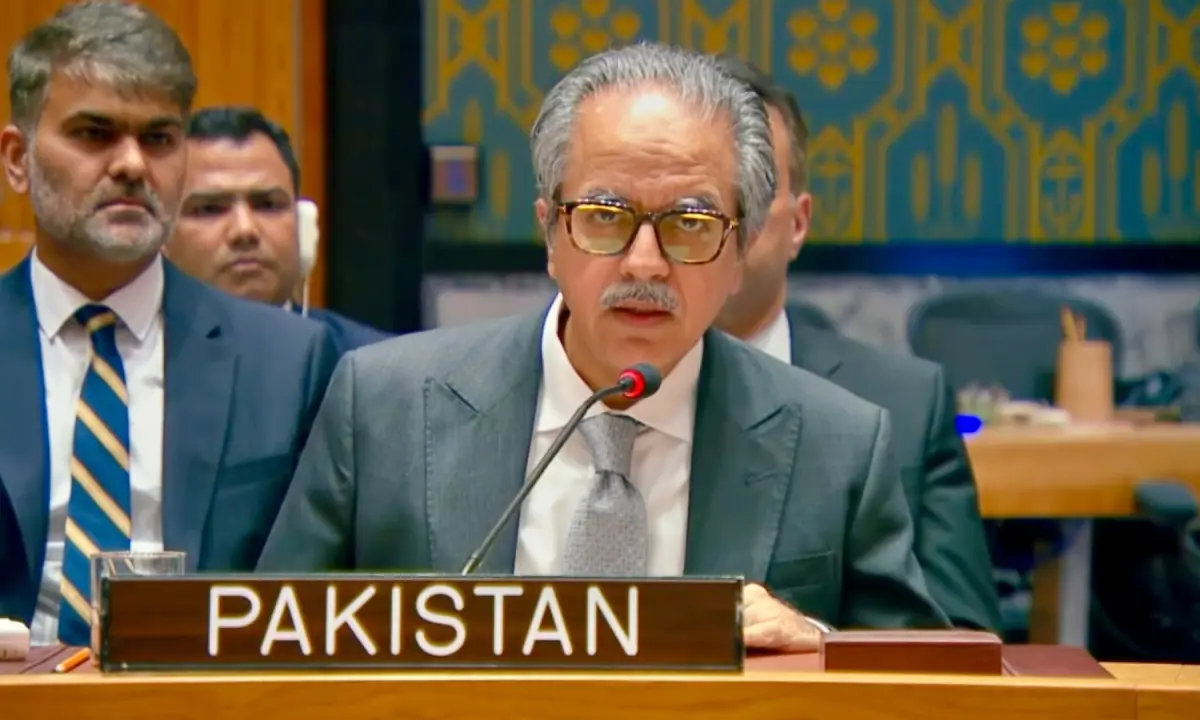
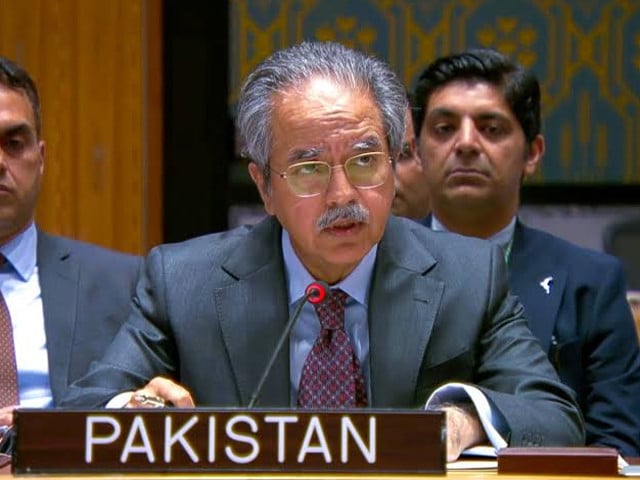
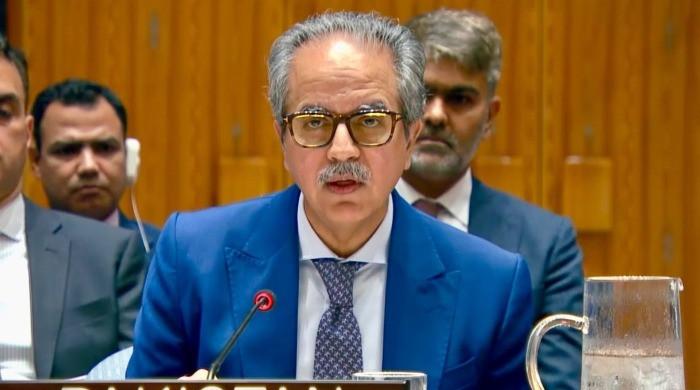
At the UN Security Council, Pakistan's envoy Asim Iftikhar Ahmad emphasized the need for diplomacy over military action regarding the Iran nuclear issue, calling for renewed dialogue and restraint amid rising tensions in the Middle East.

Envoy Asim Iftikhar Ahmad warns against abandoning dialogue for ‘short-sighted policies’
Says rising ME tension reshaped context of Iran nuclear file, urging ceasefire, restraint and renewed dialogue among all parties
Condemns strikes on nuclear sites and civilian infrastructure, calling for IAEA verification work in Iran to resume without disruption
UNITED NATIONS: Pakistan has told the 15-member United Nations Security Council that an enduring solution to the Iran nuclear issue lies in reviving diplomacy rather than abandoning it for “short-sighted policies”, as tensions continue to rise across the Middle East.
Speaking during a discussion on the UN Security Council’s ‘Committee 1737’, which oversees international sanctions on Iran related to its nuclear and missile programmes, Pakistan’s Permanent Representative to the United Nations Ambassador Asim Iftikhar Ahmad emphasised that dialogue and diplomatic engagement remain the only viable path forward.
“It is clear that dialogue, diplomacy and constructive engagement remain the only viable way forward. And yet, diplomacy has been forfeited in favour of military means,” the Pakistani envoy told the Council.
Ambassador Asim Ahmad said recent developments surrounding Iran’s nuclear programme have significantly altered the context of the issue.
“The developments since last June, as well as the ongoing situation that started with the unprovoked and unwarranted attacks on Iran, have deeply impacted the context of the Iran nuclear file,” he said.
Regretting the breakdown of diplomacy on the Iranian nuclear issue, the Pakistani envoy stressed that the fundamental principles and multilateral spirit that led to the Joint Comprehensive Plan of Action (JCPOA) — commonly known as the Iran nuclear deal — remain valid, as does the consensus adoption of UN Security Council Resolution 2231 in 2015.
(Former US President Donald Trump, during his first term, announced in 2018 the withdrawal of the United States from the JCPOA, describing it as a “horrible” and “one-sided” deal that failed to protect US national security interests.)
“More than ever, and even during the current conflict and heightened tensions, it is clear that an enduring solution lies in embracing those time-tested principles rather than abandoning them for short-sighted policies,” Ambassador Asim Ahmad said.
He described the JCPOA as a “unique instrument” and a manifestation of an approach based on dialogue, diplomacy and pragmatism. The agreement, he said, was the result of painstaking and arduous yet constructive negotiations that produced a comprehensive roadmap to address the concerns of all parties through reciprocal actions.
The arrangement, he added, embodied the principle of peaceful resolution of disputes that lies at the heart of the United Nations Charter.
“Pakistan lent its support to the negotiated settlement of the issue, and it remains our core position till today,” he said.
Ambassador Asim Ahmad also condemned the use of force and attacks on sensitive facilities.
“We have condemned all use of force, targeting of civilian infrastructure, and strikes on nuclear sites under IAEA safeguards,” he said, warning that attacks on nuclear facilities could pose serious environmental and safety risks for local populations as well as the wider region.
He also cautioned against any disruption to the crucial verification mandate of the International Atomic Energy Agency (IAEA), noting that the agency is responsible for objectively and impartially verifying compliance with nuclear safeguards obligations by member states.
“The IAEA should be enabled to fulfil this statutory function and its verification activities in Iran should resume unimpeded,” the Pakistani envoy said.
Pakistan also called for an immediate cessation of hostilities in the Middle East, urging all parties to exercise maximum restraint, avoid further escalation, establish a permanent ceasefire and return to dialogue.
“All our efforts aim in that direction,” Ambassador Asim Ahmad said.
Comments
No comments yet. Be the first to join the discussion!