

US aviation regulator pushes to speed air taxis and supersonic planes
The US Federal Aviation Administration says it is working to speed the deployment of air taxis and update rules for supersonic flight. The agency says certification and regulatory changes are aimed at supporting innovation while maintaining safety.

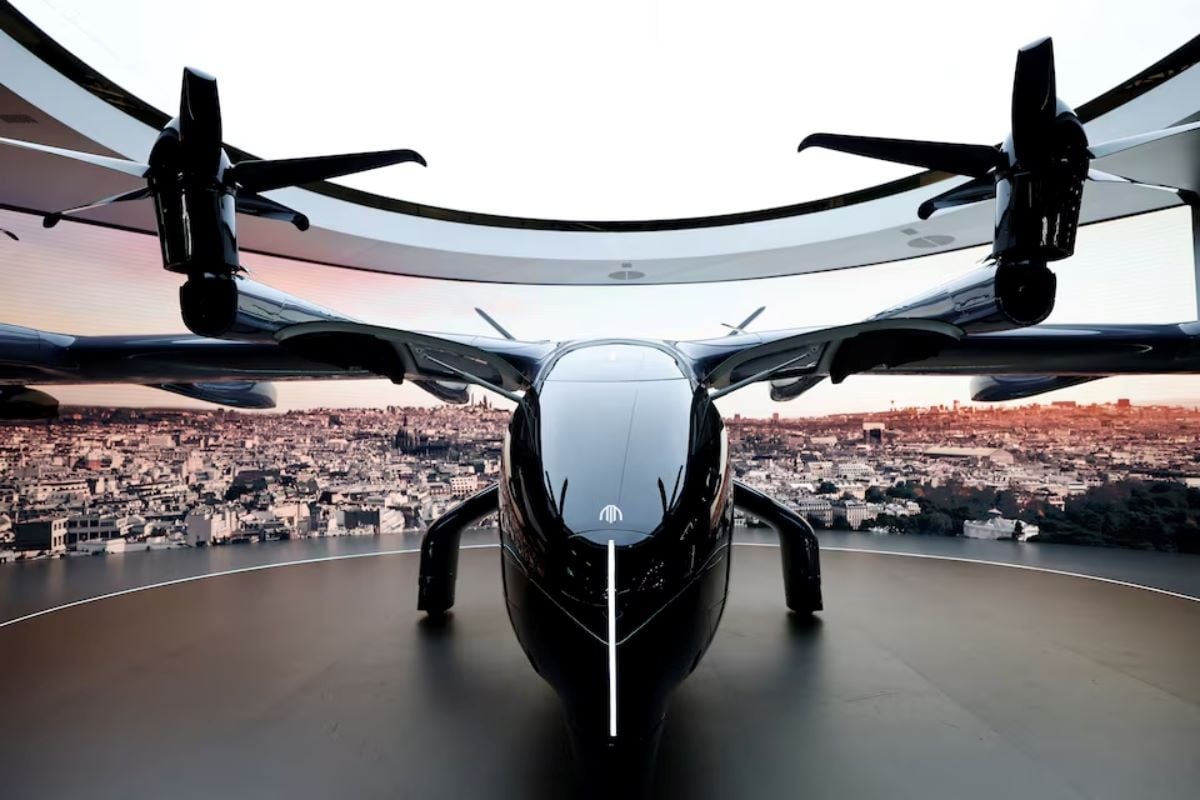
WASHINGTON: The US Federal Aviation Administration is working with industry to accelerate the arrival of air taxis, supersonic aircraft, expanded drone use and more space launches as part of what it describes as a broader shift toward next-generation aviation, Deputy FAA Administrator Chris Rocheleau said in an interview with Reuters at the Farnborough Airshow.
Rocheleau said the agency is trying to deal with certification and regulatory issues while avoiding overly rigid rules that could hinder new technology. He said the aim is to allow companies room to innovate while ensuring safety standards are met.
Speaking about the FAA’s approach, Rocheleau said “We want to make sure that we're not being too prescriptive in those standards, and that we're letting the industry drive the innovation”.
The FAA launched a pilot programme last year to support the early deployment of electric vertical takeoff and landing aircraft, or eVTOLs. Rocheleau said information gathered through the initiative — involving eight partner companies across 26 states — will help shape the certification process for the aircraft.
He said the broader objective is to integrate the new class of aircraft into the country’s airspace system in a way that is both safe and efficient.
“The whole idea behind this is to take this new technology, these new aircraft, and put them into the national airstream in a safe and efficient manner”, the statement added.
Air taxi firms seek commercial rollout
Companies developing air taxis are seeking regulatory approval as they try to bring the aircraft into commercial service in response to demand for quicker and more environmentally sustainable urban travel. The eVTOL aircraft being promoted by the industry are designed to take off and land vertically and could be used for trips to airports or for short journeys within cities, offering passengers an alternative to road congestion.
Archer Aviation chief executive Adam Goldstein told Reuters that the rollout of eVTOL aircraft could resemble the city-by-city expansion used by Google’s self-driving unit Waymo. He said the FAA pilot programme would allow the industry to begin in a limited number of cities and refine operations in a controlled setting before broader deployment.
“I think the world has learned a lot in how the autonomous vehicles have launched”, he stated.
Goldstein also said “roll this out to a couple cities in a confined area that we can kind of work through the kinks in the system”.
FAA also moves on supersonic flight rules
In June, the FAA proposed the first of two rules required to remove a ban imposed in 1973 on supersonic air transport over land. The agency plans to put forward a second rule covering acceptable noise limits for takeoff, landing and supersonic cruise operations, and intends to complete both rules by mid-2027.
Rocheleau said the agency believes the current framework no longer reflects present-day needs.
Regular commercial supersonic passenger service came to an end in 2003 when Concorde, operated by Air France and British Airways, was retired after 27 years in service. Once the new rules are in place, supersonic aircraft would still need certification from the FAA and other regulators before they could enter service.
Comments
No comments yet. Be the first to join the discussion!


